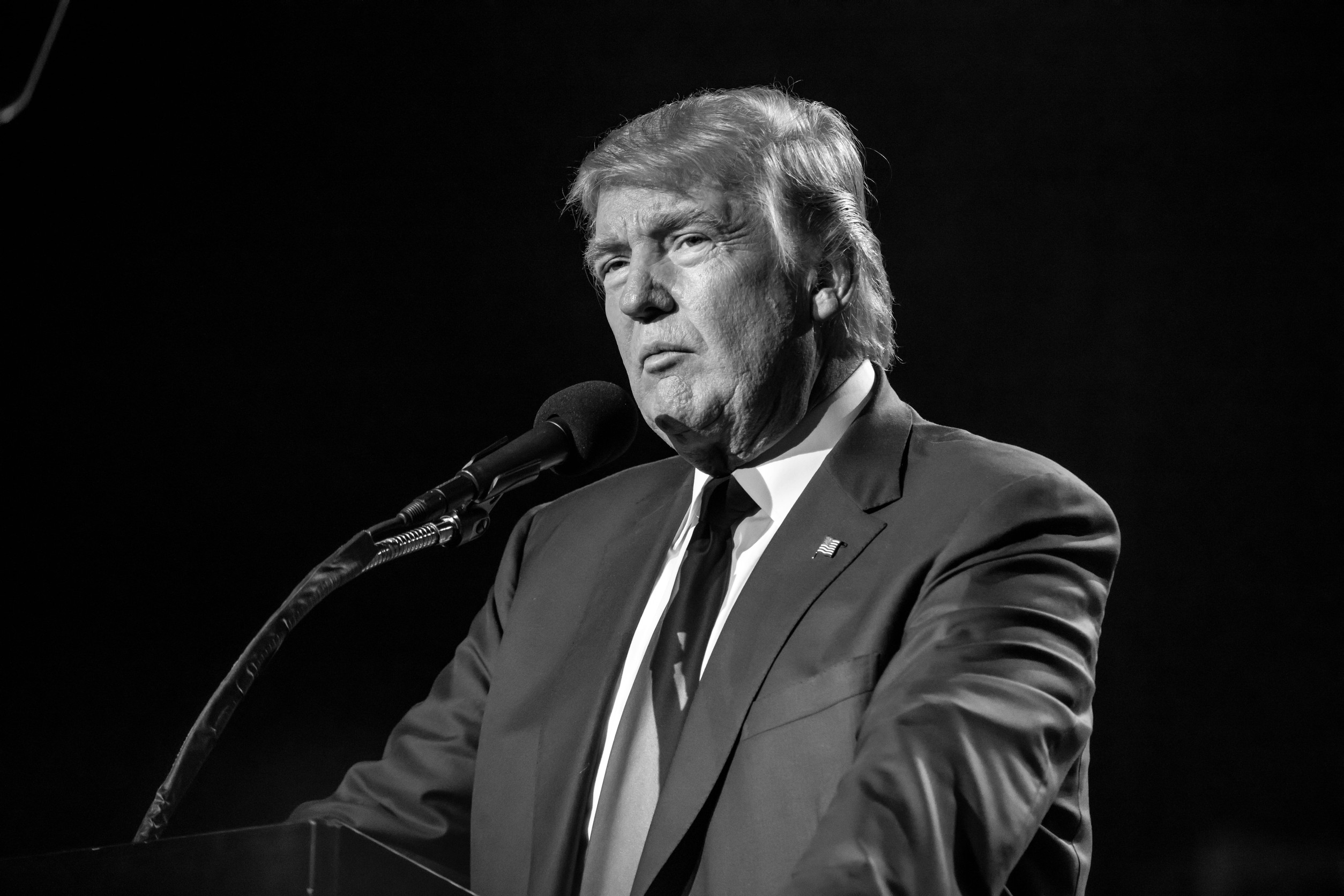
President Donald Trump compressed decades of political history, shifting voter loyalties and a fiercely contested midterm strategy into one emphatic social media post.
“Black and Brown Voters don’t want Communism or Socialism. Not surprisingly, they are flocking to the Republican Party!” Trump wrote Sunday on Truth Social. “They remember that Abraham Lincoln was a Republican!”
The statement arrived as Republicans sharpen their attacks on progressive Democrats ahead of the November 2026 midterm elections. It also raised a measurable question: Are Black and Hispanic voters truly moving toward the GOP in large numbers?
The answer depends on which election and which moment one examines.
Trump made significant gains among non-White voters in 2024. More recent polling, however, shows Democrats retaining clear advantages among Black and Hispanic voters heading into the midterms.
That tension matters most in closely divided states such as Michigan, where Detroit’s heavily Black electorate and the state’s growing Hispanic communities could help determine control of Congress.
Trump’s claim grew from a real political opening
Trump’s declaration did not emerge from nowhere.
A detailed Pew Research Center analysis found that his coalition became more racially diverse during the 2024 presidential election. Trump received 15% of the Black vote, nearly twice his 8% share in 2020.
His improvement among Hispanic voters was even larger. Pew found that 48% supported Trump in 2024, up from 36% four years earlier. Kamala Harris received 51%, leaving Democrats with a much smaller advantage than in previous presidential elections.
Black men proved more receptive to Trump than Black women. Pew reported that 21% of Black men voted for him, compared with 10% of Black women.
Those numbers gave Republicans legitimate reasons to believe that traditional Democratic voting coalitions were becoming less predictable. They did not, however, establish that Black and Hispanic voters had abandoned the Democratic Party.
Eighty-three percent of Black voters still supported Harris in 2024. Pew also found that turnout changes contributed heavily to Trump’s gains. The movement did not result solely from large numbers of individual voters switching from one party to another.
New polling challenges the word “flocking”
Trump’s use of “flocking” suggests a large, continuing migration. The latest midterm polling does not show that.
A national Pew survey conducted July 6 through July 12 found that 68% of Black registered voters preferred a Democratic congressional candidate. Only 8% favored a Republican, while 25% remained undecided or supported someone else.
Hispanic voters also favored Democrats, although by a narrower margin. Forty-nine percent preferred the Democratic candidate, compared with 26% who chose the Republican. Another 24% were undecided or favored another candidate.
These figures represent voter preferences at the time of the survey, not a forecast of the final result. Congressional campaigns were still developing, and midterm turnout can differ considerably from presidential turnout.
Still, the numbers do not support the idea that minority voters, viewed collectively, are currently rushing into the Republican Party.
Pew’s separate 2026 party-affiliation analysis found that Democratic identification remained higher among Black, Hispanic and Asian adults. It also detected modest movement away from the GOP among those groups after earlier Republican gains.
The most accurate reading is less dramatic but more politically important: Republicans demonstrated that Democrats can no longer take every part of their diverse coalition for granted.
Michigan gives the argument a battleground

Trump’s message also fits a wider Republican effort to make socialism a defining issue in the 2026 campaign.
The strategy gained urgency after progressive candidates won important Democratic primaries in Michigan. Abdul El-Sayed captured the party’s Senate nomination with proposals that include Medicare for All and changes to U.S. policy toward Israel. Environmental organizer William Lawrence won the Democratic nomination in Michigan’s competitive 7th Congressional District.
Trump called El-Sayed a “Communist loser,” although El-Sayed does not identify as a communist. National Republicans also branded Lawrence a socialist following his victory.
The political calculation is clear. Republicans hope ideological labels will alarm moderates, immigrants who have personal or family memories of authoritarian governments, and voters worried about government spending.
However, Republican campaigns do not agree on how heavily to rely on that message.
Reuters interviewed advisers to 11 Republican campaigns in competitive House races. Five planned to emphasize socialism, while six considered it a secondary issue or questioned whether it would move swing voters.
Jason Roe, a strategist for Michigan Republican Rep. Tom Barrett, said Barrett’s campaign would focus on the congressman’s record instead of making socialism its central message.
“I don’t want to devote our campaign dollars to talking about William Lawrence’s socialism,” Roe told Reuters. “Tom Barrett has a really good record to run on.”
That decision captures the Republican dilemma. Ideological warnings may energize committed voters, but families confronting expensive groceries, fuel and housing may demand more immediate answers.
Voters can dislike a label while supporting a policy
The debate becomes even more complicated when pollsters replace political labels with specific proposals.
A Reuters/Ipsos poll conducted from July 29 through August 3 found that 43% of independent voters would be less likely to support a candidate described as a democratic socialist.
Yet 60% of independents supported government-provided healthcare coverage for everyone. Another 64% favored raising taxes on corporations and billionaires.
The same survey found resistance to Trump’s political brand. Fifty-nine percent of independents said they would be less likely to support a candidate associated with the MAGA movement.
Those results suggest that labels alone cannot fully explain voter behavior. A person may reject the word “socialism” while supporting a policy promoted by a democratic socialist. Another voter may appreciate Trump’s economic message while opposing a Republican congressional candidate.
Black and Hispanic Americans also do not form a single political unit. Religion, age, education, income, immigration history, gender and geography can all shape voting decisions. A Cuban American voter in South Florida may view socialism differently from a third-generation Mexican American in Arizona or a Black union household in Detroit.
Lincoln’s name carries history, but not a simple modern comparison
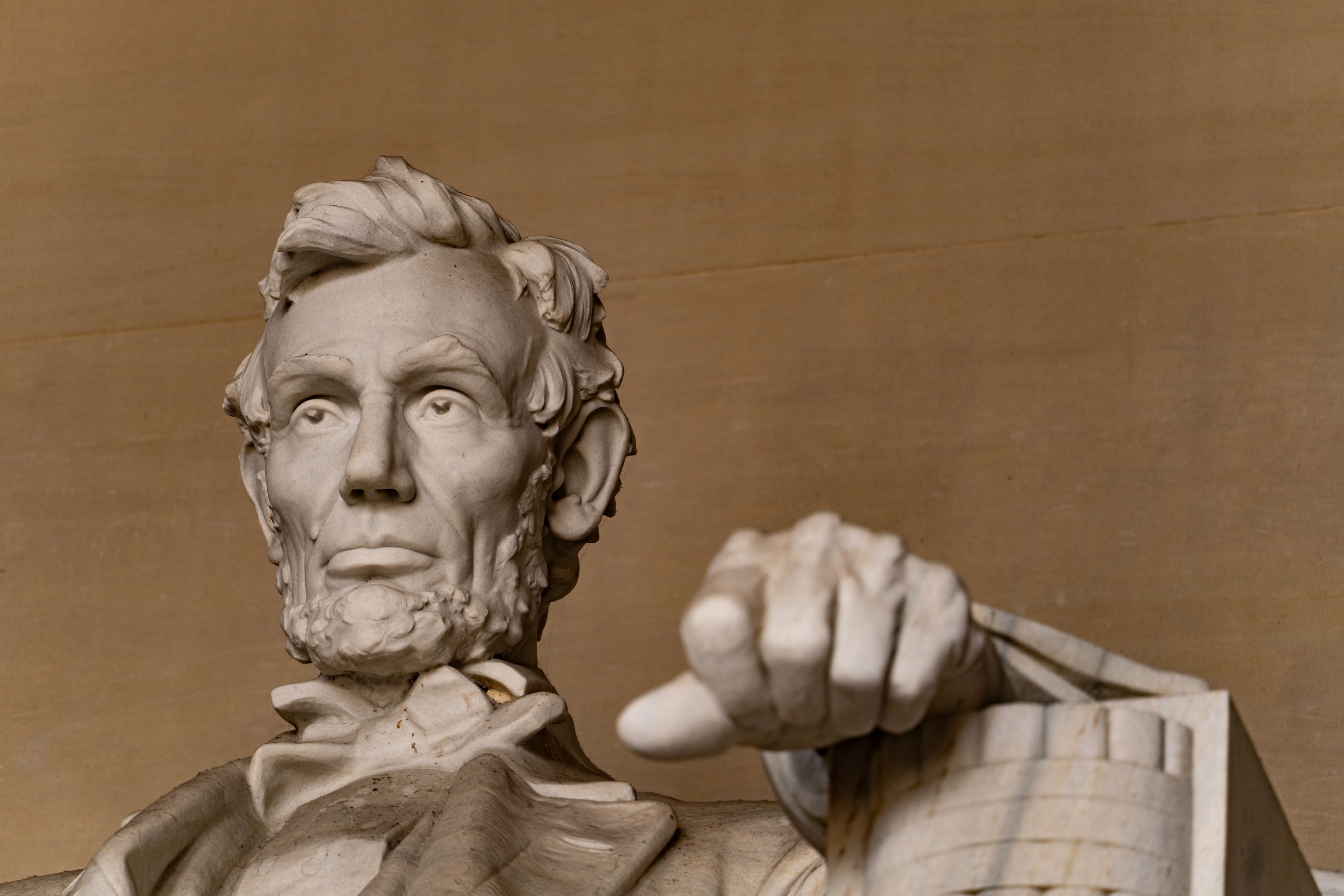
Photo by Brett A/Pexels
Trump was historically correct that Abraham Lincoln belonged to the Republican Party. Lincoln won the presidency as a Republican in 1860 and issued the Emancipation Proclamation during the Civil War.
The modern political meaning of that fact requires context. The Republican and Democratic coalitions changed substantially during the generations that followed, particularly through the New Deal period and the civil rights era.
Invoking Lincoln gives Trump’s message emotional and historical weight. It does not, by itself, demonstrate how Black Americans vote in 2026 or explain their views of current Republican policies.
Contemporary voters judge candidates on present-day questions, including prices, employment, healthcare, immigration, public safety, education and voting rights. History shapes those judgments, but it does not settle them.
A gain is not yet a realignment
Trump’s 2024 gains among Black and Hispanic voters were real, consequential and impossible for Democrats to dismiss. They helped produce a broader Republican coalition and showed that racial identity does not dictate a person’s vote.
The latest polling delivers an equally important warning for Republicans. A breakthrough in one presidential election does not guarantee lasting loyalty, particularly when midterm voters are evaluating local candidates and current economic conditions.
The 2026 elections will reveal whether Trump helped create a durable multiracial Republican coalition or benefited from a particular combination of turnout, dissatisfaction and candidate choices in 2024.
For families in Detroit, Phoenix, Miami, Philadelphia and other politically contested communities, the argument will not be resolved by a sweeping social media declaration. It will be resolved privately, voter by voter, when Americans decide which party speaks most convincingly to the lives they are actually living.