Todd Blanche walked into the Robert F. Kennedy Department of Justice Building on Monday as the confirmed U.S. attorney general. His arrival ended an 88-day stint as acting attorney general. It also began a new phase governed by written promises he made to secure the job. Those promises are already under strain.
The Senate confirmed Blanche early Saturday morning by a single vote, 50-49, after a confirmation fight that dragged on for weeks and nearly collapsed twice. Only two Republicans, Susan Collins of Maine and Lisa Murkowski of Alaska, broke with their party to vote no. They joined every Democrat present. Sen. Bill Cassidy of Louisiana delivered the decisive vote on Friday after a last-minute round of arm-twisting.
Emil Bove, a former Trump personal attorney now sitting on a federal appeals court, administered Blanche’s oath at the White House. From there, Blanche traveled straight to Justice Department headquarters, where employees lined the entrance to greet him.
A path that started in a defense lawyer’s chair
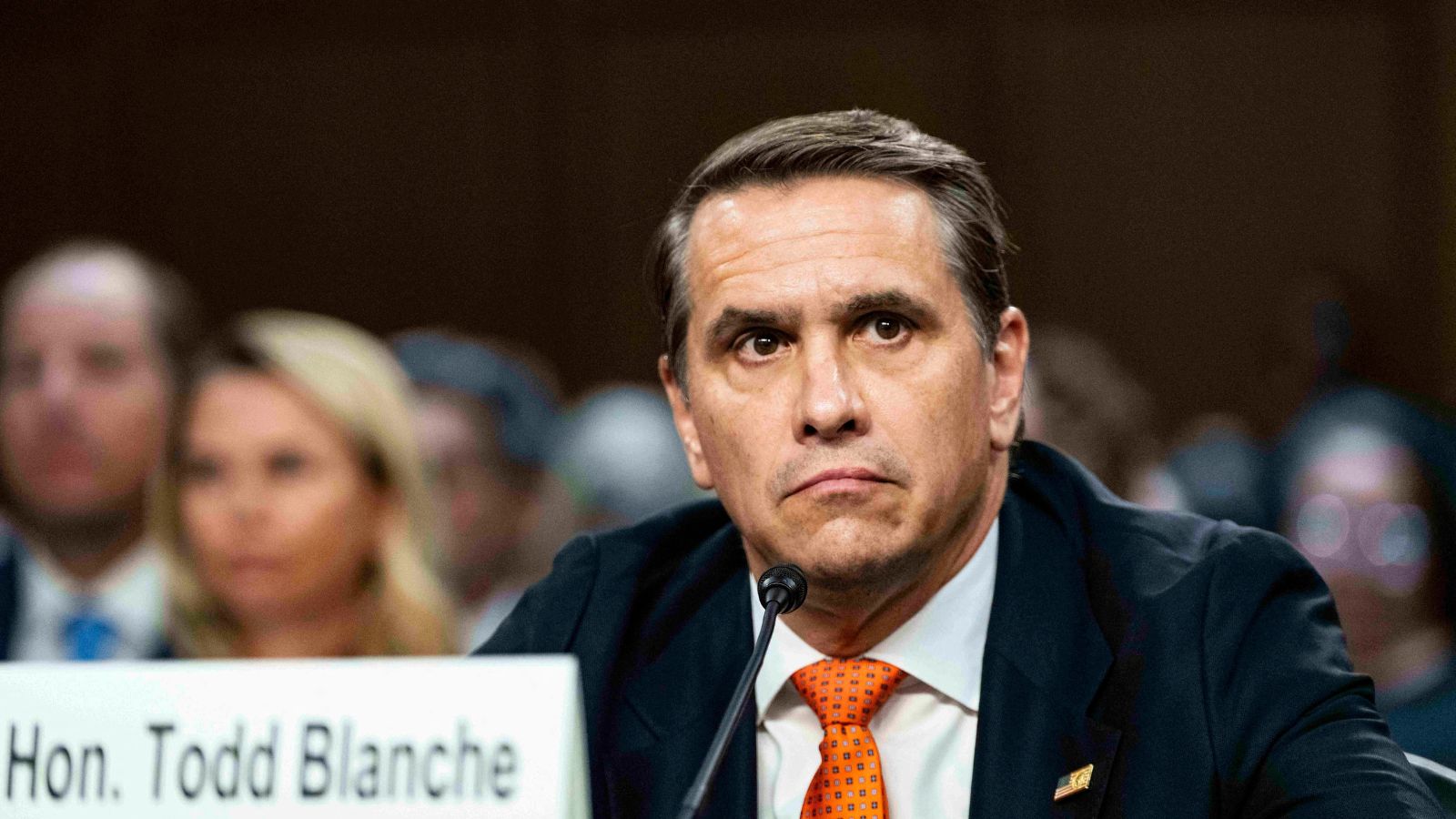
Blanche’s rise to the nation’s top law enforcement job began somewhere unlikely for the role: defending Donald Trump in criminal court. Trump hired him in 2023 to handle the hush money case, the classified documents case, and the effort to overturn the 2020 election results. When Trump returned to office, he tapped Blanche as deputy attorney general, a post the Senate confirmed him to in March 2025.
Blanche stepped into the top job in April, after Trump forced out then-Attorney General Pam Bondi. According to reports from various sources, Trump had grown frustrated that the department was not moving aggressively enough against people he considered political enemies.
Blanche moved quickly to close that gap. The department pursued charges against former FBI Director James Comey over a social media post. It also pursued a case against the Southern Poverty Law Center over payments to informants who infiltrated extremist groups.
The deal that got him confirmed
Blanche’s confirmation nearly stalled over two Republican holdouts, Sens. John Cornyn of Texas and Thom Tillis of North Carolina, neither of whom is seeking reelection this fall. Their objections centered on a Trump-era Justice Department settlement tied to an IRS dispute. Critics said the agreement shielded the president and his family from tax audits. They also said it set aside roughly $1.8 billion for a fund compensating Trump allies who claimed federal law enforcement had mistreated them.
Late on a Sunday night in early August, Blanche posted documents on social media meant to satisfy both senators, stating that the disputed fund was dead. That was enough to move his nomination out of the Senate Judiciary Committee on a party-line, 12-10 vote.
By the time the full Senate voted, Cornyn and Tillis were on board. Whether their concerns were actually resolved is a separate question.
Cracks in the promise before it was even a day old
Legal specialists who reviewed Blanche’s written assurances noted a structural problem: the underlying settlement is a contract filed in federal court, and altering its terms requires a signed amendment from every party, including Trump and his adult sons. A written order from Blanche does not, on its own, rewrite a court-filed settlement.
Trump himself undercut the concession almost immediately, telling reporters that Cornyn and Tillis had received nothing they did not already have. Blanche’s order rescinding the fund also stopped short of declaring the move permanent, leaving open the possibility that the department could revive it later.
Collins pointed to a different set of broken assurances in explaining her no vote. She cited the department’s attempted indictments of Democratic Sens. Elissa Slotkin of Michigan and Mark Kelly of Arizona.
She also pointed to Blanche’s pledge to restrict the mailing of abortion pills. Together, she argued, the moves showed the department had become more political rather than less under his leadership.
Independence questions that predate the vote
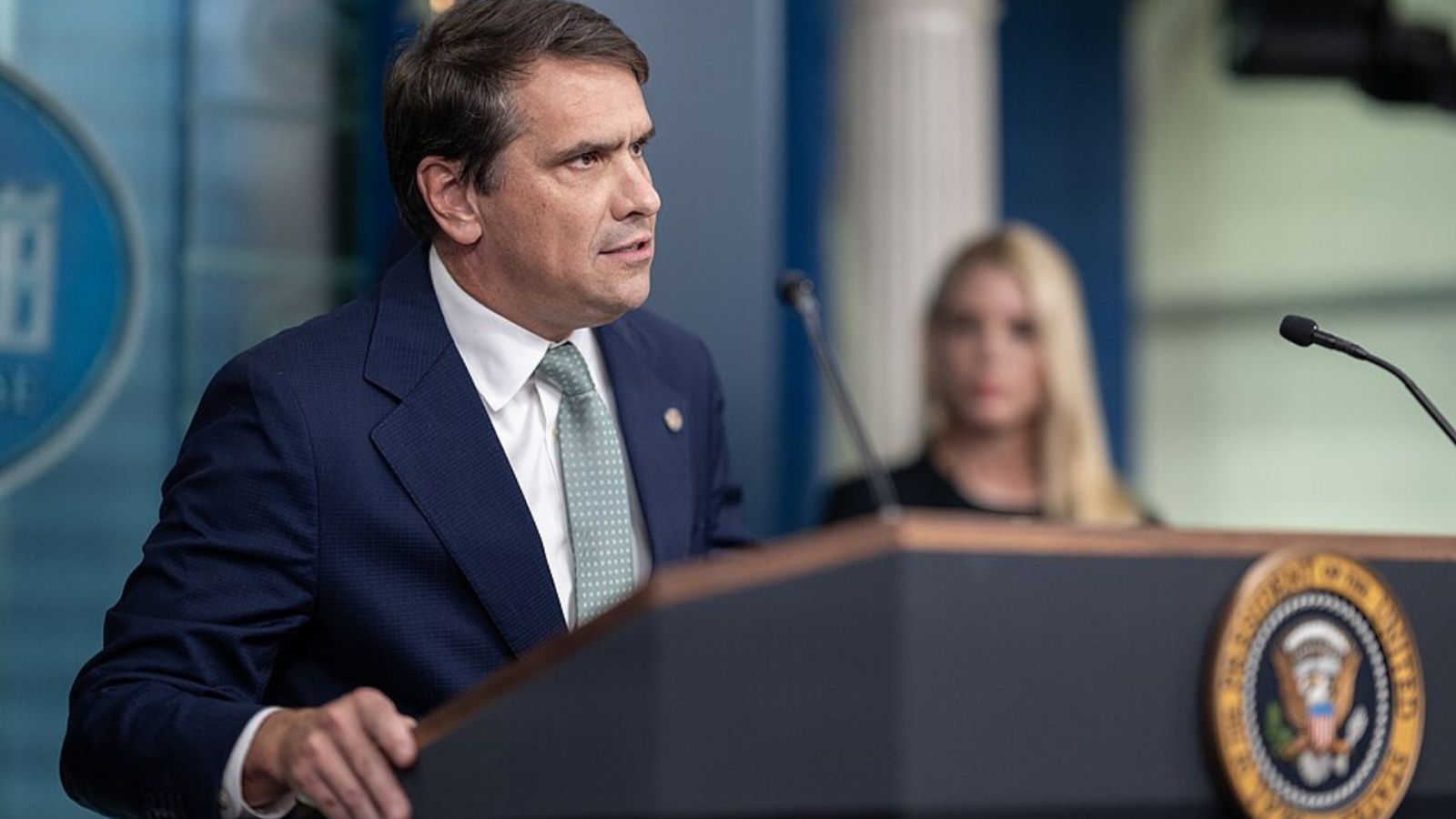
Tillis had signaled months earlier that any hint the department was not operating independently of the White House could sink his support. During his July confirmation hearing, Blanche faced repeated questions on that point. He responded by noting that the Justice Department sits within the executive branch. Some senators viewed the answer as an admission rather than a reassurance.
Sen. Adam Schiff of California argued during the committee process that Blanche has never fully separated himself from his years representing Trump personally. He predicted he would serve the president’s interests over the public’s. Sen. Alex Padilla, also of California, made a similar case to NPR, arguing that Blanche was still behaving like Trump’s personal lawyer rather than the country’s chief law enforcement officer.
The Epstein files still loom
Survivors of Jeffrey Epstein lobbied against Blanche’s confirmation over how the department has handled files related to the case, describing a long-delayed meeting with him as dismissive. Separately, the state of New Mexico has sued both the Justice Department and Blanche directly, alleging the department obstructed the state’s own investigation into Epstein-related conduct.
None of that litigation resolves on Blanche’s first official day in the job. It simply travels with him into it, alongside the written promises Republican senators accepted to get him there.
Blanche now runs a department of more than 100,000 employees with a mandate shaped as much by the concessions that secured his confirmation as by the powers of the office itself. How closely the two align may determine whether Monday’s swearing-in marks a fresh start or the first test of a deal already showing cracks.