Cali Saigon Mall in Garland, Texas, is not a polished retail attraction designed for easy consumption. It functions as a Vietnamese market shaped by daily necessity, immigrant entrepreneurship, and community continuity, rather than tourism or branding. We step into a space that feels immediately active, densely layered, and intentionally uncurated, where commerce and culture overlap without simplification.
The significance of this Vietnamese market in Garland, Texas, extends beyond food or shopping. It reflects broader demographic shifts in American suburbs, where immigrant communities build parallel commercial ecosystems that mirror their countries of origin while adapting to local conditions. The result is an environment that feels authentic but also challenging, especially for first-time visitors unfamiliar with its structure.
What we encounter is not a simplified cultural showcase. It is a functioning economic and social hub that prioritizes community needs over visitor comfort. That distinction shapes every aspect of the experience, from food service to retail layout to social interaction patterns inside the mall.
A Commercial Ecosystem Built on Community Necessity Rather Than Tourism Appeal
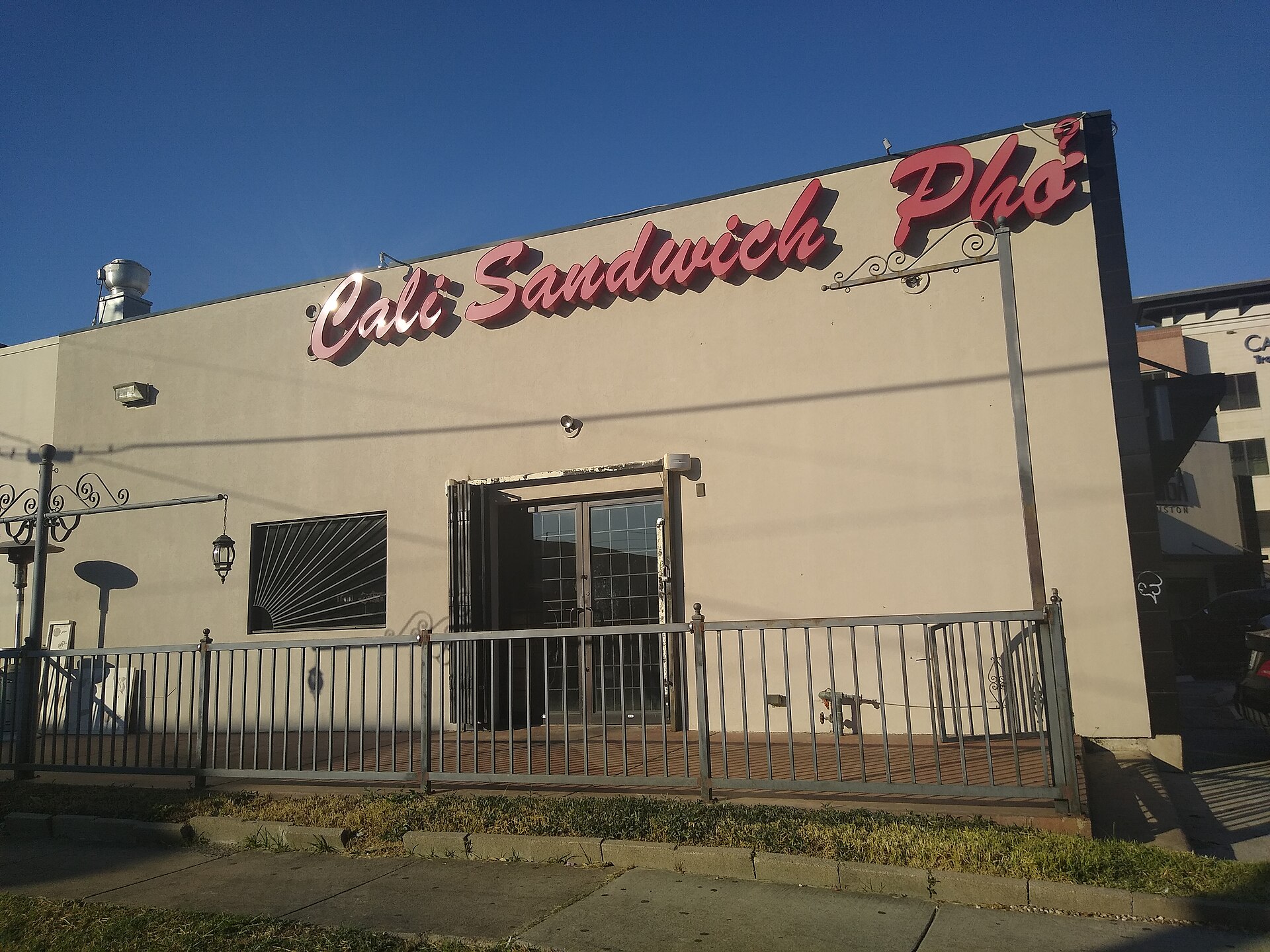
The structure of Cali Saigon Mall reflects long-term immigrant settlement patterns in the Dallas-Fort Worth region. Vietnamese migration to Texas expanded significantly after the 1970s, and over the decades, commercial centers like this emerged to meet everyday needs. These spaces were not designed as attractions but as infrastructure for food access, cultural continuity, and small-business opportunities.
Inside the mall, we observe a mixed-use environment where grocery retail, food service, and specialty shops operate side by side without strict segmentation. This creates efficiency for local shoppers who combine errands into a single visit. However, it also produces a layout that can feel disorienting to unfamiliar visitors expecting standardized organization.
The absence of a curated visitor flow is not accidental. It reflects a commercial logic rooted in practicality rather than presentation. Vendors prioritize visibility and accessibility to repeat customers who already understand the system. For newcomers, this requires adaptation rather than guided interpretation, which can create initial friction during the first visit.
Sensory Density and the Challenge of First-Time Orientation
One of the most immediate characteristics of this Vietnamese market in Garland, Texas, is its sensory density. Sound, smell, and movement overlap continuously, producing an environment that feels active rather than controlled. Vietnamese conversation fills the space, food aromas waft through the corridors, and foot traffic moves in unpredictable patterns between stalls.
This density reflects a broader characteristic of Southeast Asian market culture, where commerce is often embedded in open, multi-sensory environments. Historically, markets in cities such as Saigon functioned as daily gathering points where trade and social interaction occurred simultaneously. Cali Saigon Mall mirrors this structure in a condensed American suburban form.
For first-time visitors, however, this environment can produce cognitive overload. Without clear signage hierarchy or standardized ordering systems, individuals must rely on observation and trial-based navigation. This creates a learning curve that rewards patience but may discourage visitors expecting structured guidance.
The result is a space that feels immersive but not immediately accessible. It demands attention, observation, and willingness to participate without instruction.
Food Court Dynamics and the Economics of Independent Stalls
The food court at Cali Saigon Mall operates as a collection of independent micro-businesses rather than a unified dining system. Each stall sets its own menu, pricing strategy, and preparation style. This structure reflects a broader trend in immigrant food economies, where low barriers to entry allow entrepreneurs to operate independently within shared commercial spaces.
We find a wide range of offerings, including pho, banh mi, rice plates, noodle soups, and dessert drinks. However, quality is not standardized across vendors. Some stalls demonstrate high consistency and strong customer loyalty, while others vary depending on staffing, demand, or supply conditions.
This variability is not a flaw in the system but a structural characteristic. Unlike franchise-based food courts, where uniformity is prioritized, this environment reflects individual ownership and culinary autonomy. For regular customers, this creates familiarity with preferred vendors. For new visitors, it introduces uncertainty in selection.
Shared seating reinforces the communal nature of the space. Diners often sit near strangers, creating indirect social interaction patterns that resemble traditional street markets in Vietnam. This arrangement prioritizes space efficiency and turnover rather than personal dining separation, which can feel unfamiliar in American suburban contexts.
Banh Mi as a Cultural Entry Point and a Test of Consistency
Banh mi serves as one of the most recognizable entry points for visitors exploring this Vietnamese market in Garland, Texas. The sandwich itself represents a fusion of historical cuisines, originating from French colonial influence combined with Vietnamese ingredients and preparation styles. Its presence in the mall reflects both cultural continuity and adaptation.
At Cali Saigon Mall, banh mi preparation varies across vendors, reflecting the independent stall structure. Bread texture, seasoning balance, and ingredient ratios may vary depending on the preparation method and timing. This inconsistency highlights a key difference between standardized fast food systems and independent culinary production.
For experienced customers, this variability is expected and even valued. It reflects individuality in preparation and avoids homogenization. For first-time visitors, however, it can produce uneven impressions of quality. The experience depends heavily on vendor selection rather than a unified standard.
Despite this variability, banh mi remains a stable cultural anchor. It connects the mall to broader Vietnamese culinary traditions and provides a recognizable reference point for navigating more unfamiliar dishes.
Grocery Aisles as Infrastructure for Cultural Continuity
The supermarket inside Cali Saigon Mall plays a critical role in sustaining cultural food practices. It supplies ingredients essential to Vietnamese cooking that are often absent or in limited supply in mainstream American grocery chains. These include specific herbs, sauces, noodle varieties, frozen foods, and preserved ingredients.
This availability reflects a broader trend in the development of ethnic grocery stores across U.S. metropolitan areas. As immigrant populations grow, demand for culturally specific ingredients increases, leading to the establishment of specialized retail ecosystems. These spaces reduce reliance on substitute ingredients and support culinary authenticity at home.
However, for unfamiliar visitors, the grocery environment can feel complex. Product labeling, packaging density, and unfamiliar categories require interpretation. Live seafood sections and strong food aromas further intensify the sensory experience, reinforcing the sense that this is not a conventional supermarket.
Despite this complexity, the grocery store functions as an essential anchor for the mall. It connects dining experiences to home cooking practices and extends cultural continuity beyond the immediate visit.
Service Culture, Communication Gaps, and Visitor Adjustment
Service interactions at Cali Saigon Mall often reflect cultural expectations that differ from those in mainstream American retail environments. Communication tends to prioritize efficiency over extended engagement. Staff may focus on order completion rather than conversational exchange, which can create misunderstandings for visitors unfamiliar with this style.
This difference is not indicative of poor service but of differing cultural frameworks. In many Vietnamese and broader Asian retail contexts, customer interaction emphasizes transaction clarity and speed. Extended greetings or explanatory dialogue may be less common, particularly in high-traffic environments.
For visitors, this creates an adjustment period. Expectations shaped by American retail norms may not align with actual interaction patterns. Over time, however, many visitors adapt by observing regular customer behavior and learning indirect communication cues.
This adjustment process highlights a broader cultural reality. Commercial spaces are not uniform across societies, and successful navigation often depends on cultural literacy rather than assumption-based expectations.
Cultural Function and the Role of Immigrant Commercial Centers
Cali Saigon Mall functions as more than a marketplace. It operates as a cultural infrastructure node within the Vietnamese American community in North Texas. These types of commercial centers play a documented role in sustaining immigrant identity, language use, and intergenerational continuity.
Sociological studies of ethnic enclaves in the United States show that such spaces often serve dual functions. They provide economic opportunity for small business owners while also reinforcing cultural cohesion for community members. In this context, the mall becomes both an economic engine and a cultural preservation site.
For older generations, the mall offers familiarity and linguistic comfort. For younger generations, it provides access to heritage foods and cultural practices in a localized setting. For outsiders, it serves as an observational space where cultural differences become visible in everyday commercial activity.
This layered functionality explains why the mall does not prioritize visitor convenience. Its primary purpose is sustained community use rather than external presentation.
Navigating Complexity Through Observation Rather Than Instruction
First-time visitors often benefit from an observational approach rather than a directive one. The absence of structured guidance requires individuals to rely on environmental cues, vendor patterns, and customer behavior to make decisions. This creates a more participatory form of engagement.
We observe what regular customers order, how they navigate stalls, and how they interact with vendors. These indirect signals become practical tools for understanding the system. Over time, the space becomes more navigable, not through formal instruction but through repeated exposure.
This mode of learning reflects a broader principle in informal commercial systems worldwide. Knowledge is transmitted through participation rather than explanation. While this can create barriers initially, it also fosters deeper familiarity for those who return.
Final Thought: A Market That Reveals the Tradeoff Between Authenticity and Accessibility
Cali Saigon Mall in Garland, Texas, exists at the intersection of authenticity and accessibility. It offers a rare, unfiltered look at Vietnamese American commercial life, but it does so without adjusting itself for ease of entry. The result is a space that feels real, complex, and occasionally challenging.
We are left with an important question. Should cultural spaces prioritize clarity for visitors, or should they remain unchanged in order to preserve community function? Cali Saigon Mall does not answer this question. Instead, it embodies the tension between the two possibilities, inviting us to experience a market that is not designed to be understood immediately but to be learned over time.