For many Americans, the arguments of 2021 never really ended. They simply went quiet.
Now an old social media post from Liz Churchill is stirring them up again. Churchill’s May 3, 2024 post accompanied a video about the treatment of people who refused COVID-19 vaccines and ended with a declaration in capital letters: “The UNVACCINATED WERE RIGHT.” The post itself is more than two years old, although it continues to circulate across social media.
A Facebook post circulating with the video says it has attracted about 1.6 million views, although that live view count could not be independently verified. What can be verified is the history behind the argument. Vaccine mandates really did cost some Americans jobs, restrict access to workplaces and public venues, and create bitter divisions. What is harder to defend is the leap from those grievances to the conclusion that COVID vaccination itself was useless.
That distinction may explain why the clip still has such power.
When vaccine mandates had majority support
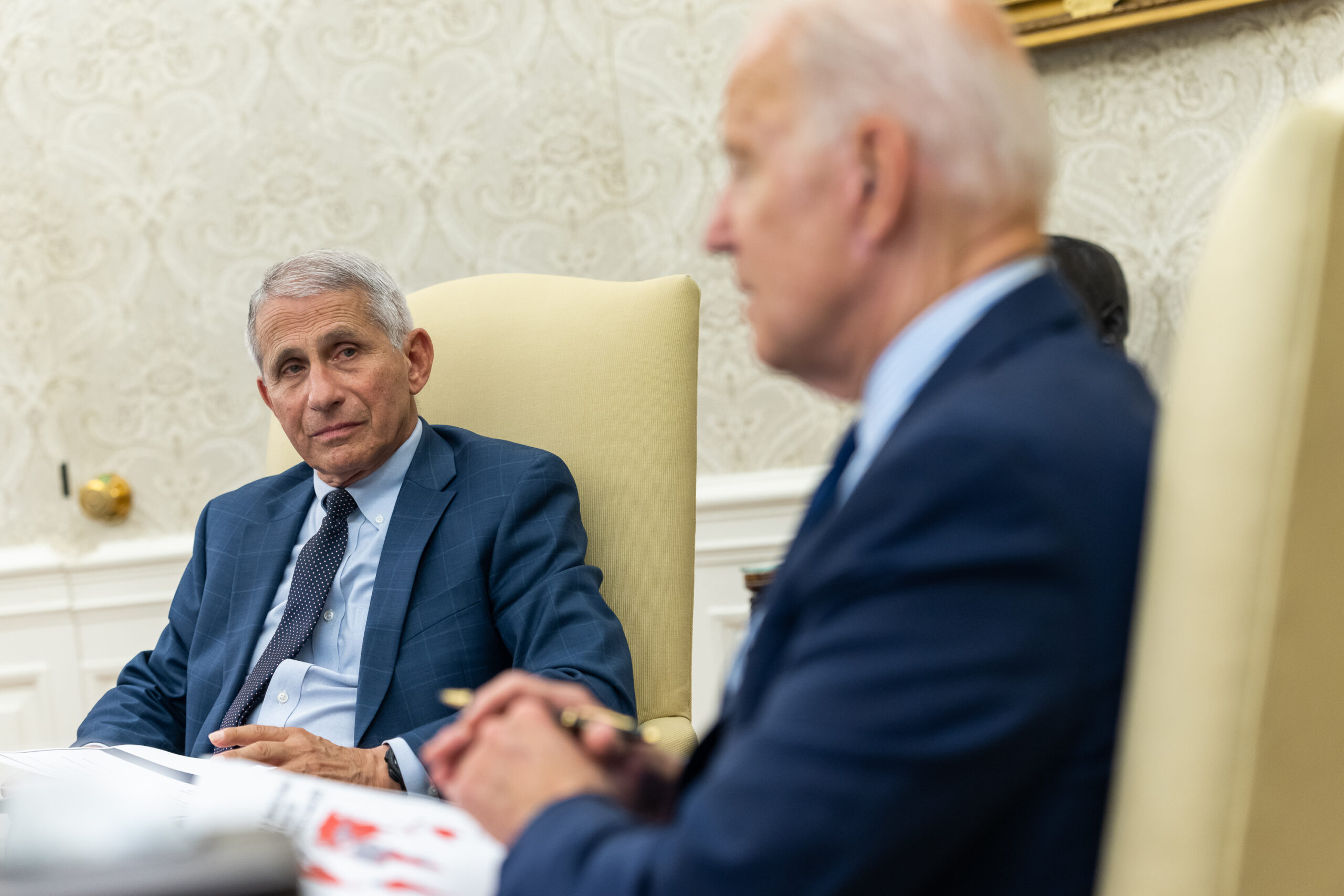
The White House, Public domain, via Wikimedia Commons
It is easy to forget just how different public opinion looked during the height of the Delta wave.
In August 2021, Gallup found that 52% of U.S. workers favored employers requiring COVID vaccination, while 38% opposed such requirements. A month later, the KFF COVID-19 Vaccine Monitor found that 58% of Americans supported the Biden administration’s plan requiring workers at larger employers to be vaccinated or undergo weekly testing.
The federal proposal eventually became an OSHA rule covering businesses with at least 100 employees. It did not simply require every worker to be vaccinated. Employers could instead adopt a policy requiring unvaccinated workers to undergo regular testing and wear face coverings.
Then the courts intervened.
On January 13, 2022, the Supreme Court blocked the OSHA rule for large private employers, ruling that the agency had exceeded the authority Congress had given it. At the same time, the court allowed a separate vaccination requirement for workers at federally funded healthcare facilities to continue.
That decision became one of the moments opponents of mandates would repeatedly point back to.
Some people really did lose their jobs
The human consequences were not imaginary.
KFF found in October 2021 that 5% of unvaccinated workers surveyed said they had already left a job because their employer required vaccination. That represented about 1% of American adults overall. The same poll found that 24% of adults said they personally knew somebody who had left a job over a vaccine requirement.
New York City provides an even clearer example.
The city eventually terminated roughly 1,780 municipal employees who failed to comply with its vaccination requirement. When Mayor Eric Adams announced the mandate would end in February 2023, those former employees were told they could apply again, although they would not automatically regain their positions. The private-sector vaccination requirement had already ended in November 2022.
Federal requirements also disappeared. The Biden administration ended COVID vaccination requirements for federal employees, federal contractors and international air travelers on May 11, 2023, as the federal public health emergency came to a close.
For people who lost careers, friendships or family relationships during that period, the disappearance of those rules did not necessarily erase the resentment.
That emotional territory is where Churchill’s post lands.
But “the unvaccinated were right” goes further than the evidence
There is another part of the record that matters.
COVID vaccines did not create an impenetrable wall against infection. Breakthrough cases occurred, and the rise of Delta and later Omicron weakened protection against becoming infected. By August 2021, the CDC was already warning that vaccinated people who experienced breakthrough infections could transmit the virus to others.
But that does not mean vaccination accomplished nothing.
CDC surveillance during the Delta period found that unvaccinated adults had substantially higher rates of infection, hospitalization and death than fully vaccinated adults. Protection against infection weakened as Delta became dominant, while protection against severe outcomes remained much stronger.
During the Omicron wave, the gap in protection against infection narrowed further. Yet in early 2022 the CDC reported hospitalization rates were about 12 times higher among unvaccinated adults than among adults who had received booster or additional doses. A separate analysis found three-dose mRNA vaccination provided strong protection against COVID-associated ventilation or death during Omicron.
So two realities can exist at once.
People can reasonably argue that some mandate policies were too broad, unnecessarily punitive or legally questionable. The Supreme Court itself blocked the sweeping OSHA workplace rule. People who lost their jobs because of local or employer requirements also have a documented grievance.
But saying those events prove COVID vaccines had no medical benefit requires ignoring a large body of evidence showing reduced risk of severe illness.
Why this fight refuses to disappear
The pandemic is now being examined through the rearview mirror, and that has given old arguments new life.
A House select subcommittee spent two years investigating the U.S. pandemic response, holding 25 hearings or meetings and reviewing more than one million pages of documents before releasing its final report in 2024.
The political fight is still active in 2026. On August 6, a Republican-led Senate committee voted along party lines to hold former NIAID director Anthony Fauci in contempt after he declined to answer questions during a pandemic-related investigation and invoked the Fifth Amendment. Fauci and his attorney have described the effort as politically motivated.
That is the environment in which Churchill’s old post is finding a new audience.
For supporters, it feels like overdue recognition of people who believe they were mocked, excluded and punished for refusing a medical procedure.
For critics, the grievance is real but the slogan is too sweeping. Being right that mandates could become coercive is not the same thing as proving vaccination offered no protection.
Years later, that difference remains small enough to fit inside one sentence and large enough to keep the entire pandemic argument alive.