Freddie Prinze (Freddie Prinze) became a household name before he had truly lived as an adult. At the height of his success, he was not just a comedian or sitcom actor; he was a symbol of rapid fame in American television. But behind the laughter, the applause, and the bright studio lights, a far darker reality was unfolding.
His death in January 1977 in Los Angeles, California, at only 22 years old, did not simply end a life. It reframed everything he had achieved. Suddenly, his comedy career, his breakout role on Chico and the Man, and his historic rise through late-night television were no longer just milestones. They became parts of a story defined by pressure, mental strain, and the crushing weight of sudden celebrity.
A Star Created Too Quickly for Its Own Safety
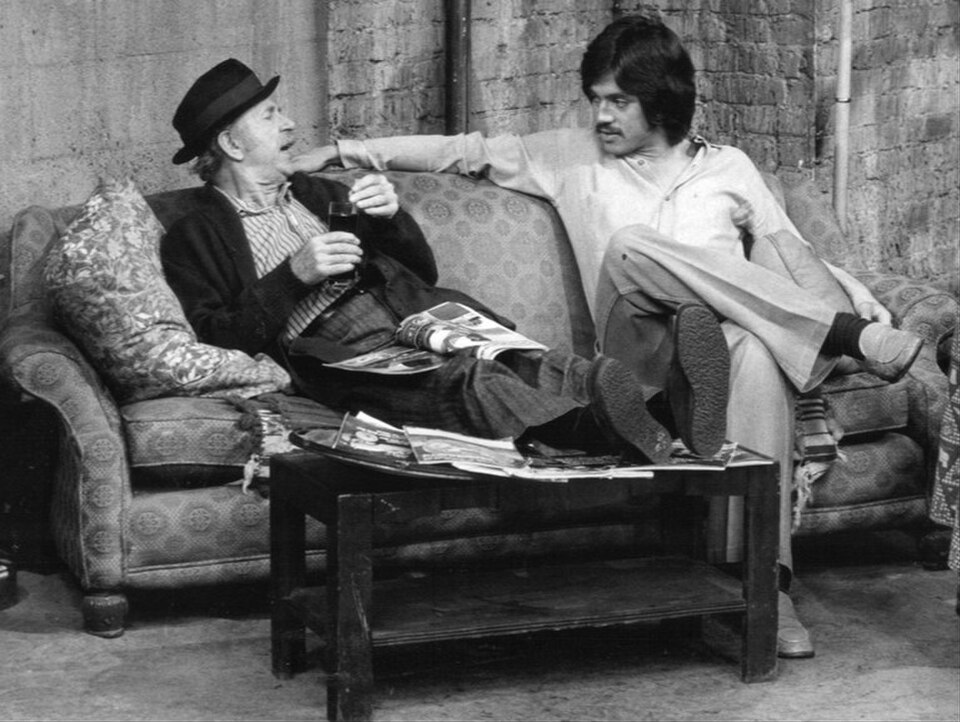
Prinze’s ascent was unusually fast, even by entertainment standards. Within a short span of time, he moved from small comedy clubs in New York to national recognition after appearances on major television stages. That speed, which once looked like pure success, would later be re-examined as something more complicated.
We often celebrate rapid fame as destiny. In Prinze’s case, it became instability disguised as opportunity.
He was still a teenager when the entertainment industry began treating him as a fully formed star. By his early twenties, he was carrying the expectations of network executives, writers, producers, audiences, and media outlets, all while still developing his own identity as a young man.
The structure around him rewarded performance, not pause. It demanded output, not recovery. And like many young entertainers of his era, he entered a system that had not yet learned how to protect the people it elevated.
Chico and the Man: The Weight of Being “The First”
When Prinze starred in Chico and the Man, he became one of the first Latino actors to lead a successful American prime-time sitcom. That achievement should have been a stabilizing milestone. Instead, it added another layer of pressure.
His character, Chico Rodriguez, was written as energetic, intelligent, and emotionally open. Audiences connected with him instantly. The role demanded constant charm, constant humor, and constant emotional accessibility. Off-screen, Prinze was expected to maintain a similar level of presence in interviews, press tours, and public appearances.
This overlap between character and performer is where many young actors begin to fracture. When the audience cannot separate the role from the person, the performer becomes trapped inside an expectation loop: always funny, always available, always “on.”
For Prinze, that loop never slowed down.
The Hidden Cost of Sudden Celebrity
As Prinze’s fame expanded, so did the emotional distance between his public image and private reality. Industry insiders later described him as increasingly overwhelmed by schedules, expectations, and personal pressures that were not visible to audiences.
In the 1970s, mental health support within the entertainment industry was minimal. Success was treated as proof of stability. Struggle was treated as a personal flaw rather than a systemic issue. Young performers were expected to adapt quickly or risk being replaced.
Prinze did not have the luxury of gradual adjustment. He had no long transition period between obscurity and stardom. There was no buffer between club performances and national fame. The leap was immediate and irreversible.
The Final Months: Pressure Without Pause
In the months leading up to his death, Prinze’s life was marked by increasing strain. He continued working, performing, and appearing in public while privately dealing with emotional distress that those around him struggled to fully contain.
The entertainment system around him still viewed productivity as proof of wellbeing. If he showed up, he was considered fine. If he worked, he was considered stable. That assumption proved devastatingly incomplete.
On January 29, 1977, Freddie Prinze died by suicide in Los Angeles, California. The news shocked the entertainment world, not because he was struggling in secret, but because the scale of that struggle had never been fully visible to the audience that loved him.
Aftermath: When Laughter Turned Into Silence
The aftermath of Prince’s death exposed a harsh truth about fame: audiences often do not see the cost behind the performance until it is too late.
For viewers of Chico and the Man, the laughter he brought into their homes suddenly carried a different emotional weight. Episodes that once felt light and entertaining became reminders of a life that ended far too early.
Within the industry, his death forced uncomfortable questions that were rarely asked at the time:
How quickly is too quickly for fame?
What responsibility does an industry have to young performers it elevates overnight?
And how many other rising stars were silently carrying similar pressures?
These questions did not produce immediate reform. But they did leave a permanent mark on how Prince is remembered.
A Legacy Defined by What Was Lost, Not Only What Was Achieved
Freddie Prinze’s legacy is often discussed in terms of his achievements: his breakthrough comedy, his historic sitcom role, and his rapid rise in television. But the emotional center of his story lies in absence.
We remember him not only for what he accomplished, but for what he did not get the chance to become.
There is a haunting duality in his legacy. On one hand, he helped redefine what was possible for Latino representation on American television. On the other hand, he became one of the earliest high-profile examples of how sudden fame without support structures can collapse inward.
His story is not only about talent. It is about timing. Not only about success. But about sustainability.
The Pattern His Life Revealed
Prinze’s life continues to resonate because it reflects a pattern that still exists in modern entertainment: rapid visibility followed by emotional strain.
Today’s platforms have changed the speed, but not the structure. Viral fame can still arrive faster than emotional adjustment. Public expectation can still exceed private capacity. And young performers can still find themselves navigating systems that reward output over wellbeing.
In that sense, Prinze’s story is not confined to the past. It is a warning embedded in the history of entertainment itself.
The Lasting Image
The most enduring image of Freddie Prinze is not his final moment, nor his final months. It is the contrast between his on-screen brightness and the quiet collapse that followed behind the scenes.
He remains a figure suspended between laughter and loss, someone whose presence reshaped television, and whose absence forced a difficult conversation the industry is still having in different forms today.