A Dallas shooting at Richland Trace Condominium has once again placed attention on how quickly violence can spill into everyday residential environments. A woman lost her life after being struck in the courtyard of a northeast Dallas condominium complex during a late-evening exchange of gunfire. The incident unfolded in a space designed for routine movement, not sudden chaos, and it has left residents and observers confronting difficult questions about modern urban safety.
The Dallas shooting at Richland Trace Condominium matters not only because of the loss of life but also because of where it happened. Courtyards, parking lots, and shared walkways form the backbone of residential living in dense neighborhoods. When violence enters these spaces, it challenges assumptions about safety that many people rely on every day. The event also reflects broader concerns about how quickly disputes can escalate in environments where people live in close proximity.
Authorities believe the woman was an innocent bystander caught in crossfire between individuals who fled the scene. She was not the intended target, according to early police findings. That detail shifts the focus from a targeted act to a wider breakdown of control in a shared environment. It also raises a difficult question that communities often struggle with after similar incidents: how does violence move from conflict to collateral harm so quickly?
A Quiet Courtyard Interrupted by Sudden Violence
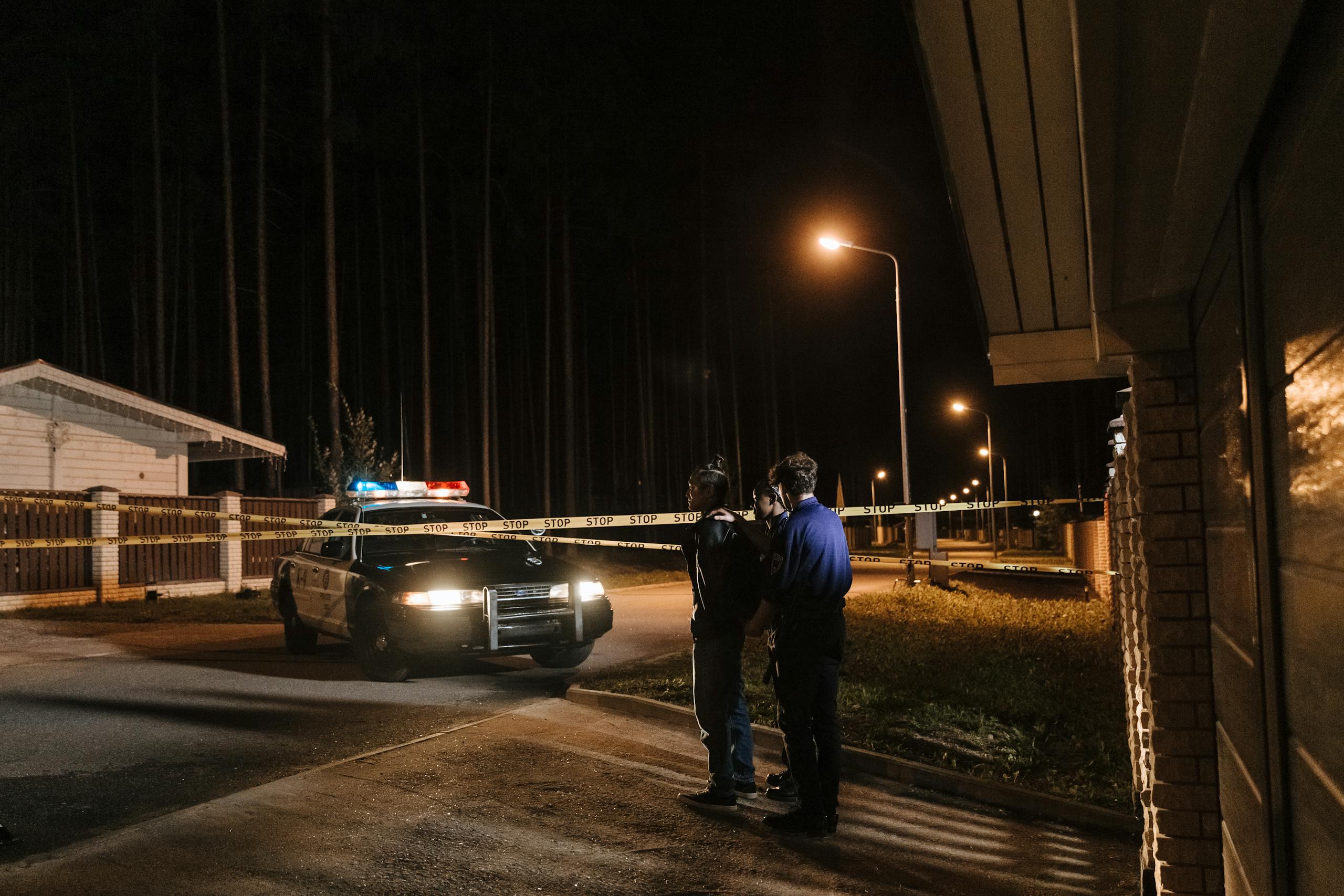
The courtyard at the center of the Dallas shooting at Richland Trace Condominium represents a familiar feature of residential design. These spaces often serve as transitional areas where residents walk between units, gather briefly outdoors, or move through parking areas. On the night of the incident, that ordinary function was disrupted by gunfire that transformed a shared space into a crime scene.
Police responded after reports of shots being fired around 9 p.m. in the 9800 block of Walnut Street. Officers arrived to find a woman suffering from a gunshot wound inside the courtyard area. Emergency responders transported her to a nearby hospital, where she later died. The sequence unfolded quickly, leaving little time for witnesses or residents to fully understand what had occurred.
The immediate aftermath revealed more than personal tragedy. Bullets struck parts of the building and damaged at least two vehicles on the property. That detail highlights how gunfire in residential spaces rarely stays contained. Even when the intended targets are unclear, the environment itself becomes part of the impact zone.
Crossfire in Dense Housing and the Risks of Shared Space
The Dallas shooting at Richland Trace Condominium reflects a broader reality in urban residential environments where density increases exposure to unpredictable conflict. In apartment and condominium communities, residents often share courtyards, stairwells, and parking lots. These areas are open enough to encourage interaction but exposed enough to allow danger to spread quickly once violence begins.
Crossfire incidents present a particular challenge because they develop without warning. Unlike targeted confrontations, they unfold in motion, often involving multiple individuals and shifting positions. When gunfire begins in a shared space, anyone nearby can become vulnerable within seconds. That is what makes these events especially difficult to prevent through personal awareness alone.
Historically, urban planners and public safety officials have emphasized the importance of “defensible space,” a concept that links environmental design with reduced crime risk. However, modern residential complexes balance accessibility, density, and aesthetics, which can sometimes limit the need for physical barriers. The result is a setting in which everyday life and sudden disruption are closer together than many residents realize.
When Routine Spaces Become Points of Exposure
In the aftermath of the Dallas shooting at Richland Trace Condominium, attention naturally turns to how familiar spaces can become sites of vulnerability. Courtyards are meant to provide a sense of openness and community within residential developments. Yet that same openness can become a point of exposure during moments of conflict.
Residents often pass through these areas without considering risk. They move between cars and homes, assume that visibility equals safety, and rely on others’ presence to feel secure. When gunfire interrupts that pattern, it exposes how quickly perception can shift. A place that feels routine can become unpredictable in seconds.
This shift is not unique to Dallas. Across many U.S. cities, residential shootings that occur in shared spaces tend to leave a stronger psychological impact than those in isolated locations. The reason is simple. People identify with the setting. They recognize the layout, the walkways, and the everyday routines that are suddenly disrupted.
Investigating Movement, Not Just Moments
The Dallas shooting at Richland Trace Condominium also draws attention to how investigators reconstruct events that happen in motion. While details remain limited, police believe the shooting involved at least two individuals exchanging gunfire before fleeing the scene. The woman who died was not believed to be part of the confrontation.
Understanding incidents like this often involves examining movement patterns rather than static positions. Investigators look at how individuals entered and exited the area, how gunfire traveled through space, and how bystanders were positioned relative to the exchange. Damage to vehicles and buildings can help map those movements without relying solely on witness memory.
In residential environments, this type of analysis becomes even more complex. Shared spaces have multiple entry points and overlapping sightlines. Courtyards connect to hallways, parking areas, and nearby streets. When suspects flee quickly, the environment itself becomes a puzzle of trajectories and timing rather than a single fixed scene.
The Human Cost Behind a Familiar Address
The Dallas shooting at Richland Trace Condominium is ultimately defined by loss. A woman who was not involved in the confrontation lost her life in a place meant for everyday living. That contrast between routine and tragedy is what gives the incident its lasting weight.
For residents in similar communities, the emotional impact extends beyond the immediate event. Familiar spaces take on new meaning after violence occurs. A courtyard becomes something observed more cautiously. A parking lot feels less routine. These shifts often persist long after police tape is removed and investigations move forward.
There is also a broader social dimension to consider. Urban residential communities depend on a baseline expectation of safety in shared areas. When that expectation is disrupted, even temporarily, it can alter how residents move through their environment. It also influences how communities discuss safety, security measures, and the balance between openness and protection.
Patterns of Urban Violence and Changing Residential Landscapes
The Dallas shooting at Richland Trace Condominium fits into a wider pattern seen in many metropolitan areas where residential density has increased. As cities expand upward and outward, more people share limited ground-level space. That includes parking structures, internal courtyards, and mixed-use pathways that blur the public-private boundary.
This blending of spaces has benefits. It supports community interaction and efficient land use. However, it also creates environments where incidents can escalate quickly once they begin. Violence does not need large public arenas to have a widespread impact. It only needs proximity.
In recent years, law enforcement agencies in multiple cities have emphasized rapid-response strategies for residential complexes. The goal is not only to address crime after it occurs but to reduce the time between incident and intervention. Still, as this case shows, even a fast response cannot undo the consequences of a few critical moments.
A Community Left With Unanswered Questions
As of the latest updates, police have not released the identity of the victim in the Dallas shooting at Richland Trace Condominium, and no suspects have been taken into custody. Investigators continue to gather evidence, review witness accounts, and analyze physical damage from the scene.
Unanswered questions remain at the center of the case. What triggered the confrontation? How many individuals were involved? Whether surveillance footage captured key moments. These details will likely shape the official understanding of what happened, but they do not change the immediate reality faced by residents.
Communities affected by sudden violence often move through a complex emotional space. There is grief for the victim, concern for safety, and uncertainty about what comes next. These feelings do not resolve quickly, especially when the incident occurs in a place that is part of daily life.
The Dallas shooting at Richland Trace Condominium leaves behind more than a police investigation. It leaves a residential space marked by an event that disrupted ordinary life in seconds. It also raises a broader reflection about how closely modern living spaces bring people together, and how that closeness can magnify both connection and vulnerability in ways that are not always visible until a moment of crisis arrives.
In the end, the most difficult question may not be what happened, but how everyday spaces can remain safe when conflict breaks through without warning.