A head-on collision in Trimble County, Kentucky, on Highway 421 North in Milton has left a 39-year-old man dead and three children seriously injured, turning a routine weekday morning into a regional emergency that stretched across state lines and strained multiple medical systems. The crash, which occurred near Milton Hill, has drawn renewed attention to the dangers of two-lane highways that carry heavy commuter traffic between communities in Indiana and Kentucky.
The incident involved a Volvo sedan that crossed the center line and struck an oncoming Ford Ranger. Authorities confirmed that David Logan of Lawrenceburg, Indiana, died at the scene while three children inside the Volvo were airlifted to Louisville hospitals. The driver of the Volvo also suffered serious injuries and was transported for emergency care.
Beyond the immediate tragedy, the crash highlights broader concerns about the Ohio River commuter corridor, where rural highways serve as critical arteries for cross-state travel. These roads often operate under conditions that combine high mobility demand with limited physical separation between opposing lanes.
A Morning Drive That Collapsed Into a Multi-County Emergency
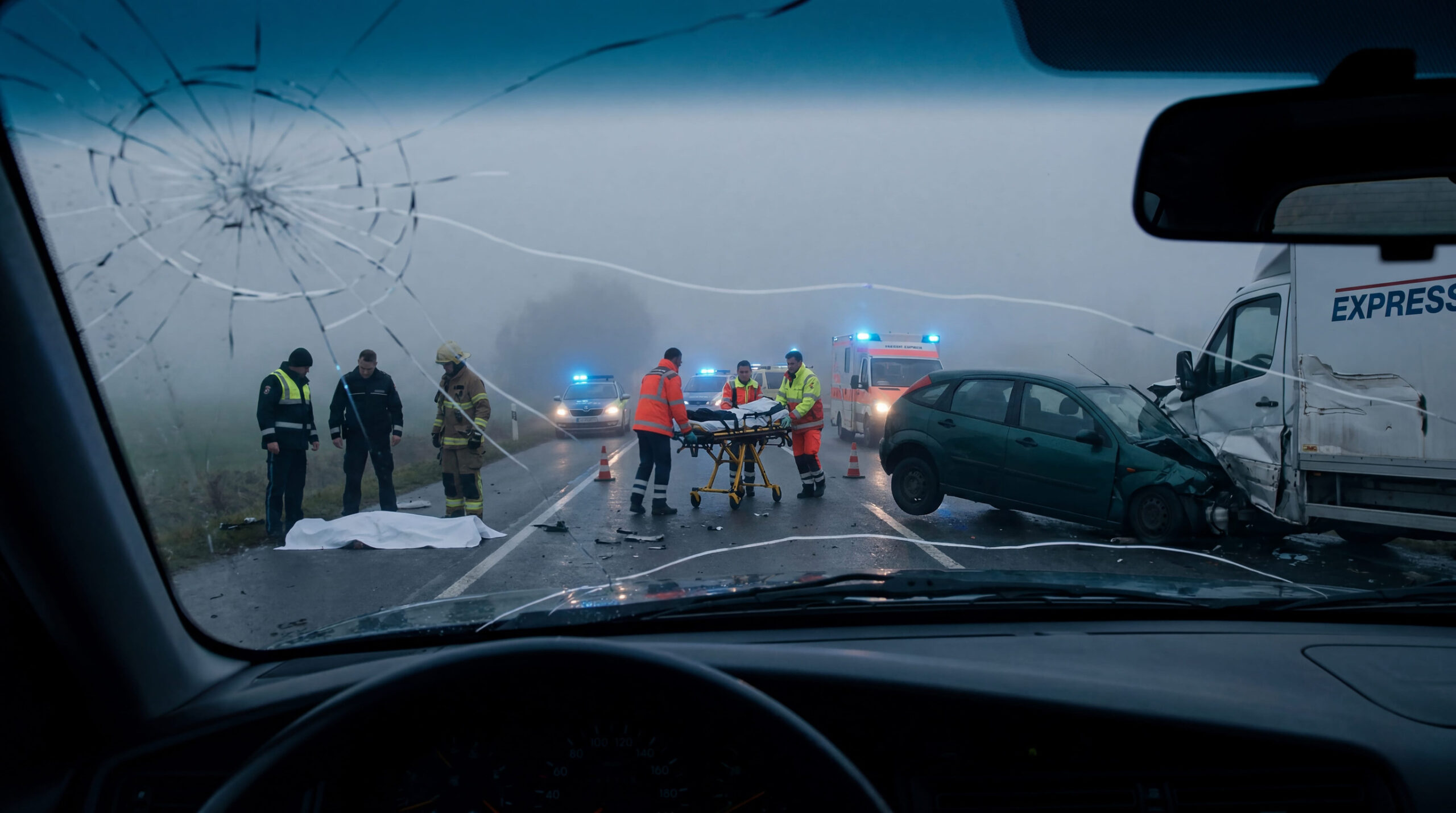
The collision occurred around 9:45 a.m. on US-421 North in Milton, a roadway that connects small Kentucky towns with Indiana communities across the Ohio River. Traffic at this hour typically reflects a blend of commuter movement, local errands, and school-related travel. Within seconds, that routine pattern collapsed into a life-threatening emergency.
Kentucky State Police reported that the Volvo sedan crossed left of center before impact. The Ford Ranger, driven by David Logan, was traveling in the opposite direction when the two vehicles collided head-on. The force of the crash proved fatal for Logan, who was pronounced dead at the scene.
Emergency response units arrived quickly, but the severity of the crash required immediate escalation. Helicopters were dispatched to transport the injured to Louisville trauma centers. Roads were closed for hours as investigators documented the scene and cleared debris from the highway.
The speed of the transformation from normal traffic flow to emergency shutdown reflects a broader reality of rural highway systems. On roads like US-421, there is little buffer between everyday driving and full-scale crisis response.
When a Split-Second Decision Becomes a Fatal Trajectory
Investigators noted that the Volvo crossed the center line, a movement often associated with a split-second lane deviation. On two-lane highways, this type of drift leaves almost no recovery space once a vehicle enters opposing traffic.
US-421 in Trimble County lacks a physical median barrier. That design means opposing vehicles travel within close proximity, separated only by painted lines. When one vehicle leaves its lane, the opposing driver often has less than two seconds to react, depending on speed and visibility.
Crash data from similar rural corridors across the United States consistently show that head-on collisions account for a disproportionate share of fatal outcomes. Transportation studies by national safety agencies have long identified lane-departure crashes as one of the leading causes of roadway deaths, especially on undivided highways.
In this case, authorities have not attributed a final cause. However, the mechanics of a center-line crossover remain central to the ongoing reconstruction. Whether due to distraction, fatigue, medical emergency, or vehicle error, the result demonstrates how quickly control can be lost on narrow rural routes.
The broader implication is not limited to a single driver or a single moment. It reflects a systemic vulnerability in roadway environments where small errors can escalate into irreversible outcomes.
Milton Hill and the Geography of Risk on US-421
The crash occurred near Milton Hill, a stretch of roadway that introduces elevation changes and limited sightlines. While not officially classified as a high-crash corridor in public reports, segments like this often carry increased risk due to topography and driver perception challenges.
Rural highways across the Ohio River region share similar characteristics. They combine curves, elevation shifts, and intermittent passing opportunities with steady commuter demand. This combination creates conditions in which attention must remain constant, even on familiar routes.
Local traffic patterns also shape risk exposure. US-421 serves not only local residents but also cross-state commuters traveling between Indiana and Kentucky. That mix introduces variation in speed, vehicle type, and driving behavior, which can complicate reaction time during unexpected events.
Transportation historians often note that many rural highway systems were designed for lower traffic volumes than they carry today. As suburban expansion and regional commuting have increased, these roads have absorbed demand without always receiving structural upgrades such as medians or expanded lanes.
In this context, Milton Hill becomes more than a location. It represents a type of roadway environment where geography and traffic volume intersect in ways that demand heightened caution.
A Regional Corridor Where State Lines Disappear in Daily Travel
The Ohio River corridor plays a central role in understanding the broader significance of this crash. The victim lived in Lawrenceburg, Indiana. The Volvo driver was from Jeffersonville, Indiana. The crash occurred in Kentucky. The injured were transported to Louisville hospitals.
This distribution reflects a regional travel ecosystem where state boundaries hold little practical meaning for daily movement. Workers, families, and students routinely cross between jurisdictions, relying on a shared network of roads that function as a unified system.
In emergency terms, this creates a multi-jurisdiction response environment. Law enforcement, medical services, and hospital networks must coordinate across state lines within minutes. In this case, Kentucky State Police, Trimble County responders, and Louisville trauma centers all became part of a single response chain.
Sociologically, such corridors reflect modern mobility patterns in mid-sized American regions. Communities are no longer isolated units but interconnected zones shaped by commuting routes. When a crash occurs, its impact spreads quickly across this network.
The result is that a single roadway incident becomes a shared regional event, affecting multiple communities simultaneously.
The Emergency Response Chain From Rural Road to Trauma Center
Once the crash occurred, emergency services activated a coordinated response that extended from rural Trimble County into Louisville’s advanced medical system. First responders secured the scene and assessed injuries before requesting air medical support.
Helicopter transport became necessary due to the severity of injuries and the distance to specialized care. The children were flown to Norton Children’s Hospital, a leading pediatric trauma center in the region. The adult driver was transported to the University of Louisville Hospital.
This chain of response reflects how rural trauma systems operate. Smaller counties rely on a network of regional hospitals to handle severe injuries that exceed local treatment capacity. Air transport bridges the gap between roadside emergencies and specialized care units.
Medical coordination of this type is highly structured. Decisions about airlift deployment depend on injury severity, transport time, and hospital availability. In cases involving children, pediatric trauma protocols prioritize rapid transfer to specialized facilities.
The efficiency of this system often determines survival outcomes in severe crashes. It also illustrates how rural infrastructure depends heavily on centralized urban medical centers.
The Human Impact Behind Highway 421’s Statistical Reality
While crash reports often focus on mechanics and logistics, the human impact remains central. One life ended at the scene. Three children sustained serious injuries and were rushed into emergency care. Families across two states were suddenly drawn into crisis.
Highway 421 is not an isolated roadway. It forms part of a larger network used daily by commuters and families. When a fatal crash occurs on such a route, it disrupts not only traffic patterns but also community perception of safety.
Residents in rural and semi-rural regions often develop familiarity with these roads. That familiarity can create a sense of predictability. However, crash patterns across similar highways show that familiarity does not reduce risk when environmental and structural factors remain unchanged.
The emotional weight of such incidents extends beyond immediate families. First responders, hospital staff, and local communities also absorb the impact. Repeated exposure to serious crashes can shape how regions view their own infrastructure and mobility systems.
Transportation Trends and the Persistent Risk of Undivided Highways
National transportation data consistently shows that undivided rural highways account for a significant share of fatal head-on collisions in the United States. These roads often lack barriers, have limited lighting, and experience variable driver speeds.
US-421 reflects many of these characteristics. While it remains a vital regional route, its design places responsibility heavily on driver attention and consistency. When those conditions break down, outcomes can be severe.
Historical comparisons show that improvements such as centerline rumble strips and widened shoulders have reduced some crash risks in similar corridors. However, upgrades often occur incrementally, depending on funding and traffic assessments.
This creates a gap between modern traffic demands and legacy roadway design. The Trimble County crash sits within that broader national pattern of infrastructure strain meeting increasing mobility.
A Roadway Event That Extends Beyond One County Line
As investigators continue reconstructing the sequence of events, the focus remains on understanding how the Volvo crossed the center line and what conditions contributed to the crash. That process will take time and careful analysis.
Yet even at this stage, the broader meaning of the incident is already visible. It reflects the intersection of human vulnerability, regional mobility, and infrastructure limitations along a shared corridor spanning multiple states.
For communities along US-421 and the wider Ohio River region, the crash is not only a tragic event but also a reminder of how closely connected everyday travel has become. One moment of lane departure can ripple outward across families, hospitals, and entire jurisdictions.
In the end, the road continues to carry traffic, but the impact of this Tuesday morning remains embedded in its stretch through Milton. It raises a question that lingers beyond the crash scene itself: how many moments of normal travel depend on conditions that leave almost no room for error?
Final Thought
On highways that connect states, towns, and daily routines, safety is often assumed rather than guaranteed. This crash on US-421 in Trimble County shows how quickly that assumption can collapse, leaving behind a landscape where movement, consequence, and human fragility meet in a single point on the road.