A lovely invitation can still leave a few practical questions unanswered. Take the buffet: the FDA limits perishables left at room temperature to 2 hours, dropping to 1 hour above 90°F unless the food is properly held hot or cold.
That’s a reason to check the clock, not criticize the cook. Let the evening have room for both good conversation and clear answers.
Buffet Dishes Left Out Too Long
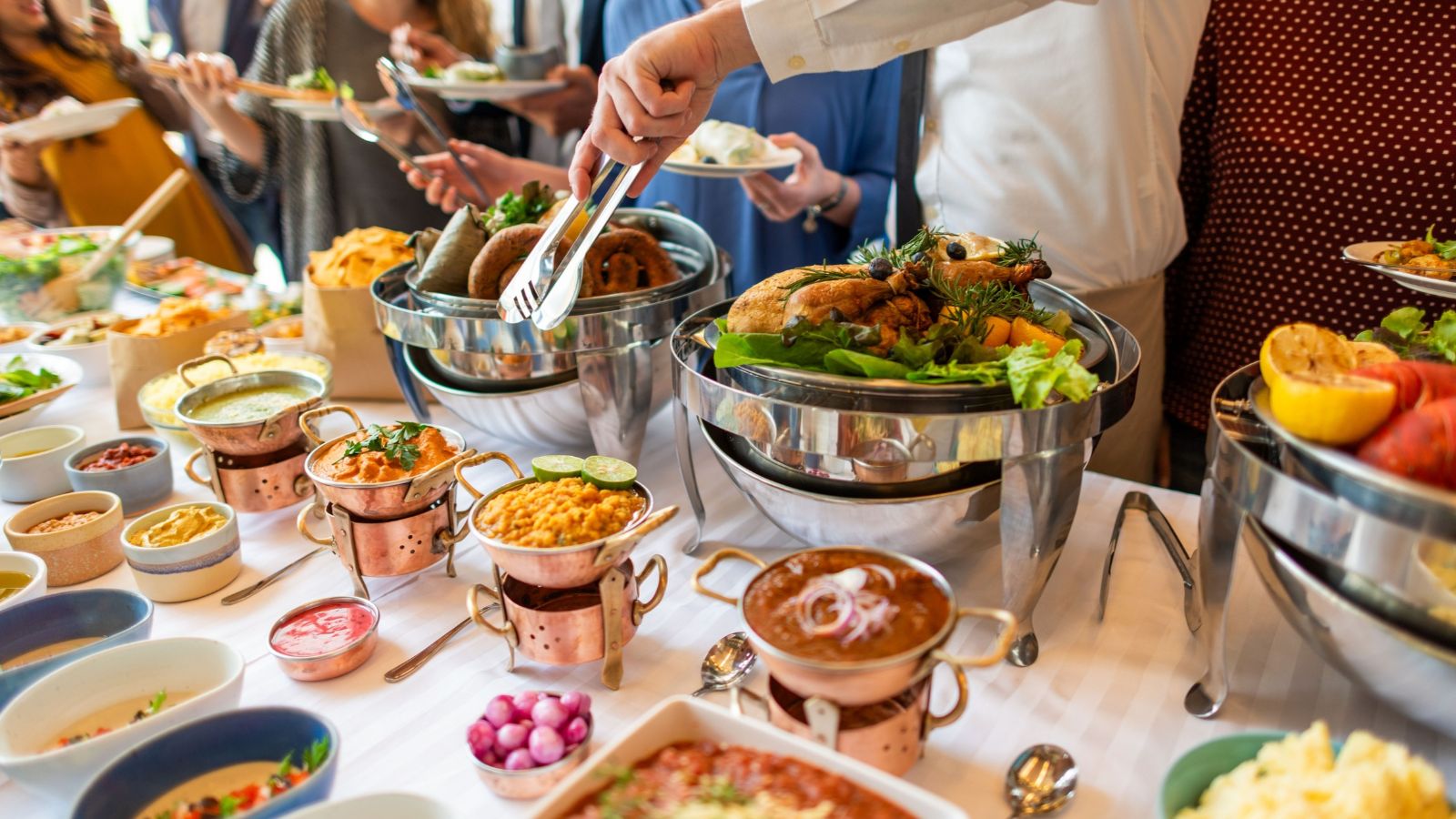
Before taking another helping, ask when the platter came out. FDA guidance calls for hot food to stay at 140°F or warmer and cold food at 40°F or colder; meat platters and egg dishes don’t get a party exemption.
Food properly held on ice or in an adequate warmer is different from food simply sitting out. If you know a dish has exceeded the holding window, pass on it.
Ordinary Raw Cookie Dough or Cake Batter
Save your enthusiasm for the finished cookies. The FDA explains that most flour is raw, so removing eggs doesn’t turn ordinary uncooked dough into an edible-dough product.
CDC guidance distinguishes baked goods and dough specifically formulated and labeled for eating raw from standard uncooked mixtures. Ask which version you’re being offered, then enjoy the intended finished product; the mixing bowl doesn’t need a courtesy taste.
Raw-Egg Mousse, Mayonnaise or Dressings
A homemade mousse deserves a preparation question, not an automatic rejection. The FDA lists mousse, Caesar dressing, custards, ice cream, and eggnog among recipes that may contain raw or lightly cooked eggs, and recommends cooked mixtures, pasteurized eggs, or appropriate prepared alternatives.
Labels matter, so ask what the recipe used rather than guessing from its name. A quiet kitchen conversation can keep the attention on the meal.
Chicken Without a Verified Cooking Temperature
Let the thermometer settle this one. CDC guidance specifies 165°F for all poultry, including ground chicken and turkey, while the FDA cautions that color and texture cannot reliably establish whether cooking requirements were met.
Ask whether the temperature was checked rather than inspecting a pink patch or judging the juices. If the poultry is known to be undercooked, decline it; don’t base the decision on appearance alone.
Related: These 8 nostalgic meals vanished because they are too much work
Ground-Beef Burgers Cooked Like Steaks
A burger and a steak don’t share the same cooking benchmark. The CDC recommends 160°F for ground meat, including beef and pork, compared with 145°F followed by a 3-minute rest for whole cuts.
A preference for rare steak therefore doesn’t answer the question about a hamburger. Ask about the burger’s measured temperature, and choose one that meets the ground-meat recommendation rather than carrying steak expectations over to it.
Raw Oysters or Clams
Keep the question focused on preparation. Virginia’s Department of Health distinguishes raw or undercooked oysters and clams from thoroughly cooked shellfish, and CDC guidance recommends properly cooked seafood as an alternative.
That doesn’t make oysters an inappropriate dinner-party dish or justify assumptions about the host’s kitchen. If you want cooked shellfish, say so before serving and decline the raw offering without turning it into a table-wide debate.
Raw or Lightly Cooked Sprouts
Even a garnish deserves a clear description. The CDC specifically names alfalfa and bean sprouts and recommends cooking sprouts until steaming hot; rinsing and cooking are different preparation steps. Ask whether the sprouts are raw, lightly cooked, or thoroughly cooked, rather than treating every salad the same. If the preparation doesn’t match what you need, choose another dish and keep the conversation focused on that specific ingredient.
Unpasteurized Milk or Soft Cheese
Read the ingredient information behind the pretty presentation. CDC guidance favors pasteurized milk and identifies soft cheese clearly labeled as made with pasteurized milk among its recommended options.
Ask to see the original packaging or confirm what went into a dairy-based dish; “farm-fresh” doesn’t answer that question. Keep the distinction specific, because neither soft cheese nor homemade preparation deserves a blanket dismissal.
Home-Canned Vegetables With Uncertain Processing
The important story is how the jar was processed. CDC guidance calls for pressure canning low-acid foods using current, tested instructions, and advises against eating home-canned food when the processing cannot be confirmed.
A sealed lid doesn’t provide that history, and a small taste isn’t a verification method. Ask about the equipment and instructions; if the answer remains uncertain, leave the jar off your plate without condemning home canning altogether.
Dishes With Unconfirmed Ingredients or Shared Utensils
Ingredient conversations belong before the first serving. In Michigan Medicine’s reporting, Nancy Polmear-Swendris explains why you should consider serving utensils alongside ingredients and notes that gluten-free baking may use almond flour.
Discuss your allergy in advance, confirm the ingredients and handling arrangements, and bring an agreed alternative when needed. If those details remain unresolved, you don’t owe anyone a taste to prove your appreciation.
Emily Post recommends offering to bring a dish that meets your needs, while Michigan Medicine encourages hosts and guests to plan together. You might say, in your own words: “Thank you for making this. I need to pass, but I’m glad we planned something I can enjoy.” Keep preparation questions private, and let gratitude carry the conversation without requiring a bite.