Being secretary of state is not the sort of job where anyone gets to enjoy a quiet Monday. One morning involves nuclear powers, the afternoon brings a trade dispute, and the evening may end with an urgent call about a war halfway across the globe.
Marco Rubio has held that pressure-cooker position since January 2025, after the Senate confirmed him by an unusually bipartisan 99-0 vote. He has since become one of President Donald Trump’s most trusted foreign-policy officials, regularly defending an “America First” approach built around security, economic competition and hard-nosed diplomacy.
So, how should Rubio’s performance be rated?
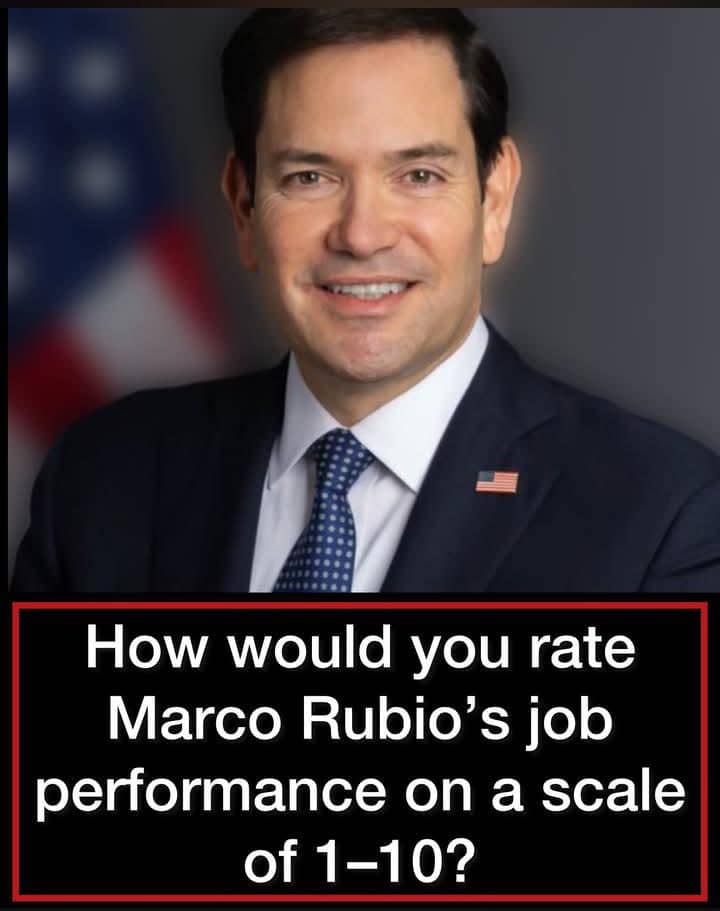
Based on his influence inside the administration, diplomatic activity, public standing and the costs of his department’s overhaul, Rubio currently earns a 7 out of 10. That is not an official score or scientific measurement. It is an editorial assessment of the record available through July 2026.
Rubio has become one of Trump’s most effective operators
Rubio’s strongest asset may be simple but valuable: the president appears to trust him.
Trump has repeatedly praised Rubio in unusually glowing terms. During his 2026 State of the Union address, the president called him “a great secretary of state” and predicted, “I think he’ll go down as the best ever.” Presidential compliments are not proof of successful diplomacy, but they show Rubio has something every secretary of state needs: access to the person making the final decisions.
Rubio also seems comfortable explaining Trump’s foreign policy without sounding as though he is reading instructions handed to him five minutes earlier. He argues that diplomacy, trade, immigration, energy and national security should work together rather than operate as separate government departments.
“We are not here to play social worker. We are here to win,” Rubio told senators while defending his approach to foreign assistance and diplomacy. Supporters hear clarity in that message. Critics hear a warning that humanitarian goals will receive less attention unless they produce an immediate strategic benefit.
Rubio has pointed to ceasefires, security partnerships, critical-mineral agreements and expanded cooperation in the Western Hemisphere as evidence of progress. During June testimony, he described his tenure as a combination of “tremendous successes” and “ongoing and difficult challenges.” Some of those achievements remain administration claims rather than independently settled verdicts, but Rubio has unquestionably maintained an aggressive diplomatic schedule.
His recent appearance at an ASEAN gathering also showed his ability to reassure nervous partners. As Washington pursued talks with China, Rubio promised Asian governments that engagement with Beijing “will never come at the expense of our alliances.” Reuters reported that he also reaffirmed U.S. treaty commitments amid renewed tensions in the South China Sea.
That ability to sound tough without closing every diplomatic door earns Rubio significant points.
The score falls when diplomacy loses its machinery
Rubio’s biggest weakness is not his television performance, speaking ability or grasp of foreign policy. It is what has happened to the institution he runs.
The Trump administration’s restructuring of the State Department and foreign-assistance system has reduced staffing, eliminated programs and sidelined experienced officials. A Reuters investigation found more than 100 ambassadorial positions vacant and described foreign governments increasingly bypassing traditional diplomatic channels in favor of Trump’s personal advisers.
That creates an awkward contradiction. Rubio says he wants the State Department restored to the center of American foreign policy, yet the department has lost employees, institutional knowledge and influence while unofficial negotiators handle some of the administration’s most sensitive assignments.
Senator Jeanne Shaheen, the top Democrat on the Senate Foreign Relations Committee, warned that the retreat from foreign assistance was creating an opening for China. “Beijing is making the case that they are a more reliable partner than the U.S.,” she said during a hearing on Rubio’s reorganization plans.
More than 130 retired diplomats and senior officials also warned that deep personnel cuts could weaken America’s ability to respond to China, Russia and other global threats. Rubio argues that the old system was bloated and inefficient. His critics respond that firing the mechanics is a risky way to make the engine run faster.
Humanitarian consequences have added to those concerns. Shaheen warned Rubio that funding changes could leave millions of food-insecure Ethiopians without assistance, potentially creating what she called a “humanitarian catastrophe.” Rubio deserves room to eliminate waste, but major reforms should be judged by what replaces the discarded programs, not merely by how quickly they disappear.
There are diplomatic strains as well. Relations with Brazil have deteriorated amid disputes over tariffs, elections and alleged U.S. interference. Brazil has delayed approving Trump’s ambassadorial nominee, illustrating how Rubio’s forceful Western Hemisphere strategy can produce cooperation in some capitals and resistance in others.
The final verdict: 7 out of 10

Rubio does not deserve a failing grade. He remains active, informed and closely involved in the administration’s biggest international decisions. A March Rasmussen survey found 47% of likely voters viewed him favorably, compared with 36% who viewed him unfavorably. That is not a direct job-approval poll, but it suggests he has preserved a stronger public image than many prominent political figures.
He also deserves credit for maintaining relationships with allies while serving a president whose unpredictable statements often leave diplomats scrambling for clarification. Rubio frequently acts as translator, negotiator and cleanup crew at the same time.
However, an 8 or 9 would require clearer evidence of durable peace agreements, stronger alliances and a healthier diplomatic workforce. Rubio cannot take full responsibility for every success claimed by the White House while treating every setback as somebody else’s problem.
The fairest score is 7 out of 10. Rubio has proven that he can survive and exercise influence inside Trump’s orbit, which is no small political achievement. The remaining question is whether his diplomacy will create lasting stability or simply produce a fast-moving collection of temporary deals, dramatic announcements and unresolved consequences.