Sen. Bill Cassidy delivered the vote that confirmed Todd Blanche as attorney general. Two days later, he could not say with certainty that Blanche would protect the Constitution once the midterm elections arrive.
The Louisiana Republican appeared on CBS’s Face the Nation on Aug. 9, where host Margaret Brennan pressed him directly. She asked whether he was confident Blanche would uphold the Constitution with the elections approaching, noting that Democrats have suggested he may not. Cassidy did not offer a flat yes.
Cassidy names the anxiety instead of denying it
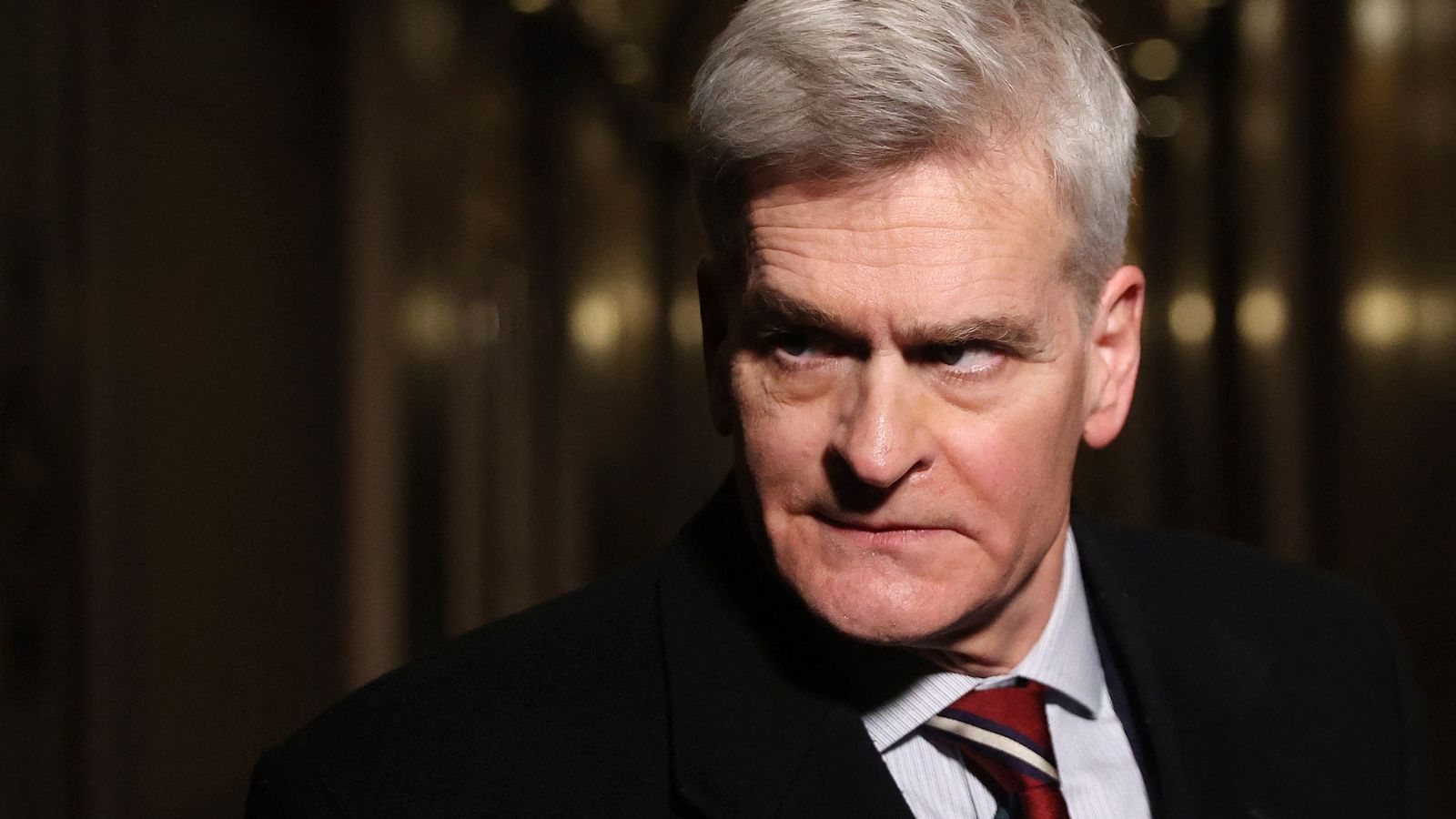
Cassidy’s answer leaned on uncertainty rather than reassurance. ‘There’s always this existential anxiety,’ he told Brennan, before adding that he was as confident as anyone could reasonably be about a future nobody can predict.
That framing echoed the language Cassidy used three days earlier on the Senate floor, when he announced the vote that sealed Blanche’s confirmation. He called the decision a gradation of gray rather than a clean judgment, a distinction that mattered given what his vote made possible.
Blanche needed every Republican vote he could keep. Sens. Susan Collins of Maine and Lisa Murkowski of Alaska had already announced opposition, and with Sen. Mitch McConnell still absent following a hospitalization, a third defection would have sunk the nomination outright. Cassidy became the deciding voice.
A $1.8 billion fund forced the standoff
The nomination stalled for weeks over a settlement Blanche personally negotiated to resolve Donald Trump’s $10 billion lawsuit against the IRS, filed after the leak of his tax returns from his first term. The deal created a nearly $1.8 billion so-called anti-weaponization fund intended to compensate people the administration deemed mistreated by federal law enforcement. That included some convicted in connection with the Jan. 6, 2021, Capitol riot.
Sens. John Cornyn of Texas and Thom Tillis of North Carolina withheld support until Blanche put the fund’s death in writing. He complied on a Sunday night in early August, stating in a signed order that no fund exists.
A second, unsigned document narrowed the separate audit immunity Trump’s settlement granted, limiting it to: Trump himself, his two eldest sons and the Trump Organization rather than a broader circle of relatives and affiliates.
Cornyn’s satisfaction carried weight with Cassidy. He noted that Cornyn had served as Texas attorney general and said it took him a while to get comfortable, but that his eventual comfort mattered. Murkowski was not persuaded. She warned that the administration retains leverage to revive the fund the moment confirmation votes are no longer needed, since Congress loses its bargaining position once Blanche is seated.
The Cassidy Hutchinson thread runs underneath
Cassidy’s unease connects to a specific case. He has voiced concern over a Justice Department investigation into Cassidy Hutchinson, the former White House aide whose testimony shaped the congressional inquiry into Jan. 6. No indictment has been filed, but the possibility sits alongside broader worries about the department pursuing the administration’s political opponents.
In his floor speech, Cassidy acknowledged what he called Blanche’s poor judgment in approving the anti-weaponization fund and exempting the president from IRS audits. He said he remains concerned about episodes of apparent lawfare, adding that both parties have used the Justice Department against political enemies at different points and that it needs to stop.
Political stakes cut both directions for Cassidy
Cassidy lost his Republican primary in May after Trump endorsed a challenger, Rep. Julia Letlow, who went on to win the seat. He leaves the Senate without needing to answer to Louisiana Republican primary voters again, a position that gave him room to break from the White House on other votes this year, including his 2021 vote to convict Trump during the second impeachment trial.
‘This is not a referendum on President Trump,’Cassidy said from the floor, framing his support for Blanche as narrow and specific rather than an endorsement of the administration broadly. He predicted criticism for the vote and got it fast. Former Republican Rep. Adam Kinzinger, who also voted to impeach Trump, publicly panned the speech, and Democratic commentators labeled it capitulation.
Legal scrutiny of the settlement has not ended
The tax immunity question remains contested outside the Senate as well. A federal judge overseeing the original IRS case has described Trump’s lawsuit as an improper act of self-dealing. The union representing IRS employees has separately asked a court to block the audit immunity agreement altogether, arguing it was never lawful regardless of how narrowly Blanche redrew its boundaries.
The Tax Law Center, a nonpartisan legal group that has tracked the settlement since May, has argued that Blanche’s written assurances do nothing to stop the fund’s revival if the administration chooses to pursue it again, and that only congressional action can close the door permanently.
That is the backdrop against which Cassidy’s Sunday answer landed. He confirmed to Blanche that he knew the fund and immunity fights were unresolved in court. He also told a national audience two days later that anxiety about the Constitution during an election year is not something he can talk himself out of, only something he has decided to live with.