Rep. Alexandria Ocasio-Cortez sat across from ABC’s Jonathan Karl on This Week Sunday and did what she has done for nearly a year now. She left the door open on two of the biggest questions in Democratic politics without committing to either one.
Asked whether she would run for president in 2028, the New York Democrat said she is focused on winning the midterms and running for Congress right now. She added that she has not ruled out the possibility and is humbled by the support she has received. Asked whether a Senate primary against fellow New Yorker Chuck Schumer was also on the table, she said anything is possible at this juncture.
Ocasio-Cortez did not spend the rest of the interview talking about herself. Instead, she framed the moment as generational. She pointed to a string of insurgent primary wins this cycle as evidence that a cohort once dismissed as too broke, too online and too immature to run the country is now old enough to lead it.
‘Millennials are not, you know, punk kids anymore. We’re grown adults with mortgages and kids,’ she said, adding that the generation is starting to be decisive at the polls and is taking the reins.
Grumbling gives way to governing
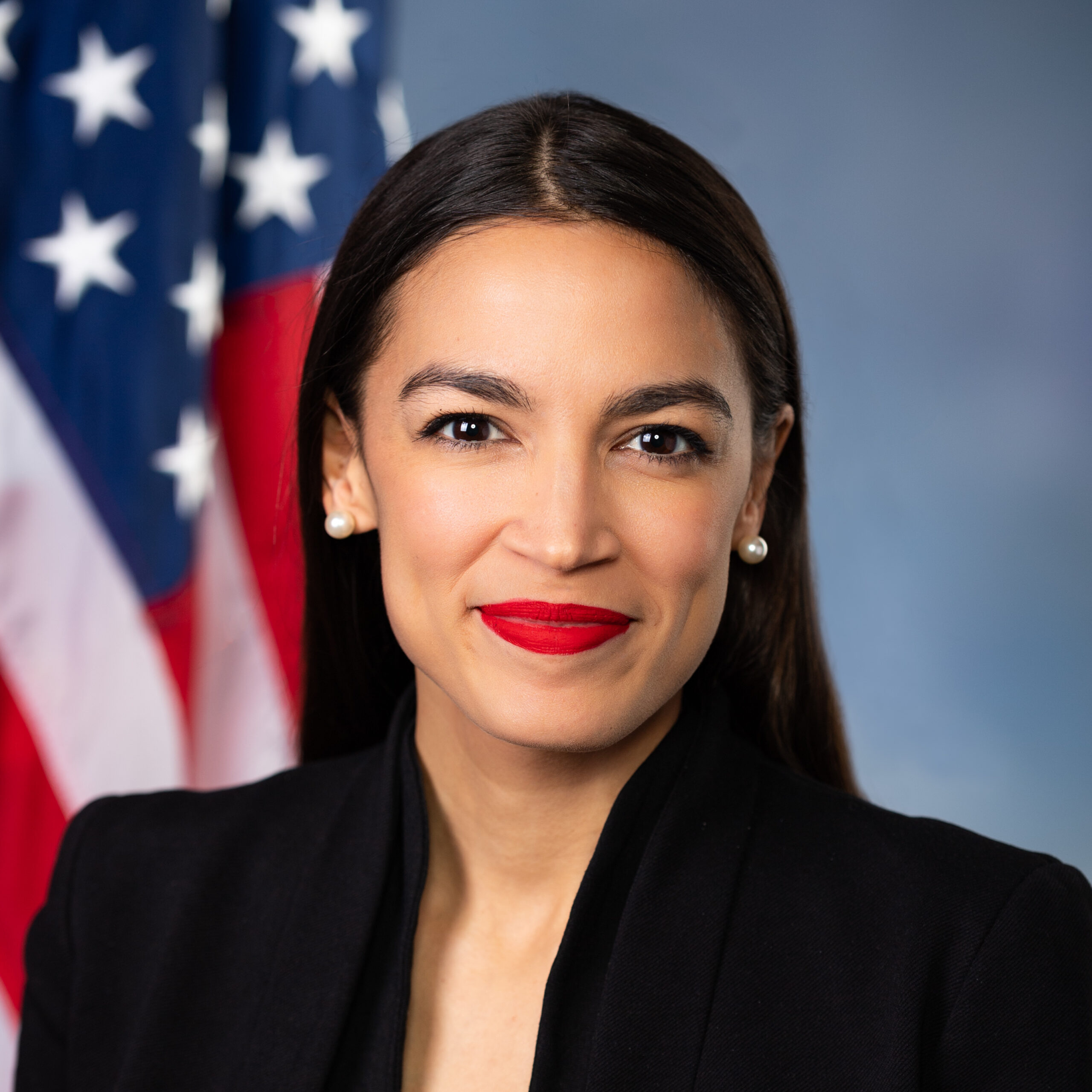
Franmarie Metzler; U.S. House Office of Photography, Public domain, via Wikimedia Commons licensed under PD US Congress
The line was not incidental. Ocasio-Cortez, 36, entered Congress in 2019 as the youngest woman ever elected to the chamber. She quickly became an avatar of a restless millennial left, a role chronicled in journalist David Freedlander’s 2026 book, The AOC Generation. Seven years later, she is positioning that same generation as an electoral bloc with mortgages, school pickups and, increasingly, primary wins.
She has reason to make the case. Abdul El-Sayed, a 40-year-old former Wayne County health director, won Michigan’s Democratic Senate primary this month. He did so after overcoming an eight-to-one spending disadvantage against Rep. Haley Stevens.
Stevens carried endorsements from Gov. Gretchen Whitmer, retiring Sen. Gary Peters and Schumer himself. She also benefited from more than $30 million in outside advertising. The spending came from a super PAC aligned with the American Israel Public Affairs Committee. El-Sayed won anyway, by roughly one percentage point.
The same night, Michigan state Rep. Donavan McKinney, a democratic socialist, unseated longtime Rep. Shri Thanedar in the state’s 13th Congressional District, CNN projected. Ocasio-Cortez cited both results Sunday as evidence of what she called a generational renewal inside the party, rather than isolated upsets.
What the numbers actually show
The generational math behind her argument is not speculative. Nearly 50 million people ages 18 to 29 will be eligible to vote in this year’s midterms, according to a Tufts University Center for Information released in May. Nearly 8.5 million of them will have entered the electorate since the 2024 presidential race. Layer in millennials, and the shift becomes even more significant. Gen Z and millennial voters combined are on track to make up a majority of the eligible electorate by 2028.
Turnout has not always matched eligibility. Voters 65 and older turned out at a 69% rate in recent midterms. Among voters ages 18 to 29, turnout was just 27%. That 42-point gap has historically limited the youth vote’s electoral weight. But CIRCLE’s pre-election polling found 56% of young people saying they were extremely likely to vote in 2026. That nearly matched the 54% who said the same before the 2024 presidential election. Researchers called the rate unusual for a midterm year.
Where AOC herself stands in a hypothetical 2028 field is no longer hypothetical either. A University of New Hampshire Survey Center poll released in July found Ocasio-Cortez leading the prospective Democratic primary field. The poll was conducted in the first-in-the-nation primary state.
She ran slightly ahead of former Transportation Secretary Pete Buttigieg. Her support skewed heavily toward voters who identify as socialists and progressives, the pollsters found, while Buttigieg’s support spread more evenly across progressives, liberals and moderates.
A pragmatist’s turn
What distinguished Sunday’s interview from the insurgent Ocasio-Cortez of 2018 was not the generational framing. It was the caution wrapped around it.
Asked why she has largely stayed out of primaries against sitting House Democrats this cycle, unlike some of her allies, she said politics is also a workplace, which first reported the interview. Her endorsements this year have gone mostly to open seats and primary challengers in New York’s state legislature. She has largely avoided backing challengers to sitting members of Congress. That marks a shift from the disruptive posture that defined her first term.
She also gently distanced herself from some of the left’s more combative rhetoric from 2020. “The rhetoric of that time is not the rhetoric we would use today,” she said. She pointed to New York City Council Member Chi Ossé’s viral response to one of his old social media posts. Ocasio-Cortez cited the episode as an example of the left reassessing its earlier tone.
That balancing act, generational disruption paired with institutional patience, is precisely what makes the Senate option against Schumer politically awkward. Schumer, 75, has led Senate Democrats since 2017 and remains the top Democrat in the chamber. A primary challenge from Ocasio-Cortez would put two New York Democrats against each other. National donors and party strategists would likely treat the race as a referendum on generational succession. The stakes would extend beyond New York and into the party’s Senate leadership.
The White House math is different, but no less loaded. Ocasio-Cortez would be 39 on Inauguration Day 2029. That would put her among the youngest presidents in American history. She would also fall squarely within the millennial age range she spent Sunday describing as newly decisive.
Whether that generation’s improving turnout numbers and this cycle’s insurgent wins can translate into a viable national campaign remains an open question. A strong showing in an early primary poll does not answer it. Her non-answers leave that possibility deliberately unresolved.
For now, Ocasio-Cortez says her attention is on the midterms in front of her, not the choices beyond them. Sunday’s interview did little to make that claim more convincing.