Noodles & Company is doing something that sounds painful at first glance. It is closing restaurants at a time when many Americans are already watching familiar chains disappear from shopping centers, college towns, and suburban roadsides.
But this is not simply another story about a restaurant brand getting smaller. The more interesting story is that Noodles & Company may be discovering that fewer locations can sometimes create a healthier business, especially when weak stores no longer drag down the rest of the chain.
The company’s latest results suggest a difficult shift is underway. After closing dozens of underperforming restaurants, Noodles says many nearby locations are picking up some of the lost sales. That gives the chain a chance to focus on restaurants that still have traffic, loyal customers, digital orders, and room to improve.
The Closures Are Not Random
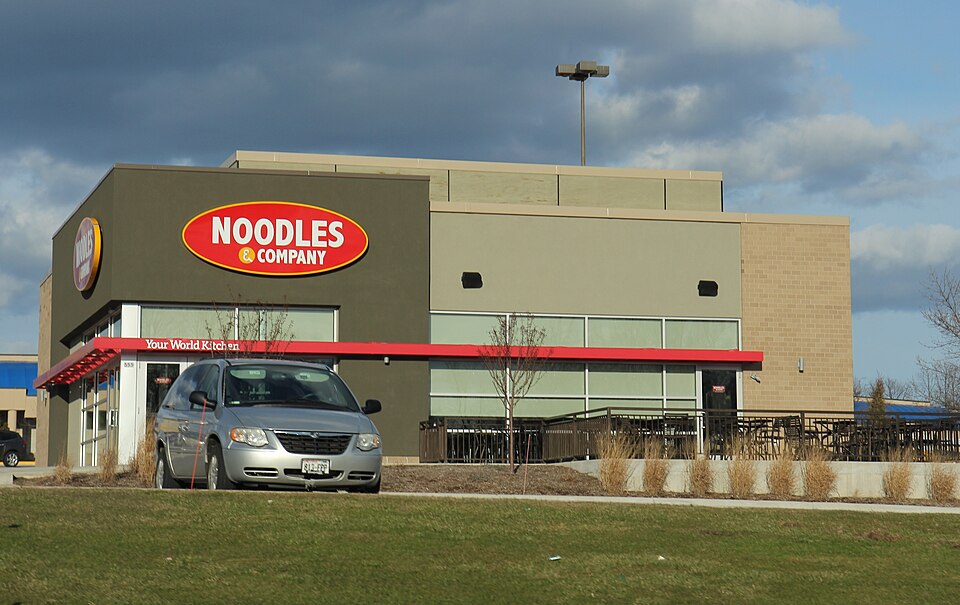
Noodles & Company ended fiscal 2025 with 423 restaurants, made up of 340 company-owned locations and 83 franchised restaurants. During that year, it closed 33 company-owned restaurants and nine franchised locations.
For 2026, the company expects another round of cuts, including 30 to 35 company-owned restaurants and five franchised restaurants. That is a serious reduction for a chain that once leaned on a broad national reach as part of its appeal.
The company has described these closures as part of a portfolio optimization effort. In plain terms, that means Noodles is looking at which restaurants still make sense, which leases are worth keeping, and which locations no longer fit how customers eat.
Why Fewer Stores Can Help the Remaining Restaurants

The surprising part is that closures may be helping the restaurants that remain open. Noodles said that when weaker stores shut down, some customers shift their orders to nearby Noodles locations instead of leaving the brand entirely.
That matters because Noodles has a strong off-premise business. Many customers already order through the company’s app, website, pickup channels, delivery services, or other digital options, which makes it easier for sales to move from one nearby store to another.
The company said about 59 percent of its 2025 sales came from digital ordering. That detail changes the closure story because a customer who loses a nearby store may still order from another location if the food remains convenient enough.
The Numbers Show a Chain Trying to Recover
Noodles & Company reported a 9.1 percent increase in system-wide comparable restaurant sales for the first quarter of 2026. Company-owned restaurants rose 9.4 percent, whilefranchised restaurants increased 8 percent.
The company’s net loss also narrowed. It reported a net loss of $3.4 million in the first quarter of 2026, compared with a net loss of $9.1 million in the same period a year earlier.
That does not mean the turnaround is complete. Total revenue was flat at $123.8 million, indicating the chain still has to prove it can grow beyond simply improving performance on a smaller base.
This Is the New Restaurant Math
For many restaurant chains, the old playbook was simple. Open more locations, expand into new markets, and use size as proof of success.
That strategy has become harder in a world of higher food costs, higher wages, tighter consumer budgets, and customers who think twice before spending money on a casual meal. A weak restaurant can quietly drain cash, management attention, and staff energy long after the first signs of trouble appear.
Noodles appears to be choosing a different kind of math. Instead of treating every location as worth saving, it is cutting weaker stores so the brand can concentrate on restaurants with better demand and better long-term potential.
Customers May Notice the Shift
For customers, the story may feel mixed. Some communities will lose a familiar lunch or dinner spot, and that can be frustrating for people who relied on a nearby Noodles location for quick meals.
But in markets where restaurants remain open, customers may see a more focused chain. Noodles has pointed to menu improvements, value offerings, limited-time items, stronger execution, and more connected marketing as part of its recent momentum.
That is important because closures alone cannot fix a brand. A restaurant chain still has to give people a reason to come back, especially when grocery prices, delivery fees, and competing fast-casual options are all competing for the same wallet.
The Menu Still Has to Carry the Turnaround
Noodles & Company has always held an unusual position in fast-casual dining. It sells comfort food, but not in the same way as a burger, pizza, or chicken chain.
Its menu spans mac and cheese, pasta, Asian-inspired noodles, soups, salads, and seasonal dishes. That variety can be a strength, but it can also make the brand harder to define if customers are not sure what it does best.
The company has leaned into menu work as part of the reset. It has promoted value-focused offerings, limited-time dishes, and returning favorites such as Steak Stroganoff, all while trying to make the brand feel more relevant to both loyal guests and new customers.
The Bigger Warning for Restaurant Chains
Noodles & Company is not alone in facing the pressure to shrink. Across the restaurant industry, many operators are dealing with uneven customer traffic, higher operating costs, and a more selective consumer base.
Recent industry data shows that many restaurant operators continue to report weaker traffic even when some sales numbers improve. That suggests price increases and better checks can hide a deeper issue: fewer people may be walking through the door.
This is why Noodles’ strategy matters beyond one pasta chain. It reflects a broader question facing restaurants across America. Is expansion still the goal, or is survival now about being smaller, sharper, and more profitable?
The Risk Is Still Real
There is a clear risk in this strategy. If too many restaurants close, the brand can lose visibility in key markets and become less convenient for casual customers.
A smaller footprint can also make it harder to attract new guests who discover restaurants simply by passing them on the road. Once a location disappears from a neighborhood, the brand has to work harder through digital channels and marketing to stay top of mind.
That is why the next phase will matter. Noodles has to prove that the sales transfer from closed stores is not just a temporary boost, but part of a stronger long-term operating model.
What Happens Next
Noodles & Company has raised its 2026 outlook after a stronger first quarter, but the brand is still in a rebuilding period. The company is closing stores, improving restaurant margins, pushing digital orders, and trying to keep momentum alive with menu and value plays.
The most compelling part of this story is not that Noodles is getting smaller. It is that the chain is trying to make the smaller look strategic rather than desperate.
If the remaining restaurants keep improving, Noodles may become an example of how a struggling fast casual brand can cut its way back to strength. But if sales slow again after the closures, the same strategy could start to look less like a reset and more like a retreat.