The potatoes are cooked. A fork slides through the middle. But instead of crisp edges and golden corners, the pan holds pale pieces that feel closer to boiled potatoes than roasted ones.
Turning up the oven at the last minute might help, but the trouble often begins earlier: with the variety, the water clinging to the surface, or a baking sheet packed too tightly.
Crispy roasted potatoes are not the result of one secret ingredient. They come from a sequence of manageable decisions that help the outside brown while the center becomes tender.
None requires elaborate equipment. A roomy pan, a fully heated oven, and a little attention before roasting can make the difference.
If your potatoes keep coming out soft or unevenly browned, work through these seven common mistakes. Each has a practical fix, from choosing the right variety to letting the edges crisp.

Choosing a Potato That Does Not Match the Texture You Want
Different potatoes produce different results. Before reaching for the nearest bag, decide what you want beneath that browned exterior.
Russets are a strong choice for a fluffy center and a substantial crust. Yukon Golds offer a creamier interior while still developing crisp surfaces. You can roast red potatoes, but their waxier texture produces a different result.
A side-by-side comparison of potato varieties by Serious Eats recipe developer J. Kenji López-Alt found that russets developed the crispest crusts. At the same time, Yukon Golds offered more flavor and a creamier interior.
For this style of roasted potato, start with russets or Yukon Golds. Neither choice requires a shopping expedition.
Cut the potatoes into similarly sized pieces so smaller ones do not finish well ahead of larger chunks. Uniformity matters more than making every piece look perfectly square.
Leaving the Surface Too Smooth
Raw potatoes can roast successfully. But if you want a more pronounced crust, parboiling gives you a useful head start.
Briefly cooking the potatoes in water softens their exteriors. After draining, tossing them helps create a rough, starchy coating that can crisp in the oven.
A useful approach is to parcook the potatoes, then toss them with oil and salt to create a textured exterior before roasting.
The goal is not a bowl of mashed potatoes. You want pieces that remain intact, with softened edges rather than smooth, untouched surfaces.
Check the potatoes rather than relying on one universal boiling time. Thin slices and large chunks behave differently. For a parcooked approach, the outside should soften while the center still offers some resistance.
Drain, then toss gently to roughen the edges without breaking everything apart. Those slightly ragged corners are an advantage, not a mistake in prep.
Sending Wet Potatoes Into the Oven
Parboiling builds texture, but water clinging to the potatoes works against the next step.
Drain thoroughly. Then let the potatoes release steam before adding oil and moving them to the baking sheet.
The distinction is between moisture inside the potato, which contributes to its tender center, and excess water sitting on the outside.
Drain the boiled potatoes thoroughly, then let them steam-dry before roasting. Let the steam escape rather than moving a dripping batch straight from the pot to the pan. The aim is to remove excess surface moisture before coating the potatoes with oil.
If you skip parboiling, roast freshly washed, cut potatoes instead, and dry their surfaces thoroughly before coating them. Oil should coat the potato, not mingle with leftover wash water.
Starting With an Underheated Oven or an Unsuitable Pan
An oven that is still warming isn’t the same as one that has reached roasting temperature.
For the high-heat approach described here, 450°F in a conventional oven is a useful setting. Preheat fully before the potatoes go in.
That does not make 450°F the only temperature at which potatoes can roast. It provides a clear starting point for developing browned surfaces rather than gently cooking the pieces through.
A shallow, rimmed metal baking sheet is a practical choice. It holds the potatoes in one layer and contains the oil without enclosing them in a deep vessel.
Preheating the baking sheet is another option. If you do, handle it carefully and place it on a heatproof surface before arranging the potatoes.
The pan is part of the cooking method, not just a vessel to carry the food.
Related: 7 Kitchen Habits That Could Be Quietly Taking the Flavor Out of Your Food
Drizzling Oil Without Coating Every Piece
Drizzling oil over a full pan can leave some surfaces coated and others almost untouched.
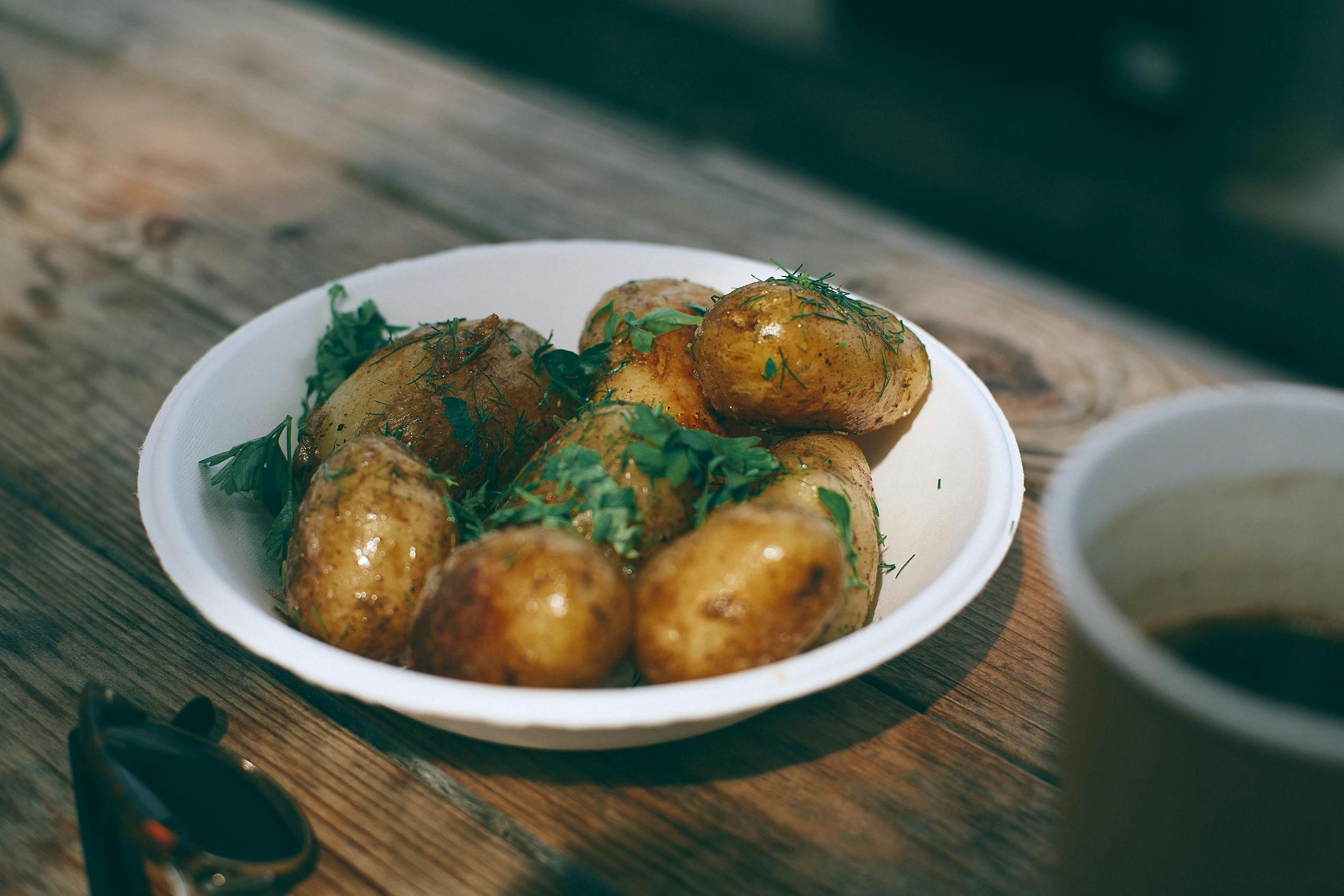
Instead, toss the potatoes with oil in a bowl before spreading them out. Turn the pieces as you mix, making sure the roughened corners get as much attention as the broad sides.
Aim for an even coating, not a few oily patches separated by dry ones.
No single oil quantity fits every batch. The amount depends on the potatoes’ weight, their cut, and how much surface area needs coating.
Check the pieces as you toss. A larger batch needs more than the same quick splash you would use for a small one.
Olive oil is one option. Whatever roasting oil you choose, distribution matters: each piece should enter the oven coated, not relying on oil to find it later.
Crowding the Baking Sheet
A generous batch is tempting, particularly when the oven is already busy. But stacking potatoes or wedging them tightly together makes browning harder.
Spread them in one layer with space between pieces. Their surfaces need exposure to the oven’s heat, not just contact with neighboring potatoes.
If the pan looks packed before roasting, move some to another baking sheet or cook in batches.
Give broad, cut surfaces contact with the pan. Those flat faces are valuable opportunities for browning.
A smaller, well-spaced batch can be more satisfying than a large pan that never develops the texture you wanted.
Turning Too Soon and Stopping Too Early
Tender does not necessarily mean crisp.
A potato can be cooked through before its exterior has developed enough color and texture. Test the center, but also inspect the outside.
Give the first side time to brown before turning. Stirring repeatedly from the start interrupts contact with the pan and can damage softened edges.
Leave the potatoes undisturbed during the initial roasting period, then turn them so other surfaces can brown.
Use color and texture alongside the clock. Look for browned faces, crisp edges, and a tender center. Once they reach that stage, serve promptly.
A Quick Checklist Before Roasting
- Choose russets or Yukon Golds.
- Cut pieces to similar sizes.
- Parboil and roughen the surfaces if using that method.
- Drain and steam-dry thoroughly.
- Coat evenly with oil.
- Use a fully preheated oven and a roomy baking sheet.
- Allow time for browning before turning.
The reward is a familiar ingredient with a satisfying contrast: a tender middle beneath a crisp, browned shell. If you have a little more space, drying and patience can change the whole pan. Which small adjustment will you try first?