Brunswick stew can start a conversation before anyone takes a bite. Someone remembers a grandmother’s version. Someone else insists it belongs beside barbecue. Then comes the question that can turn lunch into a friendly interstate debate: Virginia or Georgia?
Both Brunswick County, Virginia, and Brunswick, Georgia, claim the dish. But its place in Southern food traditions rests on more than a disputed beginning.
Meat, vegetables, and a simmering pot make an appealing combination when temperatures drop. Family recipes, community dinners and cooks who pass their knowledge along give the stew something weather alone cannot provide: continuity.
That is why Brunswick stew fits fall so comfortably. It offers a substantial meal and a connection to gatherings that have helped sustain it across generations.
A Familiar Stew With Room for Differences
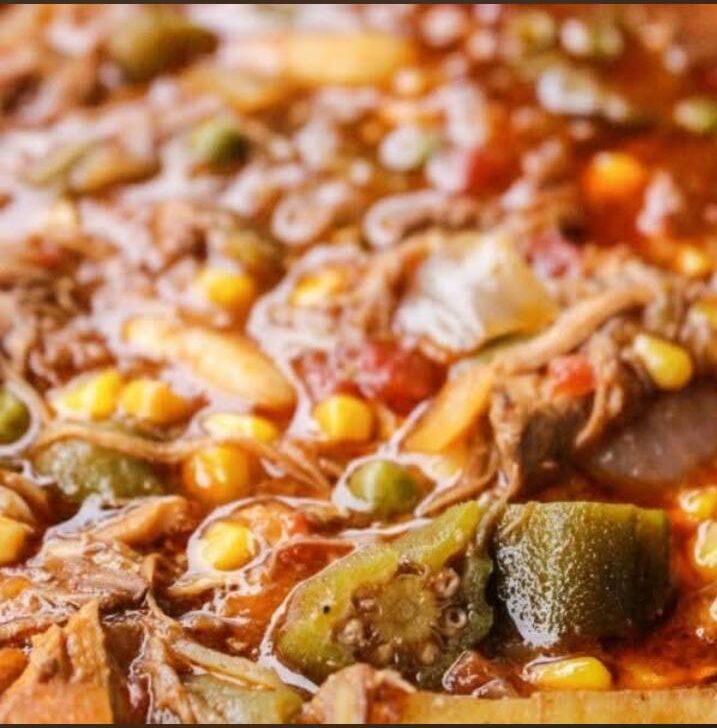
Many contemporary versions combine chicken, pork, or both with tomatoes, corn, and vegetables such as potatoes, onions, and lima or butter beans.
Some recipes include beef. Others add okra, barbecue sauce or seasonings that make one family’s pot distinguishable from another.
The consistency varies, too. Some cooks prefer a looser stew, while others let the mixture thicken until the ingredients lose their separate outlines.
Earlier accounts describe squirrel and rabbit. Modern preparations frequently substitute chicken or pork, bringing the dish into kitchens where those meats are more readily available.
This flexibility is part of its history, not a recent departure from a single, universally accepted recipe. Brunswick stew has remained recognizable while giving individual cooks room to make choices.
Why It Belongs on the Fall Table
The seasonal appeal starts with the meal itself: hot meat and vegetables in one substantial bowl.
A home version can use cooked chicken or pulled pork, turning ingredients already prepared for another meal into something different. A larger gathering can turn the same basic idea into an outdoor cooking project.
Both approaches suit the cooler-weather appetite for meals that invite people to sit down and stay awhile.
Different kinds of participation also fit. One person may prepare the ingredients, another may tend the pot, and others may arrive when it is time to serve.
Brunswick stew also belongs to summer reunions, barbecue gatherings, and celebrations throughout the year. Fall gives that established tradition another welcoming occasion.
Virginia’s Story Credits Jimmy Matthews
Brunswick County’s best-known account places the stew’s beginning in 1828 and credits Jimmy Matthews, a Black cook enslaved by Dr. Creed Haskins.
According to the county’s tradition, Matthews prepared squirrel stew while accompanying a hunting party. The ingredients associated with that story include squirrel, onion, butter, bread, and seasonings.
That differs considerably from the tomato-and-vegetable mixture many diners recognize today.
The Taste of Brunswick Festival’s history says later cooks added vegetables and replaced squirrel with chicken. The account suggests the dish developed over time rather than appearing fully formed in its modern version.
Virginia formally embraced the local claim in 1988, when its General Assembly recognized Brunswick County as the stew’s birthplace.
That recognition shows the county’s strong attachment, although the hunting-party account remains an origin tradition rather than a conclusively documented first preparation.
Related: 15 Foods From the ’60s Most Boomers Loved With a Passion
Georgia Has a Claim of Its Own
Brunswick, Georgia, has long defended its place in the story.
A commemorative pot bears an inscription declaring that the first Brunswick stew was made on St. Simons Island on July 2, 1898.
The inscription preserves Georgia’s claim, but the stew’s history reaches beyond the monument. Folklorist John A. Burrison, writing in the New Georgia Encyclopedia, gives Brunswick County, Virginia, priority for the dish’s name while describing Georgia’s enthusiastic adoption of it.
Virginia has the earlier prominent origin account. Even so, the competing traditions do not establish one conclusively documented first pot.
The rivalry remains part of the dish’s identity, reflecting how strongly both places have made it their own.
Barbecue Helped Give the Stew Another Home
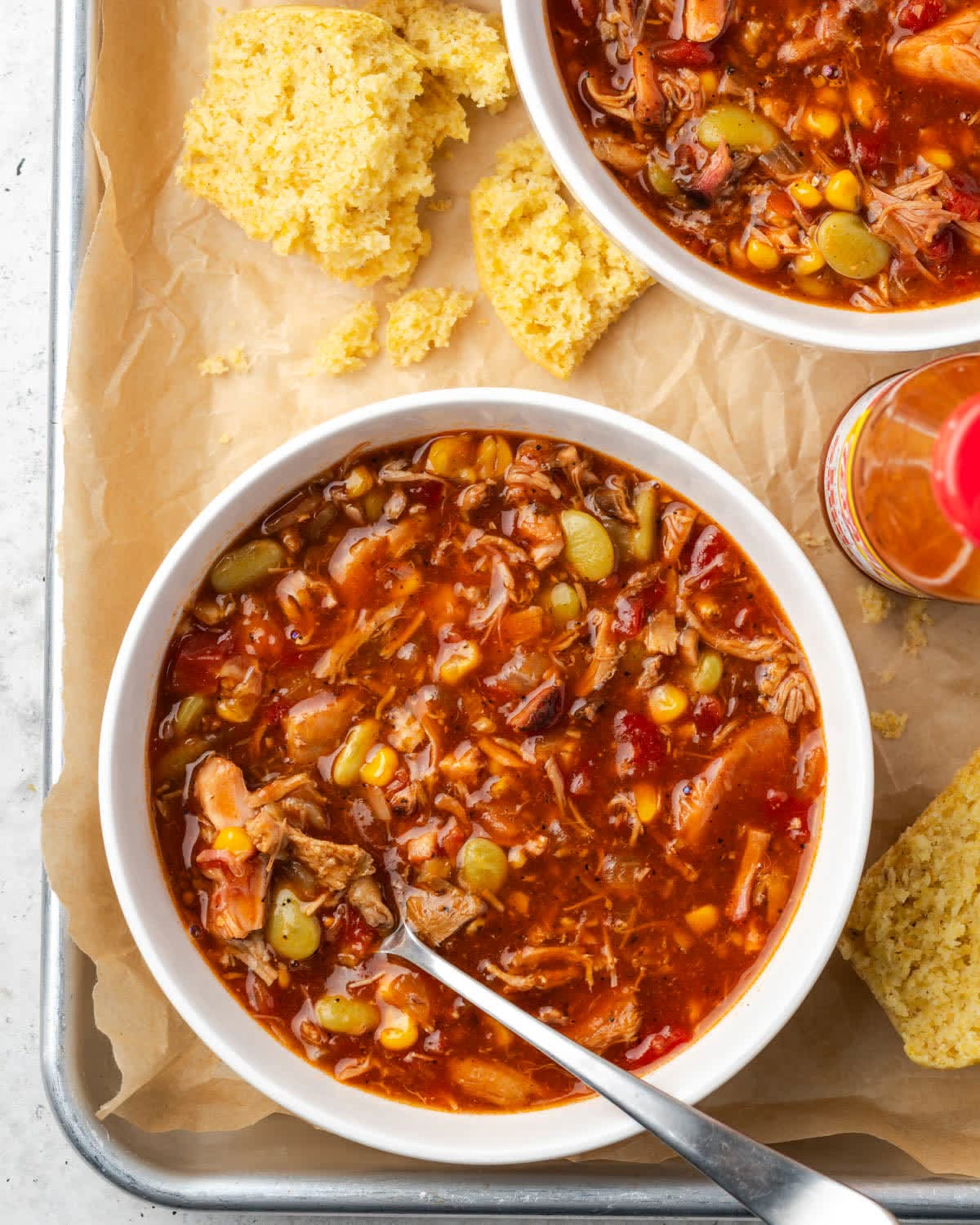
In Georgia, Brunswick stew became closely associated with barbecue.
That relationship gave it a place beyond the household kitchen. A diner might find it alongside smoked pork, while a family might make it at a larger barbecue gathering.
Burrison describes the stew as a customary feature of Georgia fundraisers, political rallies, and reunions.
Those repeated appearances matter. People do not need to learn a dish from the same source for it to become familiar. One person inherits a recipe; another first tries it with barbecue.
The different routes help explain how Brunswick stew became a regional food without becoming identical everywhere. Its place on the menu can change even when the name remains the same.
When a Stew Dinner Helps Sustain a Community
The dish’s fundraising history becomes especially tangible at Springfield Friends Meeting in High Point, North Carolina.
According to the congregation’s history, members struggled with mortgage payments after building a meetinghouse in 1927, then faced the additional pressures of the Great Depression.
Members organized repeated Brunswick stew dinners that helped pay off the mortgage by the mid-1940s. The dinners continued for decades afterward.
The meeting also preserves a recipe attributed to Sara R. Haworth, published in a 1954 newspaper article and intended to serve 100 people.
It combines chicken, pork, and beef with vegetables, illustrating both the scale of community cooking and the variety found under the Brunswick stew name.
Here, the meal was not merely a symbol of togetherness. It helped support a shared institution.
Related: How Families Celebrated Thanksgiving in the 1950s
The People Behind the Big Pots
Large-batch cooking depends on more than a list of ingredients.
Stewmasters and their crews organize preparation, tend the pot, and learn when the mixture has reached the desired result.
Filmmaker Stan Woodward’s documentary, preserved by Folkstreams, captures that knowledge moving between generations.
Georgia cook Lee Ferguson describes learning through his mother, whose knowledge came from her mother. He encourages his son to watch so the practice can continue.
In Virginia, the Taste of Brunswick Festival describes the Brunswick Stewmasters’ Association’s commitment to teaching younger participants.
These are different ways of preserving the same essential relationship: an experienced cook makes room for someone else to learn.
A written recipe can record quantities. Watching someone cook helps carry forward the judgment behind them.
More Than a Bowl of Nostalgia
Brunswick stew endures because it can change without losing its connections.
Chicken can replace game. A family supper can become a fundraiser. A barbecue side can become the main meal.
Its fall appeal comes from that combination of substance and familiarity, not from evidence that it was invented for autumn.
The origin debate adds interest, but the people cooking and sharing it give the tradition its future.
When a shared pot can carry old memories while welcoming new cooks, what better reason is there to pull up another chair?