Georgia has become one of America’s biggest political battlegrounds, and a new wave of debate is once again putting the state’s election system under the spotlight.
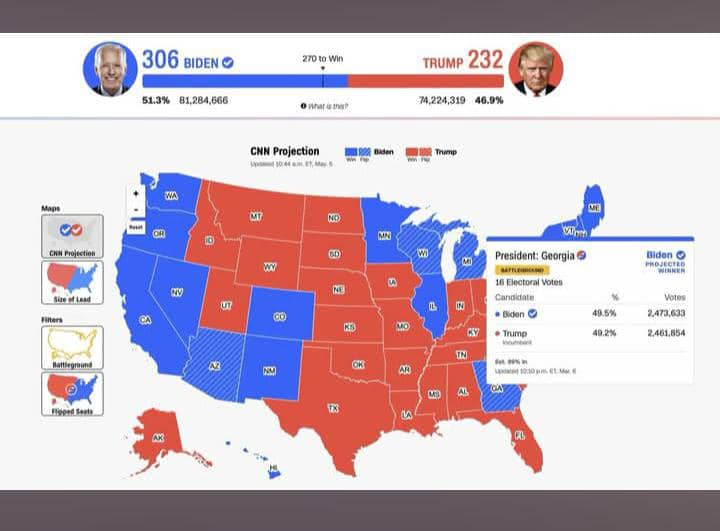
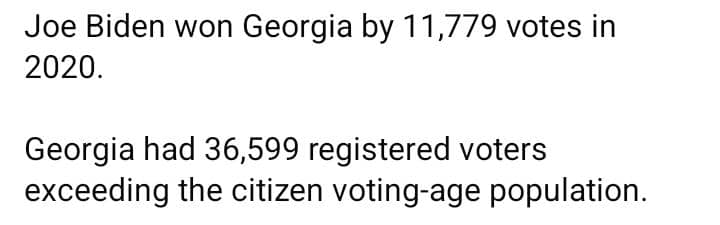
At the center of the conversation is a simple comparison: Joe Biden defeated Donald Trump in Georgia’s 2020 presidential election by 11,779 votes, while the state reported 36,599 more registered voters than its estimated citizen voting-age population.
The difference has fueled questions from critics who argue Georgia’s voter rolls deserve closer examination. Supporters of the state’s election system, however, point out that the number does not represent illegal ballots or prove that ineligible voters participated.
The reality is more complicated than a single headline number.
As Georgia prepares for another major election cycle in 2026, the debate over voter lists, election security and public trust is becoming one of the state’s biggest political issues.
What the 36,599 Number Actually Shows
The figure of 36,599 comes from comparing two separate data sets.
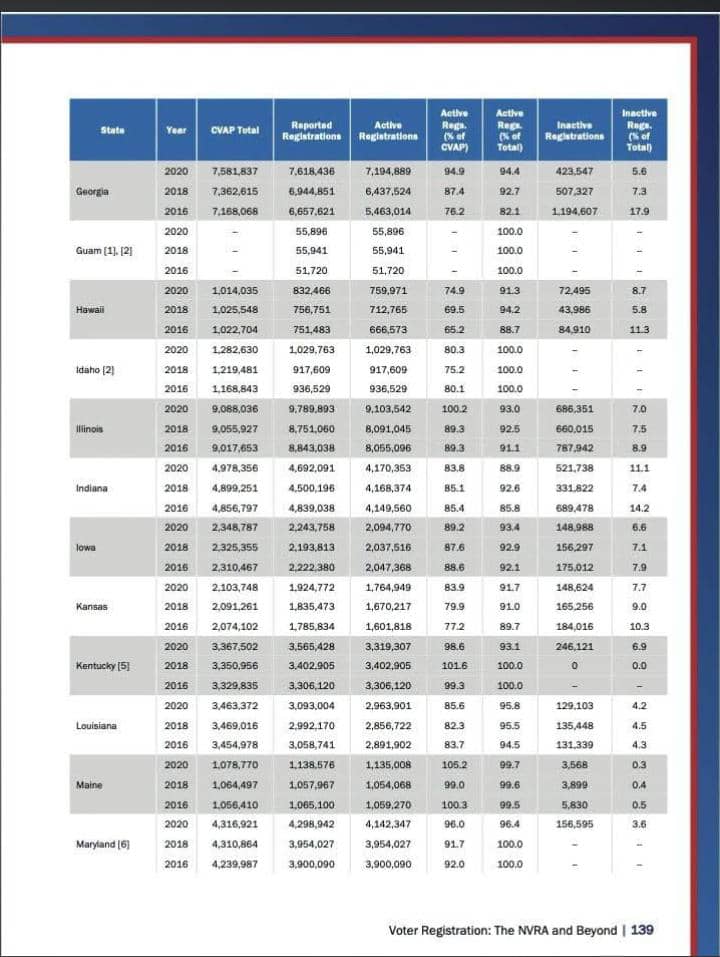
According to the U.S. Election Assistance Commission, Georgia reported 7,618,436 registered voters before the 2020 presidential election. The estimated citizen voting-age population was listed at 7,581,837.
The difference between those numbers is 36,599.
That calculation is accurate. But the meaning behind it has become the subject of political disagreement.
A voter registration list is an administrative record. It contains people who have registered to vote and may include active and inactive records. A citizen voting-age population estimate comes from Census data and represents a statistical estimate of citizens aged 18 and older who live in the state.
The two numbers are not expected to match perfectly.
Georgia, like every other state, regularly updates voter registration records. People move, change addresses, die, or become inactive over time. Federal law also creates rules that prevent states from immediately removing voters from registration lists.
The state reported more than 423,000 inactive registrations in 2020. Those records did not mean those individuals voted. They represented people whose registration status had changed because election officials could not verify their current information or because they had not participated in elections for some time.
The key point is simple: a registration record is not the same thing as a ballot.
The 36,599 figure does not identify illegal voters, does not show that those people cast ballots, and does not demonstrate that enough improper votes existed to change the result of the 2020 election.
Georgia’s 2020 Election Went Through Multiple Reviews
Georgia’s 2020 presidential election became one of the most heavily examined elections in modern state history.
After the initial count showed Biden winning by 11,779 votes, Georgia conducted a statewide hand audit of approximately five million presidential ballots. State officials said the audit confirmed the original result.
The state also completed another recount requested by the Trump campaign. That recount again resulted in Biden’s victory.
Georgia Secretary of State Brad Raffensperger defended the process, saying the state had “counted accurately, fairly, and reliably.”
The reviews did uncover small mistakes in some counties, as often happens in large elections involving millions of ballots. However, election officials said those errors were not large enough to affect the outcome.
The debate over Georgia’s voter rolls remains active because election administration is not only about counting votes. It is also about public confidence.
For many voters, the existence of outdated or inactive registration records raises concerns about whether election systems are being maintained properly. Election officials argue that maintaining large voter databases while protecting eligible voters’ access requires balancing accuracy with legal safeguards.
That tension continues to shape Georgia politics.
Why Election Integrity Is Already a Major Issue in 2026
Georgia is once again preparing for a high-stakes election year in 2026.
The state will hold races for governor, U.S. Senate, Congress, and other statewide offices. Because Georgia has shifted from a reliably Republican state into a competitive battleground, every election issue receives national attention.
Election security is expected to remain one of the biggest topics on the campaign trail.
Republicans in Georgia have continued pushing for stronger election rules, arguing that tighter safeguards are necessary to protect public trust. Democrats have warned that some voting changes could create unnecessary barriers for eligible voters.
The secretary of state race will be especially important because that office oversees elections across Georgia. Candidates are expected to debate voter registration, voting technology, ballot counting procedures, and election transparency.
Georgia lawmakers have also continued changing election rules. Recent legislation has addressed voting technology and recount procedures, reflecting the ongoing political focus on election administration.
But the bigger question facing Georgia voters is not just about one number.
It is about whether people believe the election system works.
The 36,599-registration difference will likely continue to appear in political discussions because it is larger than Biden’s 2020 winning margin. However, understanding what the number represents is critical.
A gap between registration totals and population estimates can raise questions. It can encourage reviews of election procedures. But by itself, it does not prove that illegal votes were cast or that an election outcome was changed.
As Georgia heads toward another closely watched election, the battle over trust may become just as important as the battle over votes.
The state’s political future could depend not only on who wins at the ballot box, but also on whether voters believe the system counting those ballots deserves their confidence.