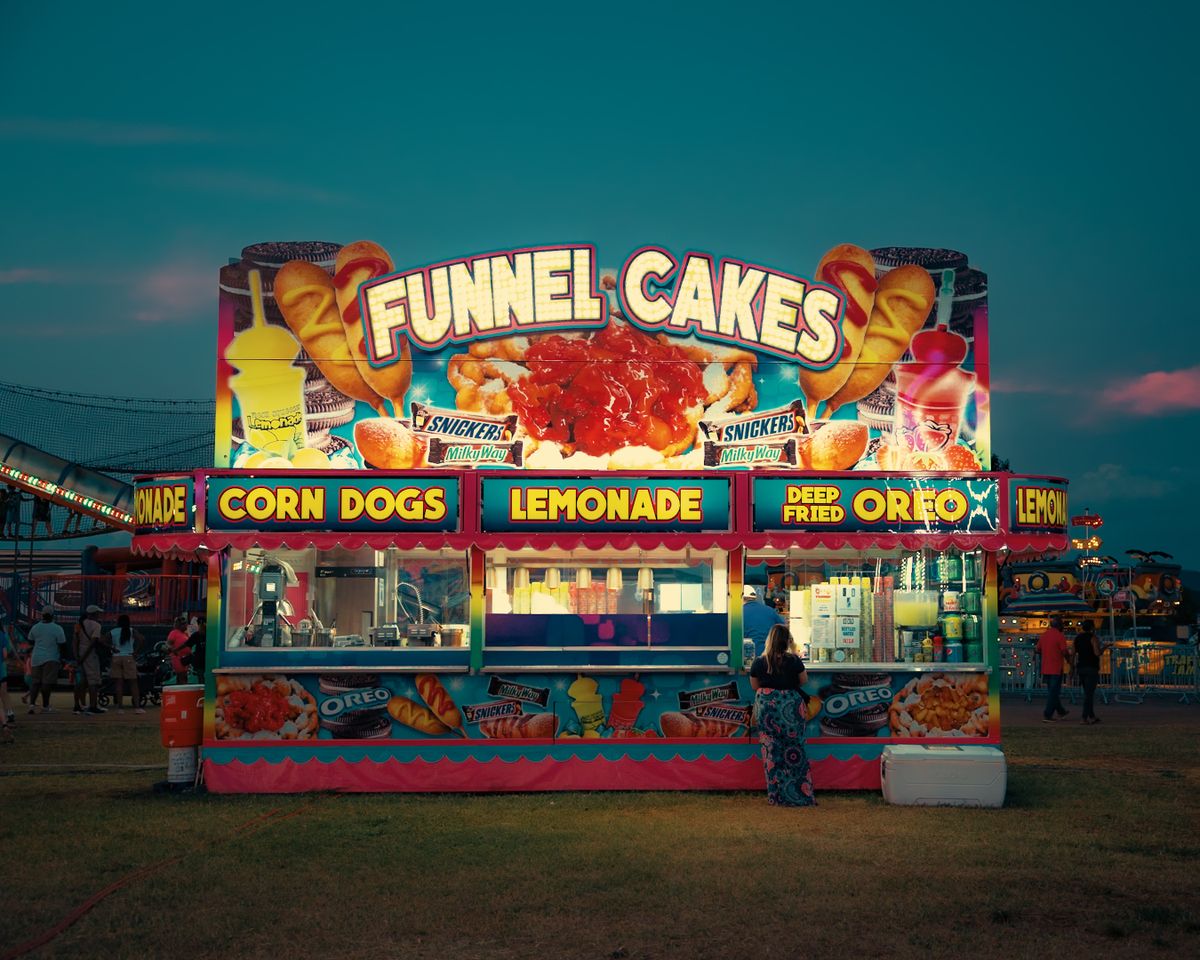
The American fair did not begin with someone wondering whether butter needed a crispy coating. Its roots were agricultural: farmers gathered to show livestock, share knowledge and compete over what they raised and made. Over time, that combination of competition and spectacle found another outlet at the concession stand. Corn dogs, funnel cakes and eventually deep-fried butter helped turn a day at the fair into an opportunity to eat something decidedly outside the everyday menu.
That story hides an important distinction: county fairs, state fairs, and folk festivals are different events, and no single one invented America’s fried-food tradition. County fairs helped establish the agricultural gathering; festivals helped popularize particular treats; major state fairs later gave ambitious vendors a prominent stage. The result was not one sudden transformation but a series of developments. Follow those connections, and the journey from prize livestock to powdered sugar starts to make surprisingly good sense.
Before the Fryers, the Fair Was About Farming
One important figure in the county fair’s development was Elkanah Watson, whose agricultural interests included improved livestock breeds. According to the New York State Library, he staged a celebrated cattle show in 1810 and organized the Berkshire Agricultural Society in 1811 to sponsor an annual agricultural fair in Pittsfield, Massachusetts. His efforts helped create an institution that spread beyond one community. The original attraction was agricultural improvement, not a competition to find the most outrageous thing to dunk in hot oil.
State fairs developed a similar combination of education, gathering and friendly rivalry. Smithsonian’s account identifies the 1841 fair in Syracuse, New York, as an early milestone and describes events showcasing livestock, vegetables and traditional homecrafts. “The fairs were started as a way to bring farmers together to compare notes,” Marla Calico of the International Association of Fairs and Expositions told Thrillist, in an interview quoted by Smithsonian. Competition was already part of the experience long before concessionaires began competing over fried desserts.
Food eventually became another way to show off agricultural abundance and inventive cooking. Texas Monthly, drawing on historian Warren Belasco’s Meals to Come: A History of the Future of Food, describes cooking contests and demonstrations that celebrated American farm products. At the 1893 Chicago World’s Fair a world’s fair, not a county fair corn appeared in 300 preparations. That broader exhibition culture helps explain the connection: food could be practical nourishment, but visitors also came specifically to see and discuss it.
Corn Dogs and Funnel Cakes Made the Fryer a Headliner
Before fried butter drew headlines, the corn dog offered a much simpler proposition: a hot dog wrapped in fried cornmeal batter. Carl and Neil Fletcher made their “corny dog” famous at the 1942 State Fair of Texas, though that milestone shouldn’t be confused with settling every competing claim about who invented the corn dog. Their contribution was a particular product that became closely associated with the Dallas fair. Getting its batter right, however, was considerably harder than the finished snack might suggest.
Neil Fletcher explained the development in a 1983 New York Times interview quoted by Texas Monthly. “We must have tried about sixty times until we got one that was right, and we spent another twelve years improving it,” he said. The problem was finding batter that both tasted good and stayed on the hot dog. That account reveals something easily missed amid the novelty: a successful fried fair food needs more than an amusing name; it has to hold together and deliver.
Funnel cake reached its own turning point through a different kind of gathering. Food writer Tori Avey traces its rise in mainstream American awareness to Pennsylvania’s Kutztown Folk Festival, which began in 1950. The cakes became a major festival success, selling several thousand and becoming strongly associated with Pennsylvania Dutch celebrations. Avey also notes that some Pennsylvania Dutch families made them before the festival, so the event helped popularize the treat rather than invent fried batter from scratch.
Those histories show why no neat county-fair-only origin story exists for the concession foods Americans recognize today. A state fair helped establish the Fletchers’ corny dog, while a folk festival gave funnel cake a broader audience. County fairs became part of the same landscape of seasonal gatherings and familiar treats; for example, Loudoun Museum documents funnel cakes at several local Virginia fairs. The tradition traveled across event types instead of staying neatly within county or state boundaries.
Related; As England Bans Fried Foods in Schools to Curb Obesity, America Turns to GLP-1s for Teens
Food Competitions Turned Familiar Treats Into Bigger Attractions
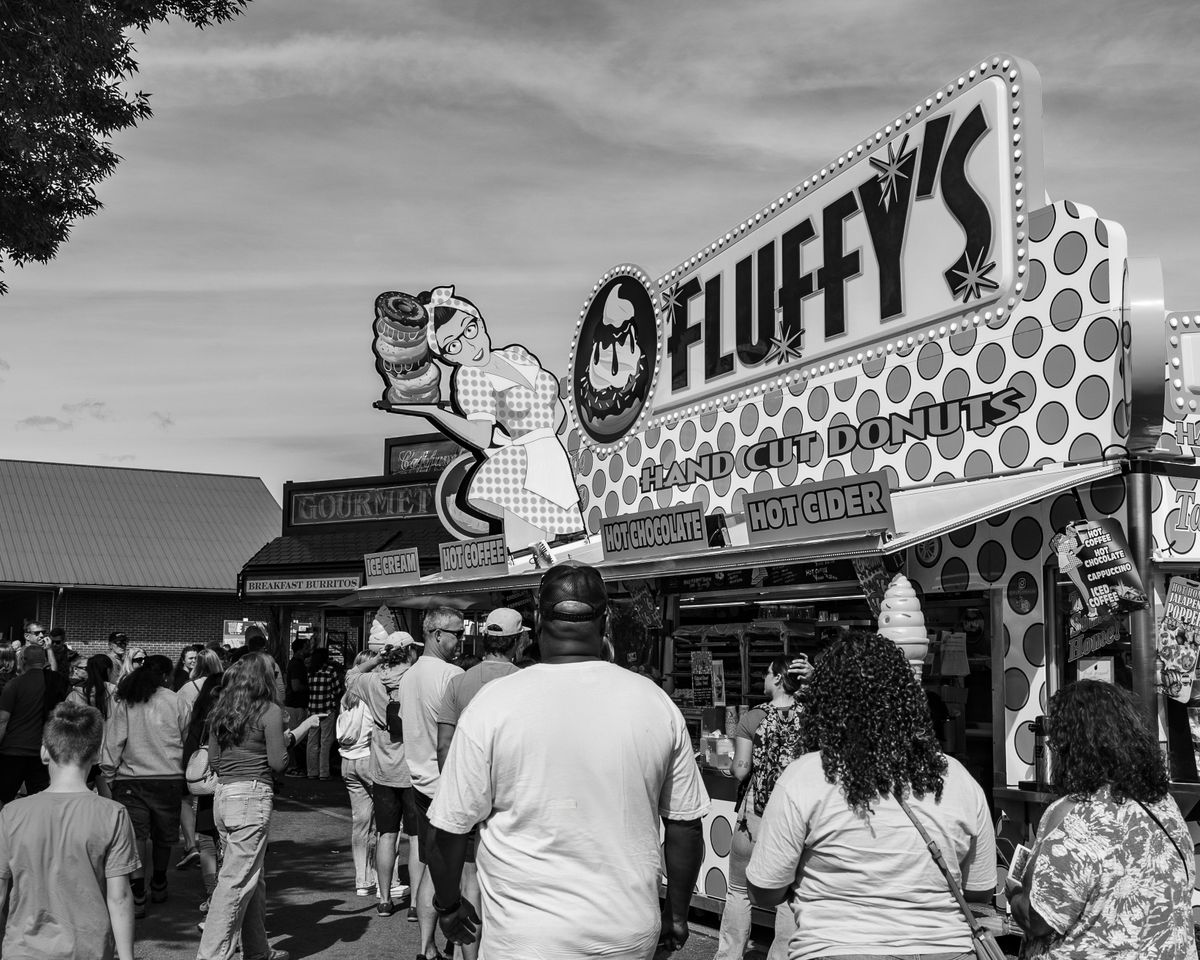
Texas formally showcased the modern push toward increasingly inventive fair food in 2005, when the State Fair introduced its Big Tex Choice Awards. Ron Black, then the fair’s senior vice president of food and beverage, explained the reasoning to Texas Monthly: “You always want to have some things new and different at the fair.” The contest encouraged concessionaires to develop distinctive dishes rather than rely exclusively on established favorites. Food no longer just accompanied the entertainment; the new menu became an attraction.
Abel Gonzales Jr. became one of the competition’s defining names. The fair’s official records list his fried peanut butter, jelly, and banana sandwich as the 2005 Best Taste winner, followed by Fried Coke’s Most Creative award in 2006 and Texas Fried Cookie Dough’s Best Taste award in 2007. Deep Fried Butter won Most Creative in 2009. Those dates matter because the spectacular butter creation wasn’t his starting point; it followed years of experimentation and successful entries.
Nor did “fried butter” mean dropping an unprotected stick into the fryer. The fair described Gonzales’s entry as whipped butter wrapped in a special dough and quickly fried, while Texas Monthly described dough-wrapped frozen butter balls being cooked and finished with honey and powdered sugar. “My thing is something new, something that nobody’s done before,” Gonzales told the magazine. His approach captured the modern fair-food challenge: make the description surprising enough to attract attention, then make the actual dish worth eating.
The crowd’s response gave that approach more than publicity. Texas Monthly reported that Gonzales sold about 35,000 orders of fried butter after its 2009 award, while also documenting how winning dishes attracted media attention. That is the key connection between the old agricultural fair and today’s fried-food spectacle: both reward visitors with something they can admire, compare, and talk about afterward. The prize pig and the battered butter ball are very different attractions, but competition helped bring each into the spotlight.
Other Posts You May Like
- 6 Controversial Foods Banned in Other Countries But Still Available in the U.S.
- 9 Habits That Help Prevent Belly Fat