Constitutional law rarely comes with a family story attached. Rep. Delia Ramirez supplied one after the Supreme Court rejected President Donald Trump’s attempt to restrict birthright citizenship.
The Illinois Democrat celebrated the June 30 ruling by describing herself as the daughter of a Guatemalan immigrant who entered the United States while pregnant with her.
“Today and always, I am the proud, defiant daughter of Maria Elvira Ramirez Guerra, a Guatemalan immigrant who crossed the border pregnant with me,” Ramirez said. “And regardless of what some of my colleagues might call me, I am a citizen by birthright and an AMERICAN!”
Her statement transformed a lengthy Supreme Court opinion into something much easier to picture: a pregnant immigrant crossing a border, her daughter growing up in Chicago, and that daughter eventually taking a seat in the United States Congress.
A Court Victory That Felt Deeply Personal
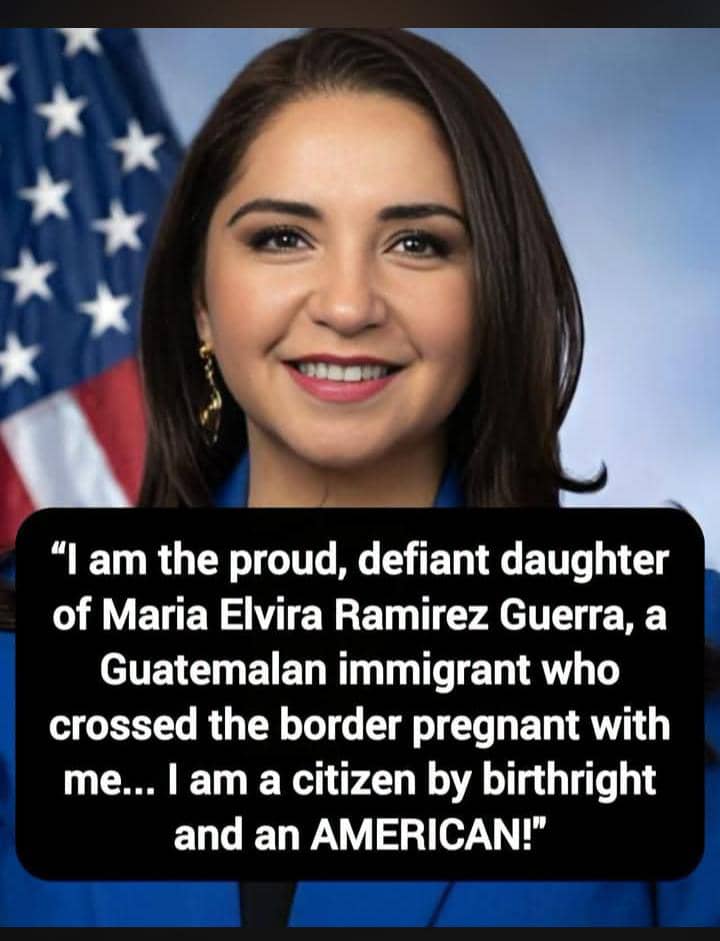
Ramirez represents Illinois’ 3rd Congressional District. Her official biography describes her as the daughter of working-class Guatemalan immigrants and a lifelong resident of Chicago’s Humboldt Park neighborhood.
She is also the first Latina elected to Congress from Illinois and the first Latina elected from the Midwest. Before entering Congress, Ramirez worked in nonprofit organizations and served in the Illinois General Assembly. Her office says she is the only current member of Congress living in a mixed-status family.
That background helps explain why birthright citizenship is more than another policy dispute for her.
Ramirez had already introduced the Born in the USA Act in May 2025. The proposal was designed to prevent federal money from being used to implement Trump’s citizenship order. Her office said the legislation had attracted 136 co-sponsors by the time the Supreme Court issued its decision.
In her response to the ruling, Ramirez said the justices had affirmed that the 14th Amendment’s citizenship guarantee applies to people born in the United States.
“Immigrants belong,” she said, adding that immigrant families are also “inheritors of the promise of America.”
Ramirez did not identify the colleagues she referenced when she said she remained an American regardless of what others might call her. Rather than guessing at her target, the safest reading is that she was emphasizing that citizenship is a constitutional status, not something determined by political insults, ancestry, or public opinion.
What the Supreme Court Actually Decided
Trump signed Executive Order 14160 on January 20, 2025, his first day back in office. It directed federal agencies not to recognize citizenship for certain children born in the United States when their mothers were undocumented or temporarily present, and their fathers were neither citizens nor lawful permanent residents.
The administration argued that those children were not fully “subject to the jurisdiction” of the United States, as that term is used in the 14th Amendment. The order was written to apply prospectively to babies born more than 30 days after its issuance.
The policy never took effect because lower courts blocked it.
In Trump v. Barbara, the Supreme Court upheld that block. The final outcome was 6-3, although the justices did not all follow the same legal path.
Chief Justice John Roberts wrote the controlling constitutional opinion, joined by Justices Sonia Sotomayor, Elena Kagan, Amy Coney Barrett and Ketanji Brown Jackson. They concluded that children born in the United States to parents who are undocumented or temporarily present are under American jurisdiction and therefore “are citizens at birth.”
Roberts also relied on the Supreme Court’s 1898 decision in United States v. Wong Kim Ark, which recognized the citizenship of a U.S.-born man whose parents were Chinese nationals.
“Citizenship, then and now, was the right to have rights,” Roberts wrote. He ended one section of his opinion with a compact line carrying more weight than its four words might suggest: “We keep that promise today.”
Justice Brett Kavanaugh agreed that Trump’s order could not stand, but he reached that conclusion through federal law rather than the Constitution. Kavanaugh argued that Congress had codified birthright citizenship and had not authorized the additional exclusions the president created.
Justices Clarence Thomas, Samuel Alito and Neil Gorsuch dissented. Thomas argued that the 14th Amendment should require a stronger connection to the United States, including domicile, rather than birthplace alone.
Trump Says the Citizenship Fight Is Not Finished
The ruling closed one legal route, but it did not end the political argument.
Trump called the decision “too bad for our Country” and urged Congress to pass legislation restricting birthright citizenship. He argued that lawmakers could act without pursuing a constitutional amendment.
Days later, on July 8, Trump said he would ask the Supreme Court to rehear the case. He called the ruling a “miscarriage of justice” and wrote, “AMERICAN CITIZENSHIP IS NOT FOR SALE!”
Supreme Court rehearing requests are rarely granted, particularly after the justices have fully heard arguments and issued a final opinion.
Ramirez also made clear that she did not consider the debate finished. She thanked activists who challenged the order but urged supporters of birthright citizenship to remain watchful.
“We will continue to fight in the streets, in the courts, and in Congress to protect our rights and our neighbors,” she said.
For Ramirez, the legal language surrounding jurisdiction, domicile, and executive authority ultimately returned to a single plain statement about who she is. Her mother was an immigrant. She was born in the United States. Under the Constitution and the Supreme Court’s ruling, she is an American.