A federal judge in California has delivered a sweeping nationwide setback to the Trump administration’s immigration enforcement strategy, blocking policies that allowed federal agents to arrest immigrants at immigration courts and hold detainees in short-term cells for longer periods.
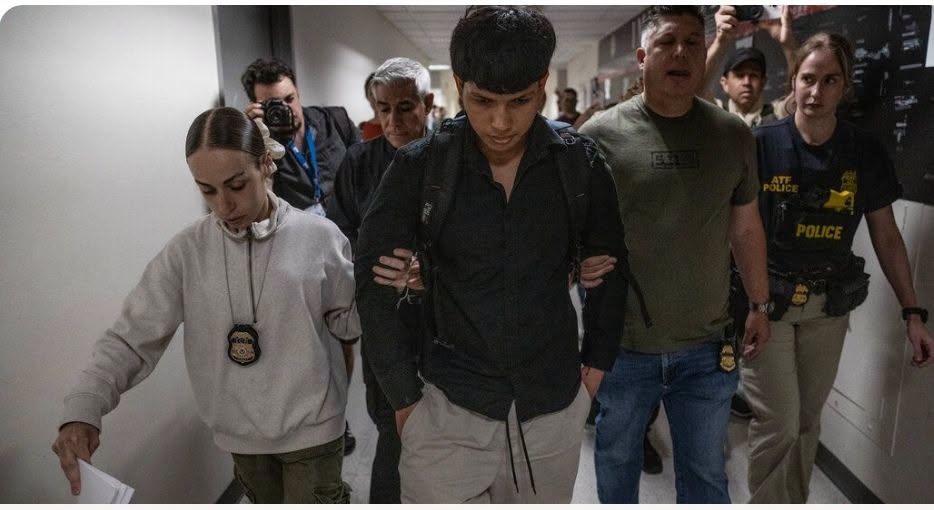
The ruling, issued Tuesday by U.S. District Judge P. Casey Pitts of the Northern District of California, strikes at one of the most visible and controversial tools in the administration’s deportation push. For months, immigration courts had become places where some people arrived for scheduled hearings, only to encounter federal agents waiting in hallways, elevators, and courthouse exits.
The decision does more than pause a single enforcement tactic. It vacates multiple policies tied to courthouse arrests and detention rules, restoring limits that had narrowed the when and how of immigration agents’ civil arrests at courthouses. It also rejects the government’s attempt to expand temporary detention from a 12-hour limit to as long as 72 hours.
For immigrants, attorneys, judges, and community advocates, the ruling changes the atmosphere around immigration court. The Trump administration creates a legal obstacle at the center of its broader effort to speed up deportations and widen federal enforcement power.
Judge Says Immigration Court Arrest Policy Lacked a Reasoned Basis
At the heart of the ruling is a basic principle of administrative law: federal agencies must explain major policy changes before they impose them.
Judge Pitts found that Immigration and Customs Enforcement and the Executive Office for Immigration Review failed to give a reasoned explanation for reversing earlier limits on courthouse arrests. The court said the agencies did not properly address the risks that earlier guidance had recognized, including fear, safety concerns, and the possibility that immigrants would stop showing up for court.
That point matters because the immigration court is already a high-pressure system. People in removal proceedings are required to appear before immigration judges. Missing a hearing can lead to serious consequences, including an in absentia removal order. When arrests become associated with attendance, the court system itself can begin to feel like a trap.
The ruling does not say the government can never enforce immigration law at or near a courthouse. Instead, it says the administration cannot erase prior limits without doing the legal work required to justify the change. In practical terms, the court treated the policy reversal as rushed, unsupported, and legally defective.
The Case Started With an Asylum Seeker Arrested After Court
The lawsuit grew out of the arrest of an asylum seeker who had attended a routine immigration court hearing in San Francisco. After the hearing, ICE arrested her as she was leaving court.
That detail is central to the case because it challenges the government’s framing of courthouse arrests as ordinary enforcement. The people affected were not hiding from the system. Many were appearing exactly where the government had ordered them to appear.
The lawsuit argued that courthouse arrests created a coercive choice: attend a required hearing and risk arrest, or skip court and risk deportation for failing to appear. Civil rights groups said that the dynamic damaged the integrity of immigration courts by making legal compliance feel dangerous.
Judge Pitts agreed that the government failed to seriously consider those consequences. The ruling emphasized that agencies cannot focus only on enforcement advantages while ignoring the predictable damage to court access and hearing attendance.
The Nationwide Order Goes Beyond Immigration Courthouses
One of the most important parts of the decision is its reach. The order applies nationwide, not just in California.
Earlier litigation had produced narrower relief in certain places, including a New York order that restricted arrests at immigration courts in Manhattan. This California ruling goes further by vacating the challenged policies nationwide.
The scope matters because immigration court arrests had become a national flashpoint. Reports of arrests outside courtrooms and in public courthouse spaces spread across major cities, raising questions about whether people could safely participate in their own legal proceedings.
By vacating the policies nationwide, the court made the decision relevant for immigration courts from New York to Los Angeles, from Texas to Florida, and from large urban court systems to smaller jurisdictions where immigrants may already face long travel distances, limited legal support, and language barriers.
ICE Detention Waiver Also Comes Under Fire
The ruling also targeted a separate but connected policy: ICE’s waiver of the 12-hour limit for temporary holding facilities.
Under the challenged policy, ICE could hold people in short-term cells for up to 72 hours. The court rejected that expansion, finding that the agency failed to properly consider alternatives and consequences.
This part of the ruling is significant because courthouse arrests often feed directly into detention. A person arrested after a hearing may be moved quickly into a holding room, processing area, or detention facility. If temporary cells become overnight holding spaces, the nature of detention changes.
Short-term holding rooms are not designed to function like full detention centers. They may lack beds, showers, outdoor space, proper medical access, and other conditions expected for longer confinement. The court’s concern was not only that the government extended the time limit, but that it did so without a careful explanation.
Why the Administrative Procedure Act Became the Legal Weapon
The case turned heavily on the Administrative Procedure Act, the 1946 law that governs how federal agencies make and change policies.
The APA does not require courts to agree with every agency decision. It does require agencies to show that they considered the important issues, explained their reasoning, and avoided arbitrary action.
Judge Pitts found that the Trump administration’s policies did not meet that standard. The ruling treated the courthouse arrest policy as a major shift that demanded more than a bare assertion of enforcement authority.
That legal framing is powerful because it avoids turning the case into a broad political debate over immigration. The court’s message was narrower and sharper: agencies can change policy, but they must think before they act, especially when the change affects access to courts, detention conditions, and due process.
The Ruling Restores Narrower Limits on Courthouse Arrests
The decision effectively restores earlier restrictions that limited immigration courthouse arrests to exceptional circumstances.
Those earlier limits generally treated courthouses as sensitive places where enforcement actions should not become routine. Arrests were reserved for narrower situations, such as national security threats, imminent danger, or urgent public safety concerns.
That framework recognized a practical truth: courts cannot function if people are afraid to enter them. Immigration courts depend on attendance. Attorneys need clients to appear. Judges need respondents present. The government itself needs hearings to move forward.
By contrast, routine courthouse arrests risk undermining the same system they claim to serve. If people believe attendance equals detention, fewer people may appear, more cases may end by default, and court backlogs may become even harder to manage.
A High-Stakes Decision During a Deportation Push
The ruling lands during a broader Trump administration effort to expand immigration arrests and increase deportations.
Since returning to the office, the administration has used immigration enforcement as a central policy priority. Courthouse arrests became one piece of that strategy because they allowed agents to locate people at scheduled hearings.
That tactic may appear efficient from an enforcement standpoint. People arriving for hearings are easier to find than people spread across homes, workplaces, and communities. But the court found that efficiency alone does not excuse an agency from considering legal and practical harms.
The decision now forces the administration to choose its next move. It can appeal the ruling, write new policies with stronger legal reasoning, or shift enforcement resources away from courthouse arrests while litigation continues.
Immigration Courts Already Face a Massive Backlog
The ruling also comes against the backdrop of a heavily burdened immigration court system.
By the end of May 2026, more than 3.2 million active cases were pending in U.S. immigration courts, with more than 2.3 million people waiting for asylum hearings or decisions. That backlog makes attendance, scheduling, and trust in the system even more important.
When courts are already strained, policies that discourage people from appearing can create a larger administrative problem. Missed hearings may lead to faster removal orders in some cases, but they can also prompt motions to reopen, legal challenges, emergency filings, and additional confusion for courts already managing enormous caseloads.
This is why the ruling matters beyond the individuals arrested. It reaches the machinery of the immigration court itself. A court system cannot process cases fairly or efficiently if people believe that showing up may be used against them.
Civil Rights Groups Frame the Decision as a Court Access Victory
Civil rights organizations that challenged the policy described courthouse arrests as an attack on due process and access to justice.
Their argument was direct: immigrants should not have to risk arrest simply for obeying a court notice. Families should not have to choose between attending a hearing and staying together for one more day. Lawyers should not have to tell clients that the courthouse itself may be the most dangerous place in their case.
The court did not adopt every moral claim in political language. It instead used administrative law to reach a similar practical result. The government failed to explain why it could disregard earlier concerns about chilling effects, courthouse safety, and hearing attendance.
That gives the ruling a wider legal force. It is not just a statement of sympathy. It is a finding that the government’s own process was legally inadequate.
DHS Condemns the Ruling as Judicial Overreach
The Department of Homeland Security criticized the ruling, arguing that immigration enforcement should be allowed to proceed when people are ordered removed or are otherwise subject to detention.
That response signals the administration is unlikely to treat the decision as the final word. The government may argue on appeal that the court interfered with executive authority over immigration enforcement, an area where presidents often claim broad discretion.
The legal fight may also turn on the difference between a nationwide injunction and nationwide vacatur under the APA. The government has challenged broad judicial remedies in other cases, and this ruling is likely to become part of the larger debate over the power of district courts to stop federal policies nationwide.
For now, however, the order stands as a major check on the administration’s courthouse strategy.
What Changes for Immigrants With Court Hearings
For immigrants in removal proceedings, the ruling may reduce the immediate fear of being arrested inside or around immigration court under the vacated policies.
That does not mean every risk disappears. People may still face detention in other settings, especially if they have final removal orders, criminal cases, prior immigration violations, or separate enforcement issues. The ruling does not repeal immigration law or prevent ICE from acting under all circumstances.
What it does change is the legality of the broad policy that made courthouse arrests a routine tool. It restores the idea that immigration courts must remain places where people can appear, argue their cases, consult counsel, and comply with legal obligations without a blanket arrest policy hanging over every hearing.
For attorneys, the decision may make it easier to advise clients to attend court. For families, it may reduce the terror surrounding hearing dates. For judges, it may help preserve the courtroom’s basic function.