Geneva answered Washington within 24 hours. On Tuesday, a World Health Organization spokesperson defended the science behind childhood immunization schedules before reporters at the UN. The remarks came in direct response to President Trump’s Monday order cutting the list of universally recommended childhood vaccines from 18 to 11.
The exchange set a global health body against a sitting American president over a question with no ambiguity in the research record: whether fewer vaccines, administered on a slower timeline, make American children safer.
WHO’s answer, delivered through spokesperson Tarik Jašarević, drew on six decades of accumulated evidence. The White House’s answer rested largely on a promise of “gold standard” protection and a renewed claim tying vaccines to autism.
What the Order Actually Changes
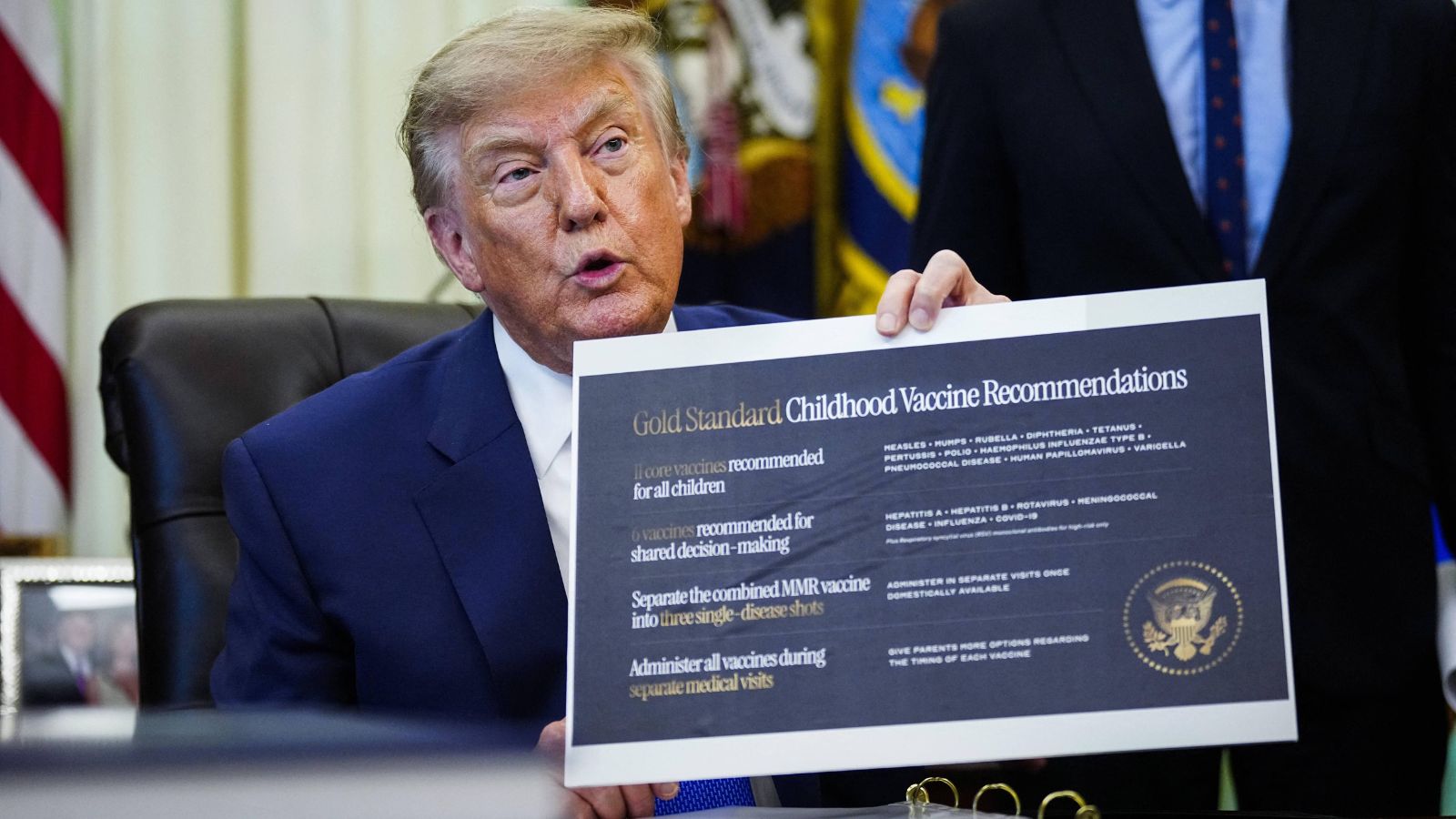
Trump signed the executive order Monday afternoon in the Oval Office, flanked by Health and Human Services Secretary Robert F. Kennedy Jr. The directive removes seven vaccines from the universal childhood schedule. They include vaccines for COVID-19, influenza, rotavirus, hepatitis A, hepatitis B, and bacterial meningitis. The order leaves those vaccines to what it calls “shared clinical decision-making” between parents and doctors.
It also instructs that the combined measles, mumps and rubella shot be split into three separate injections given at separate appointments, a format no other country currently uses. “Today, we’re proud to officially announce the United States of America’s gold standard childhood vaccination recommendations,” Trump said before signing the order. He added that the changes touch “many subjects, but including autism in particular.”
The order builds on groundwork Kennedy laid in January, when he bypassed the CDC’s Advisory Committee on Immunization Practices and unilaterally trimmed the same schedule. A federal judge blocked key portions of that earlier move in March, and it remains tied up in litigation. Whether Monday’s order faces an identical legal fate is not yet clear, though most attorneys tracking the case expect a challenge within weeks.
Geneva’s Rebuttal, Delivered in Specifics
Jašarević told reporters that vaccination recommendations rest on more than 60 years of research conducted by WHO, national health authorities, and independent expert panels working in parallel. He pointed specifically to WHO’s Strategic Advisory Group of Experts on Immunization. The group provides evidence-based guidance to national immunization technical advisory groups. Those bodies help most countries set their own vaccination schedules.
“What comes out from WHO is science-based,” Jašarević said, adding that the organization hopes governments will lean on the best available evidence rather than depart from it. The statement stopped short of naming Trump directly. That diplomatic choice is consistent with how WHO has handled tensions with Washington since the administration moved to withdraw the U.S. from the organization at the start of Trump’s term.
That restraint has not extended to the domestic medical establishment, where reaction has run hotter and more specific.
Domestic Pushback, From Doctors to a Senate Physician
Dr. Andrew Racine, president of the American Academy of Pediatrics, called the changes “not only disheartening but dangerous” in a statement issued the day the order was signed. He argued the administration was withholding protection against measles, influenza, and RSV while advancing what he described as misleading claims about vaccine risk.
Sen. Bill Cassidy of Louisiana, who chairs the Senate Health Committee and previously practiced medicine, went further. “I’m a doctor. This executive order is wrong. The president does not have the expertise to make these changes,” Cassidy wrote on X Monday afternoon. His criticism marked a notable break from a lawmaker who cast the deciding vote to confirm Kennedy as HHS secretary last year.
Mike Ybarra, chief medical officer at the pharmaceutical industry group PhRMA, took a narrower but pointed position. He said any revision to the schedule “should be driven by the same high standard of evidence” that built it in the first place.
Dr. Ashish Jha, who coordinated the White House COVID-19 response under the previous administration, called the MMR-splitting provision a “terrible idea” in a Monday interview. She noted flatly that no other country divides the shot into three separate visits.
The Backdrop the Order Arrives Against
Context matters here, and it is not favorable to the administration’s timing. CDC data updated in late July put this year’s measles case count at 2,318. That has already surpassed the 2,289 cases recorded in all of 2025. Last year’s total was itself the highest annual tally in more than three decades.
The country is now recording its second consecutive record-breaking measles year, and international health officials are watching closely, since a U.S. outbreak stretching past a full year could cost the country the measles elimination status it earned in 2000.
93% of this year’s confirmed cases involve people who were unvaccinated, according to CDC figures. Dr. William Schaffner, a preventive medicine professor at Vanderbilt University Medical Center, described the erosion in stark terms. He called the original U.S. elimination of measles a public health triumph. Now, he said, that achievement is unraveling as the country drifts toward pre-vaccine-era risk.
Against that backdrop, removing vaccines such as hepatitis B and rotavirus from the universal list changes their status. They would move from standard recommendations to shared clinical decision-making. Public health researchers view that shift as a step in the wrong direction rather than a course correction.
No new peer-reviewed research has emerged justifying the change; the order relies instead on the administration’s own review process, conducted internally rather than through the CDC’s traditional advisory structure.
Where the Fight Goes Next
The immediate practical effect on families is limited. The order does not eliminate insurance coverage for the affected vaccines. Most states also set their own school and child-care vaccination requirements independently of federal recommendations.
But CDC guidance carries outsized influence with local health departments and pediatricians’ offices. It also shapes the standing orders pharmacies use to administer vaccines without an individual prescription. The practical ripple effects may take months to become fully visible.
Legal challenges are widely expected, following the same path that stalled Kennedy’s January changes. Medical associations, several vaccine manufacturers, and at least one federal judge have already signaled skepticism toward the administration’s authority to rewrite immunization guidance outside the CDC’s advisory process.