A denomination can reveal its deepest fears by the doors it chooses to close. The Southern Baptists’ ban on women pastors is now more than a dispute over titles, pulpits, or church procedure. It has become a public test of how America’s largest Protestant denomination understands authority, gender, decline, and survival.
At the 2026 Southern Baptist Convention annual meeting in Orlando, messengers voted 6,028 to 2,026 to advance a constitutional amendment that would formally restrict churches with women pastors from remaining in good standing. The measure still needs another two-thirds vote at the next annual meeting before it becomes part of the SBC Constitution. Yet the first vote already sent a clear signal about where the denomination’s center of gravity is moving.
The deeper story is not simply that Southern Baptists are debating women in ministry again. It is that a shrinking denomination is choosing one of its loudest public fights around exclusion. At a time when membership has fallen to levels not seen in decades, the SBC is asking whether its future depends on a wider witness or a harder gate.
The Vote That Became a Mirror
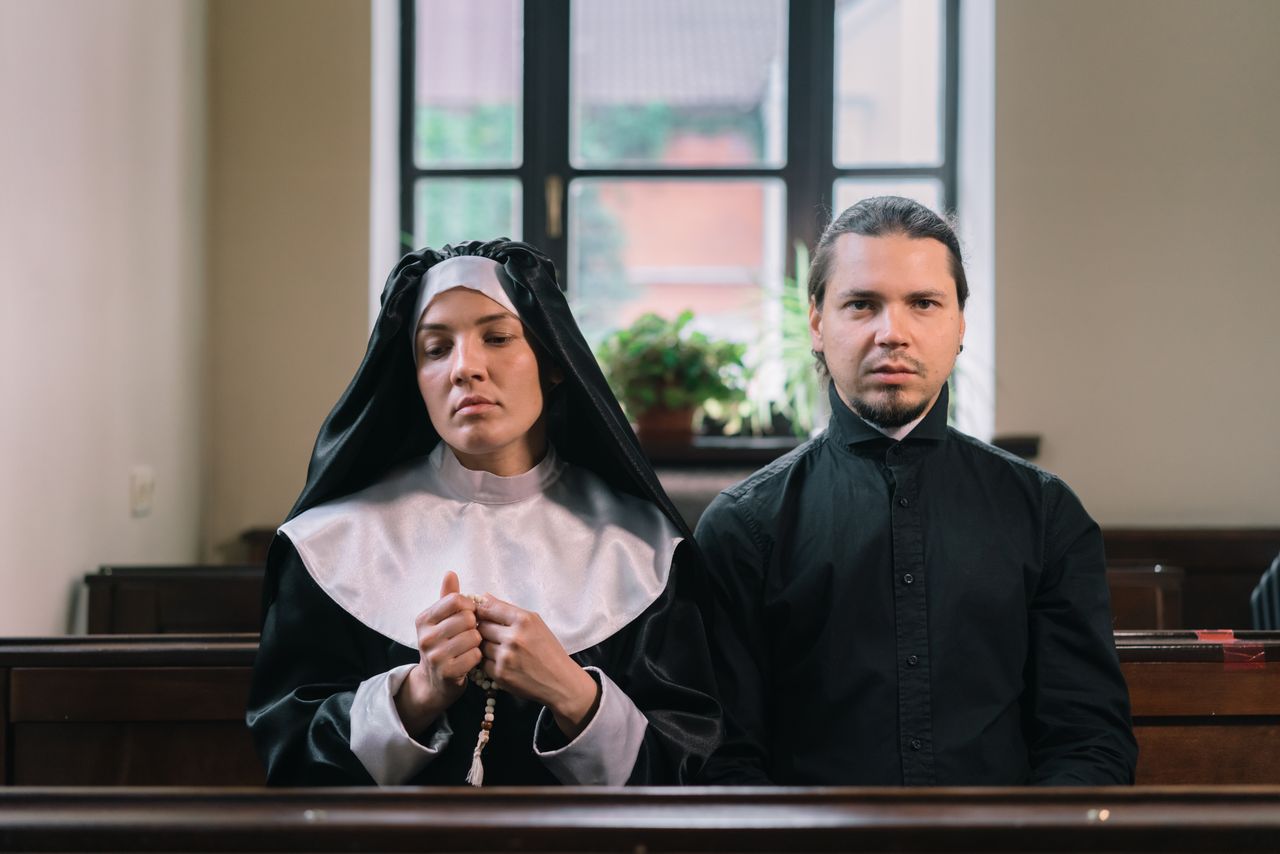
The Orlando vote did not arrive from nowhere. Southern Baptists have debated women’s pastoral authority for years, and the denomination’s official faith statement already says the office of pastor is limited to men. Supporters of the amendment argue that the convention must align its governing rules with that belief.
To them, the issue is doctrinal clarity. They believe a church cannot remain in cooperative fellowship while appointing women to roles that the SBC reserves for men. In that view, the amendment does not create a new belief, but strengthens enforcement of an existing one.
Yet the vote also reveals how the denomination sees itself under pressure. When institutions feel secure, they often tolerate more internal variation. When they feel threatened, they often define their borders more sharply.
That is why the Southern Baptist women pastors’ ban carries meaning beyond a single theological dispute. It shows a denomination trying to preserve identity during a period of cultural and numerical uncertainty. The vote functions as a mirror, reflecting both conviction and anxiety.
A Shrinking Church Tightens the Gate
The SBC remains a powerful religious body with thousands of churches and millions of members. Still, its long-term membership decline has become impossible to ignore. Recent denominational data shows membership around 12.3 million, a sharp drop from its peak in the mid-2000s.
There are encouraging signs in the same picture. Worship attendance and baptisms have recently improved, providing leaders with evidence that local church life has not collapsed. But improved attendance does not erase the larger trend of fewer people formally belonging.
That tension makes the amendment more striking. The denomination is not expanding from a position of broad cultural confidence. It is trying to define itself while facing a thinner base, a more skeptical public, and a younger generation less attached to institutions.
For supporters, a smaller but more doctrinally unified SBC may seem stronger than a larger but looser one. They may see decline as a reason to recover certainty, not soften boundaries. In their view, faithfulness should not depend on public approval.
Critics read the same moment differently. They see a denomination losing members while spending national energy on who must be kept out. To them, the gate is becoming more visible than the mission.
The Polite Phrase With Sharp Edges
The phrase “friendly cooperation” sounds gentle. It suggests churches choosing to work together through missions, seminaries, relief efforts, and shared beliefs. In practice, however, it determines whether a congregation remains recognized inside the SBC family.
The convention does not operate like a centralized church government. It cannot directly hire or fire pastors in local congregations. Local church autonomy remains one of the most important Baptist principles.
But autonomy does not guarantee denominational standing. A church can make its own leadership decision, and the SBC can decide that decision places the church outside the bounds of cooperation. That is where the amendment gains power.
This structure matters because the Southern Baptists’ ban on women pastors would not merely express disagreement. It would give the convention a clearer constitutional tool to determine which churches remain within the circle. The punishment may sound procedural, but the effect can feel deeply personal.
For many congregations, leaving the SBC or being removed from it would affect their identity, relationships, mission partnerships, and history. Some churches have belonged to the denomination for generations. Losing that connection is not a small administrative event.
The Fight Has Moved Beyond Senior Pastors
Many readers may assume this debate concerns only women serving as lead pastors. The proposed language, however, raises broader questions about function, title, authority, and public ministry. That makes the issue more complicated for local churches.
A church may not have a woman as senior pastor, but it may have women serving as children’s pastors, worship pastors, teaching pastors, or discipleship pastors. Women may occasionally preach, lead ministries, train volunteers, or shepherd members through crises. These roles often carry pastoral weight even when they do not carry the top title.
That is where the debate becomes more personal. If the amendment focuses not only on titles but also on functions, churches may feel pressure to rename roles or limit women’s visibility. The line between permitted service and forbidden authority can become difficult to draw.
The SBC has long depended on women’s labor in teaching, missions, care, and local ministry. Many churches would struggle to function without that work. Yet the amendment signals that visible pastoral recognition remains a boundary the denomination wants to protect.
This creates a powerful contradiction for critics. Women may be trusted to carry ministry burdens, but not trusted with the office that publicly names that burden as pastoral. The more women serve, the harder it becomes to hide that tension.
Saddleback Was the Warning Shot
The national debate became more concrete when Saddleback Church, one of the best-known congregations in the country, was removed from the SBC after appointing women to pastoral roles. Fern Creek Baptist Church in Kentucky also became part of the same broader fight. Those cases showed that the issue could move from theory to consequence.
Saddleback’s removal mattered because of its size and public profile. It demonstrated that even a prominent church could lose standing when the SBC judged its leadership structure out of bounds. The message traveled far beyond California.
For amendment supporters, those removals showed courage. They believed the convention had finally acted consistently with its stated beliefs. To them, influence and size should not exempt a church from doctrinal standards.
For critics, the expulsions showed a narrowing denomination willing to break fellowship over women’s leadership. They saw the action as a warning to other churches that may share mission goals but differ on pastoral titles. The proposed constitutional amendment would make that warning even stronger.
This history gives the current vote a harder edge. Churches now know that the debate is not abstract. If the amendment passes again, the consequences may become clearer, broader, and more difficult to avoid.
The Abuse Crisis Shadows the Debate
The SBC’s vote on women pastors lands in the shadow of its sexual abuse crisis. A major independent investigation released in 2022 found that senior leaders had mishandled abuse reports and mistreated survivors over many years. That history still shapes public trust.
This does not mean every supporter of the amendment lacks concern for abuse survivors. Many Southern Baptists care deeply about reform, accountability, and protection. But public perception depends not only on stated values, but on visible urgency.
That is why the contrast feels so sharp. Critics ask why the denomination can move with such clarity on restricting women’s authority while abuse reform has often appeared slower and more contested. The question is not only what the SBC believes, but what it mobilizes to control.
Institutional credibility often depends on moral proportion. When a church body appears more decisive about policing women’s titles than protecting the vulnerable, many outside observers draw a harsh conclusion. Survivors and former members may draw an even harsher one.
This shadow will not disappear before the next vote. The SBC may insist that doctrinal clarity and abuse reform can occur simultaneously. Still, the optics remain difficult because the public remembers which battles receive the strongest machinery.
Younger Americans May Hear Something Different
The SBC is speaking to its own messengers, but the message travels beyond the convention hall. Younger Americans hear these debates through a different cultural filter. Many have grown up seeing women lead schools, companies, hospitals, courts, and public agencies.
When they hear that a denomination is debating whether women can pastor or preach, they may not first think of church polity. They may hear another institution questioning women’s authority. That creates a communication gap that church leaders cannot ignore.
Some younger Christians still embrace complementarian theology. The issue is not a simple divide between old and young. Yet the broader culture has changed, and arguments that once sounded normal inside church walls now face sharper public scrutiny.
This matters because younger generations already show lower levels of trust in organized religion. They often judge institutions by how they handle power, abuse, race, gender, and transparency. A fight over women pastors may confirm suspicions they already carry.
The Southern Baptists’ ban on women pastors, therefore, becomes part of a larger generational story. It asks whether the denomination can explain its convictions in a way that sounds faithful rather than fearful. That will not be easy.
Boundary Politics and the Future of Belonging
Every religious body needs boundaries. Without them, shared identity becomes vague, and cooperation loses meaning. The real question is which boundaries become central enough to define the institution’s public face.
The SBC’s current direction suggests that women’s pastoral authority has become one of those defining lines. Supporters view that as necessary discipline. Critics view it as boundary politics at a moment when the denomination needs repair and renewal.
Boundary politics always creates winners and losers. Some churches gain confidence that the convention is holding the line. Others feel pushed toward silence, compliance, or departure.
This affects more than pastors. It shapes seminaries, mission boards, church plants, and younger ministers as they decide where they belong. It also affects women who wonder whether their gifts will always be welcomed with conditions.
If the amendment passes in 2027, the SBC may gain a clearer constitutional identity. But clarity can also reduce flexibility. A cleaner line on paper can create a smaller circle in practice.
Final Thought
The Southern Baptists’ ban on women pastors is not merely a procedural fight about church language. It is a revealing moment in the life of a denomination that still holds enormous influence, yet no longer commands the same cultural confidence it once did. The vote shows how deeply questions of gender, authority, doctrine, and decline now overlap.
Supporters believe the SBC must protect its theological convictions even when the culture objects. Critics believe the denomination is choosing control over trust at a time when trust is already fragile. Both sides understand that the stakes extend beyond a single amendment.
The next vote will decide whether this restriction is added to the SBC Constitution. The deeper question will remain long after the ballots are counted: can a shrinking denomination build a stronger future by narrowing the doorway, or will the harder gate make the empty spaces inside even harder to ignore?