The turkey may be the star of most Thanksgiving tables, but the dishes around it often tell where a family comes from. In some kitchens, a stack of soft potato rounds waits under a towel. In others, banana-leaf bundles simmer in a big pot, or a smoky platter of pork sits beside the sweet potatoes.
Across the United States, heritage foods shape the holiday as much as the bird does. Wikipedia’s overview of the traditional Thanksgiving dinner points to 3 regional examples: Norwegian lefse in Minnesota and the Pacific Northwest, pasteles in Puerto Rico and roast pork tied to the Makahiki season in Hawaii.

Norwegian Lefse in Minnesota and the Pacific Northwest
According to the Thanksgiving dinner overview, Minnesotans and Pacific Northwest residents of Norwegian or Scandinavian descent often set the holiday table with lefse. The soft Norwegian flatbread is typically made from riced potatoes, flour, butter and milk, cream or lard, according to Wikipedia’s entry on lefse.
Making it is a craft of its own. Cooks use a potato ricer, a grooved rolling pin and long wooden turning sticks to move the thin rounds onto a large, flat griddle. The most common way to eat lefse is spread with butter and sugar and rolled up, though cinnamon, jam and lingonberries are popular too. Some American families go further, with peanut butter or even ham and eggs.
Lefse is especially popular among Norwegian Americans across the Midwest, including Minnesota, North Dakota, South Dakota, Iowa and Wisconsin, and it is closely tied to both Christmas and Thanksgiving. Mankato, Minnesota, even marks Lefse Day on the Sunday after Thanksgiving. Fosston, Minnesota, holds a November Lefse Fest with a Champion Lefse Maker competition, Barnesville hosts the National Lefse Cookoff during its Potato Days festival, and Starbuck claims the world’s largest lefse, made in 1983. Families who don’t roll their own can buy it from makers such as Norsland Lefse in Rushford, Minnesota, which says its lefse is made with real potatoes and promotes holiday orders.
Regional sides show up everywhere on the holiday map. One recent roundup found that stuffing is the favorite Thanksgiving side in 38 states, and Frenz Hub’s list of strange Thanksgiving traditions collects a few of the more unusual ones.
Pasteles in Puerto Rico
In Puerto Rico, the Thanksgiving table often goes well beyond the mainland standards. According to the Thanksgiving dinner overview, the meal there includes arroz con gandules, pasteles and potato salad, and the turkey is often stuffed with mofongo, the mashed plantain dish.
Pasteles are the most labor-intensive of the bunch. According to Wikipedia’s entry on pasteles, the masa is typically made from grated green banana, green plantain, white yautía, potato and calabaza, seasoned with annatto oil. The filling is usually a meat stew that may include Boston butt, ham, bacon, raisins, chickpeas, olives and capers. Each portion is spread on a warmed, oiled banana leaf, folded, tied into a packet and boiled or steamed.
The dish resembles a tamal and is considered related to the Mesoamerican tamale. Pasteles are a cherished recipe especially around Christmastime, and families often make 50 to 200 or more at once during the holidays, freezing extras for later. For families who serve them at Thanksgiving, that first batch can mark the start of a long holiday season, on the island and across the diaspora.
Frenz Hub’s look at American traditions that confuse the rest of the world is a reminder of how much the holiday varies depending on where it is celebrated.

Makahiki Roast Pork in Hawaii
In Hawaii, Thanksgiving dinner connects with a much older season of thanks. According to the Thanksgiving dinner overview, the holiday there ties into the Makahiki period, whose feasts featured roast pork, fish, sweet potatoes, nuts and other vegetables.
The Makahiki season was the ancient Hawaiian New Year festival held in honor of the god Lono. It lasted about four lunar months, roughly from October or November to February or March. On Hawaii Island, it began with the crescent moon that followed the rising of the Pleiades shortly after sunset, usually around November 17. People gave thanks for the harvest, warfare was forbidden, and the season was filled with hula, sports and feasting. Offerings included pigs, taro, sweet potatoes and dried fish.
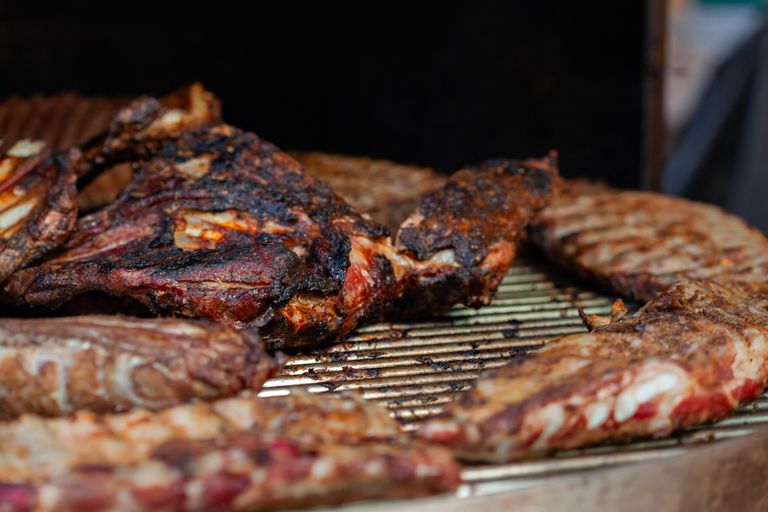
Roast pork in Hawaii often means kalua pig, cooked in an imu, an underground oven. Hardwood heats stones in a pit, the pit is lined with vegetation, and salted meat wrapped in ti leaves is buried to cook for several hours. According to Wikipedia, the ti leaf wrapping is what gives kalua pig its distinctive flavor, along with hardwood smoke. Today, some cooks use an oven and liquid mesquite smoke instead of digging a pit.
For travelers heading to the islands or to a relative’s house for the holiday, an outlook on Thanksgiving’s busiest flying days lays out the travel crunch, and Frenz Hub’s list of food laws and rules in other countries is a fun read for anyone curious about how dining customs differ.
One Holiday, Many Tables
The overview notes other regional touches as well, such as sauerkraut served in the Mid-Atlantic, especially by Baltimoreans of German and Eastern European descent. For families who have moved far from where those recipes began, cooking them once a year is a way to keep a grandmother’s griddle, a great-aunt’s banana leaves or a cousin’s imu part of the holiday. Together, these dishes show that Thanksgiving is shaped as much by family heritage as by the turkey in the middle of the table.
This article was produced with AI assistance and edited for accuracy against the sources linked above.
Image: Lance Fisher – CC BY-SA 2.0/Wikimedia Commons