A Miami brunch ends with a manager, a refund demand and a table of friends who had cleaned their plates minutes earlier. By her account, that scene helped push the creator behind a TikTok video posted as @bambiwaldorf toward a firm rule about whom she lets near her life. She says she grew up in the suburbs and spent her twenties learning how a very different world operates.
Her video answers commenters who called her anti-Black, elitist and colorist for distancing herself from people tied to the ‘hood’. The reply is blunt. Leave, close the chapter and bring nobody with you.
I could not independently verify the incidents she describes, so they appear here as her account. The claims layered on top of them can be checked, and the results run uneven.
Dating an NBA player put her in rooms she had never entered
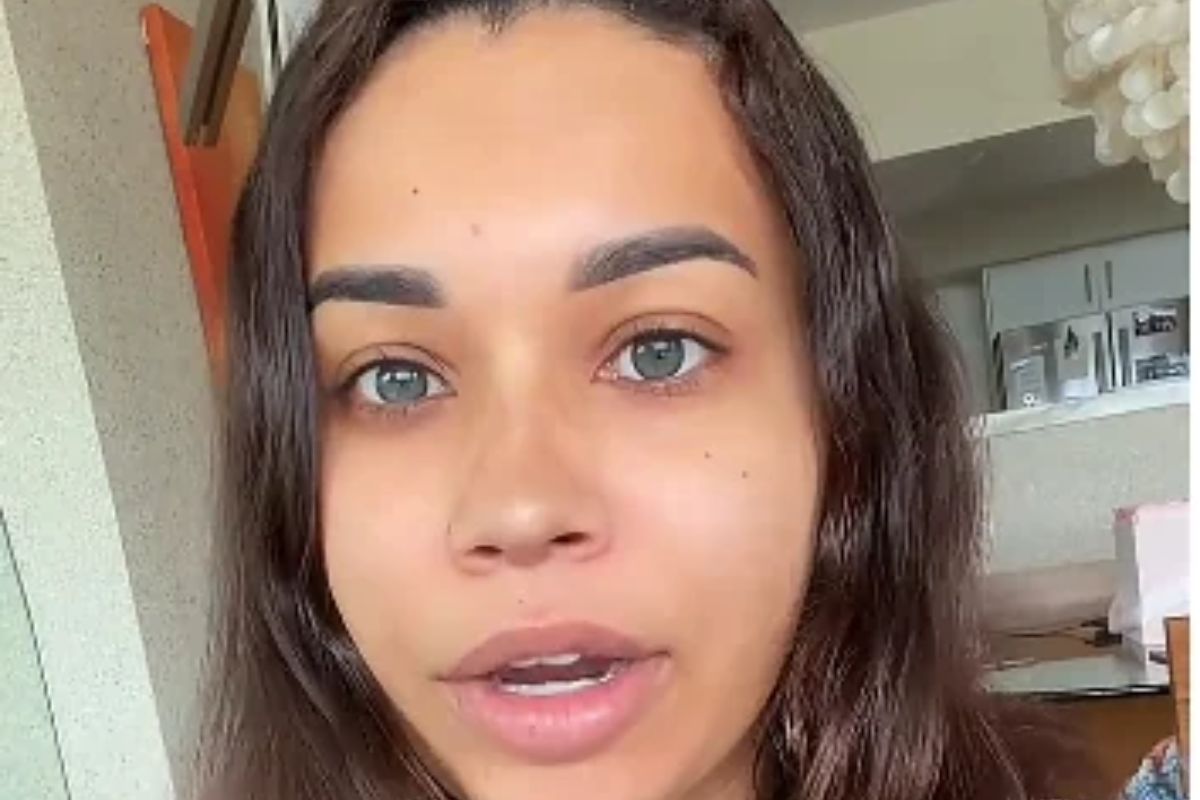
Her telling starts there. Once she began dating the player, she says, she met rappers and other players’ girlfriends who grew up around gas station corners, constant glances over the shoulder, drugs, violence and prostitution treated as normal. Poverty alone was never her complaint.
Relatives in the Dominican Republic, she says, were raised on a farm with no electricity or running water, yet they lack the mentality she ties to the hood. She allows that not everyone from there fits the pattern, then says she believes most do. Majority is the hinge of her argument, and the evidence below keeps testing it.
A hotel tab and an unlocked phone shaped her distrust
In Minneapolis, she says, a friend who claimed to have grown up on the city’s most dangerous street asked for her Four Seasons room number to send flowers, then billed meals at the hotel restaurant to the room. She says she later told the hotel to keep her room details private and saved a screenshot as proof.
Another friend, she adds, described a card reader that can lift payment details from a phone left unlocked, so she keeps hers locked around them. A security explainer from McAfee rates that kind of skimming a low risk, noting that contactless payments work only within a few centimeters and rely on encrypted one-time codes.
The tab story is a character claim she can document. The card reader story is a technology claim, and it is the shakier of the two.
The majority claim collides with the best data on who gets shot
Her Louisiana smoke shop story is the most harrowing one she tells. The friend she was with, she says, was trying to hand her off to a dealer when a man walked in over what she took to be a debt and shooting began. It was the first time she had heard bullets.
Violence like that is real, and researchers map it narrowly. Studying a Chicago community of about 82,000 residents, sociologists Andrew Papachristos and Christopher Wildeman traced a network of co-offenders that held less than 4 percent of the neighborhood’s population yet accounted for 41 percent of gun homicides.
Each social tie removed from a homicide victim cut a person’s own odds of becoming one by 57 percent. Danger follows specific ties, which a sweeping rule about whole neighborhoods cannot capture.
Food stamps pay too little to be anyone’s life plan
She says mothers in that environment tell their children to skip college and live off EBT. Nothing in her video lets anyone test the anecdote, but benefit math can be checked.
USDA figures compiled by USAFacts put the average participant’s benefit at $188 a month in fiscal 2025, roughly $6 a day, and the figure sat 27.6 percent below the fiscal 2021 high of $259. Benefits also shrink as household income rises. If any family is making that trade, the numbers say it is a bad one.
Pell Grants are real money, and her community college route exists
Her exit plan runs through community college, Pell Grants and campus jobs. The grant side checks out. Federal Student Aid’s January 30 notice set the $7,395 maximum Pell award for the award year running July 1, 2026 through June 30, 2027, with a $740 minimum, and warned the figure could change if Congress acts.
Actual awards depend on need and enrollment. Whether the maximum covers rent, books and transit depends on the school and the city, details her video skips.
The debt she waves off lands hardest on Black graduates
She tells viewers a truly poor student will not end up buried in $80,000 of debt. Research on the 2008 graduating class complicates that comfort.
Scott-Clayton and Li’s analysis found Black bachelor’s graduates owed $52,726 on average four years later, against $28,006 for white graduates. Graduate school borrowing explained about 45 percent of the gap.
48 percent of Black graduates owed more on federal undergraduate loans than at graduation, compared with 17 percent of white graduates, and their four-year default rate ran 7.6 percent against 2.4 percent.
Her $80,000 figure sits well above the average, yet the pattern strains any story in which aid alone clears the road.
Florida’s marijuana law turns on weight, and her story never gives one
She says a friend, after hearing she was too high, offered to order a burger and milkshake and instead called police. Twelve officers arrived, she says, and threatened a felony over papers, lighters and a jar of weed. She did not know Florida caps possession at a set amount.
A Florida House staff analysis lays out the line at 20 grams: a first-degree misdemeanor at or below it and a third-degree felony above it, with up to five years in prison and a $5,000 fine. Paraphernalia alone is a first-degree misdemeanor, according to NORML’s penalty schedule.
Her video provides no weight or outcome, and I could not confirm whether any charge followed.
Mobility research rewards new friendships more than burned ones
Harvard economist Raj Chetty and colleagues examined 21 billion Facebook friendships for a pair of Nature papers in 2022. The share of high-income friends among low-income people ranked among the strongest predictors of upward mobility found to date, and it explained known links between mobility and racial segregation, poverty rates and inequality.
The finding backs her instinct to change company. Nothing in it tests severing ties, and it shows a pattern across areas rather than proof for any single person.
She calls the pull-down dynamic a ‘crab bucket mentality’ and offers no research for it. Her rule against looking back rests on experience alone.
Critics land their best punch where she generalizes about an entire community
Strip the verdict away and her safety habits need no defense. Locking a phone, guarding an address and leaving rooms that turn volatile are choices any hotel guest or restaurant manager would recognize.
Trouble starts where a handful of bad experiences become a ruling on most of a population. Concentrated violence, modest benefits and uneven college outcomes all appear in the research above, while nothing there supports a dangerous, jealous majority.
She calls her stance a wish for peace. Commenters hear class contempt, and a video that mixes a personal safety plan with a verdict on everyone from the hood leaves room for both readings.
One table at one Miami brunch started the story. The research suggests it should have stayed a story about one table.