California has long prided itself on leading climate initiatives, promoting renewable energy, and pushing electric vehicle adoption. Yet beneath this progressive image lies a persistent vulnerability: the state still relies heavily on imported crude oil to power its transportation networks, industrial operations, and even critical military installations.
As domestic production continues to decline and refinery capacity shrinks, this dependence is no longer just an economic concern; it has become a national security issue.
The state consumes enormous amounts of petroleum every day, from fueling vehicles and aircraft to supporting port operations, agriculture, and emergency services. California’s isolated position in the U.S. energy system, combined with limited pipeline access and reliance on maritime oil imports, makes it especially exposed to global supply shocks.
When international tensions, shipping delays, or natural disasters occur, the consequences are felt rapidly across local markets and critical infrastructure.
Geography and Infrastructure Amplify Risk
California’s energy network is not integrated with the main U.S. pipeline system the way Texas’, Louisiana’s, or the Midwest’s are. This geographic isolation means the state cannot easily source replacement fuel from nearby regions if local refineries or ports are disrupted.
Instead, the state depends on tanker shipments from foreign suppliers, which can take three to four weeks to arrive. Even small disruptions in timing, port operations, or global crude markets can quickly trigger price spikes and supply bottlenecks.
Moreover, much of California’s refining and offshore infrastructure is aging. Many platforms, pipelines, and processing facilities were designed decades ago, and their vulnerability to seismic events adds a layer of operational risk. A major earthquake or industrial failure could simultaneously disrupt multiple nodes in the fuel supply chain, magnifying the consequences of an already fragile system.

Foreign Crude Makes Up the Bulk of Supply
Domestic production in California has steadily declined over the past several decades due to regulatory pressure, field depletion, investor caution, and environmental priorities. To fill the gap, the state increasingly relies on foreign crude, importing significant volumes from Brazil, Iraq, Guyana, Canada, Ecuador, Argentina, Saudi Arabia, Colombia, and the UAE.
Brazil and Iraq alone account for more than a third of these imports. While some of these sources are politically stable, others sit in regions prone to conflict, sanctions risk, or shipping disruptions, exposing California to global volatility in ways that pipeline-connected states do not experience.
California’s refineries also produce specialized fuel blends, such as CARB-compliant gasoline, that cannot easily be substituted for standard domestic fuel. This requirement further tightens the state’s reliance on specific import streams and specialized refinery output, creating a unique vulnerability that few other U.S. states face.

Military Readiness Depends on Civilian Fuel
The national security implications of California’s energy dependence are profound. The state hosts major military installations, including naval bases, air force stations, and training facilities, which rely on the civilian energy grid for their operational fuel.
From aviation jet fuel to diesel for armored vehicles and emergency response fleets, reliable energy underpins the state’s strategic and defense capabilities. Any significant supply disruption could affect mission readiness and national defense posture, highlighting the stakes beyond everyday gas prices.
Refinery Closures Compound the Problem
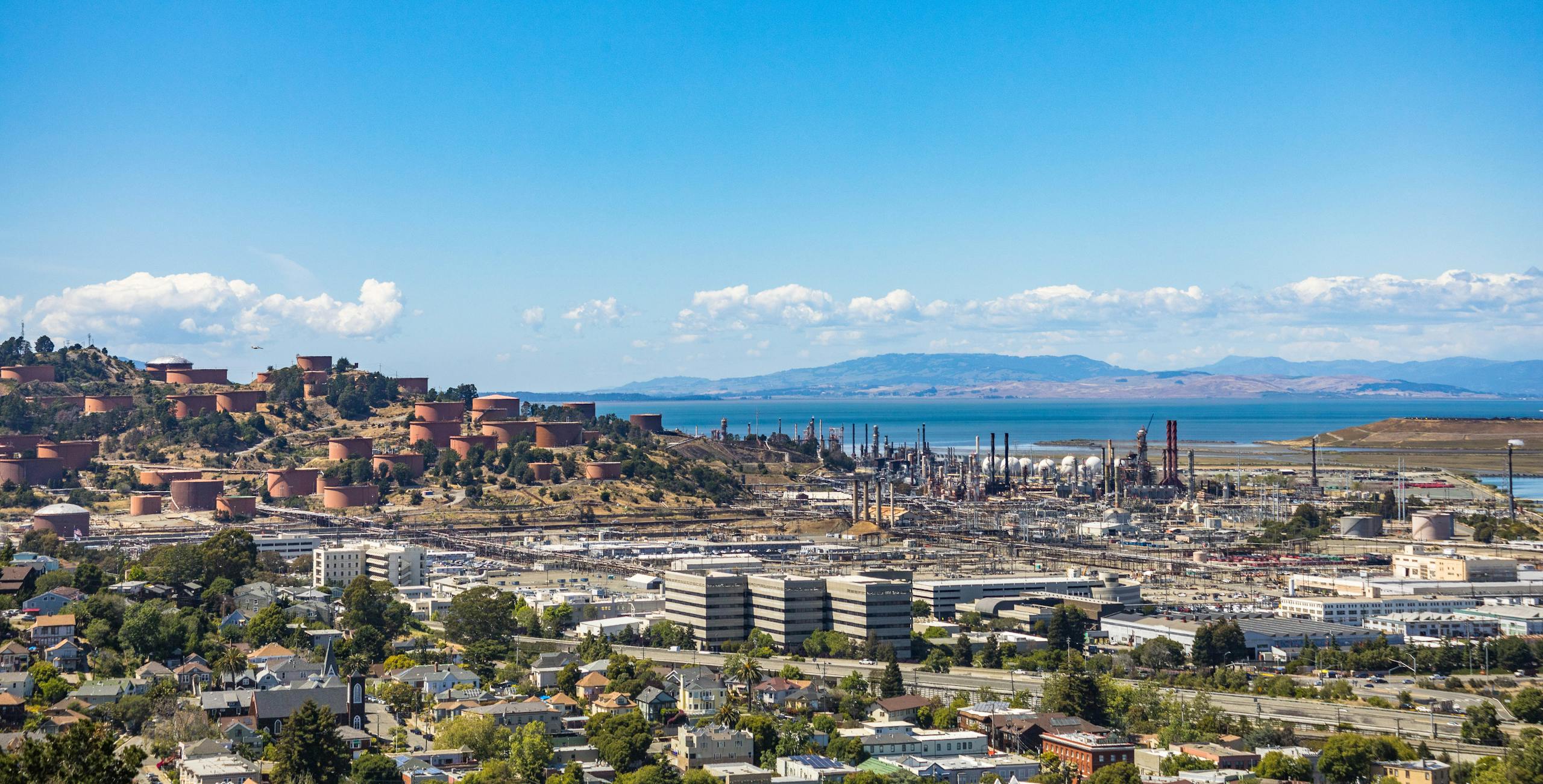
California’s shrinking refinery base exacerbates the risk. Planned or unplanned closures reduce the state’s capacity to process both domestic and imported crude. Refineries do more than supply gasoline; they produce diesel, jet fuel, and specialized petroleum products essential for agriculture, shipping, and emergency services.
As capacity diminishes, California increasingly depends on foreign imports for both crude and refined products, heightening vulnerability to global price fluctuations and shipping delays.
Economic Ripple Effects Reach Beyond the Pump
Foreign oil dependence is not just a national security concern; it has tangible economic consequences. California’s agricultural sector, valued at over $50 billion annually, relies heavily on diesel for tractors, irrigation pumps, and transport trucks.
Ports, airports, construction firms, and commercial logistics networks all absorb fuel price volatility. When oil imports are disrupted, businesses face rising costs that often get passed on to consumers, affecting household budgets and small businesses more severely than large corporations.
Climate Policy and Energy Reality Collide
California’s ambitious environmental agenda has pushed reductions in domestic oil production through stringent regulations, environmental permitting, and long-term fossil fuel restrictions. While these measures support a cleaner future, they intensify short-term supply risks.
Millions of vehicles still run on gasoline, trucks require diesel, and aviation and shipping remain fossil-fuel dependent. Without sufficient in-state production or reliable backup imports, policy priorities can inadvertently magnify exposure to external supply shocks.
Geopolitical Concentration Risks
A critical but often overlooked point is the concentration of foreign crude sources. Heavy reliance on Iraq and Brazil, in particular, means that political instability, sanctions, or disruptions to maritime routes in just a few regions can disproportionately impact California.
The state’s isolation from the continental U.S. energy grid and limited alternative supply chains magnify the effects of such geopolitical events, creating a unique and high-stakes vulnerability.
Technological and Industrial Implications
California is a hub for advanced industries, from semiconductor fabrication to aerospace and AI data centers. These sectors require uninterrupted energy for production and cooling systems. Fuel shortages can disrupt manufacturing schedules, lead to costly downtime, and slow innovation, demonstrating that oil dependence has cascading effects beyond transportation and military readiness.
Bridging the Gap Between Security and Sustainability
The solution is not to abandon clean energy goals but to build a transition that balances environmental ambition with practical energy security. That includes preserving enough refinery capacity during the transition, diversifying supply sources, improving emergency fuel reserves, and investing in domestic production where feasible.
Transparent planning and proactive infrastructure investment can ensure that California can pursue renewable energy while protecting consumers, businesses, and national defense from avoidable supply shocks.
Final Takeaway
California’s reliance on foreign oil is more than a matter of high gas prices. It is a complex intersection of aging infrastructure, geopolitical exposure, refinery constraints, military needs, economic dependencies, and policy ambition.
The state’s energy system may be facing a pivotal moment: continuing down the current trajectory could leave residents, businesses, and strategic operations exposed to international disruptions, while a balanced approach could secure energy resilience without sacrificing environmental goals.
Energy security and climate progress must coexist if California hopes to remain both a global environmental leader and a reliable domestic powerhouse.