A restaurant can spend thousands creating the perfect atmosphere. The lighting is warm. The chairs are carefully selected. The plates match the concept. Every corner appears intentional.
Then a guest sits down and faces a surprisingly basic question: Where does the purse go?
It is one of those problems that seems too small to deserve attention until it happens. The bag ends up awkwardly balanced on a lap, squeezed between the diner and the table, placed on a second chair another guest could use, or lowered onto a floor never designed to hold personal belongings.
For many diners, the purse is not just an accessory. It may contain a wallet, keys, medication, work items, personal documents or other valuables. Yet restaurant layouts often seem designed around plates arriving at the table, not everything else guests bring with them.
The strange part is that the solution does not require a major redesign.
The idea of dedicated handbag storage has existed for years. A U.S. patent application filed in 2020 highlighted the same challenge, noting that placing bags on tables reduces dining space, while leaving them on floors or hanging from chairs can create inconvenience or security concerns. Another patent published earlier described a table-mounted handbag holder designed to keep bags off the floor.
The issue continues because many restaurants still treat purse storage as an afterthought rather than part of the guest experience. In 2025, The Washington Post featured a Miss Manners question from a diner who struggled to find a practical place for a small clutch at a restaurant. The advice was simple: when the furniture does not offer a solution, ask staff for alternatives.
But guests should not always have to solve a design problem themselves.
Here are 10 practical fixes restaurants could adopt more often.
Add hooks beneath bars and counters
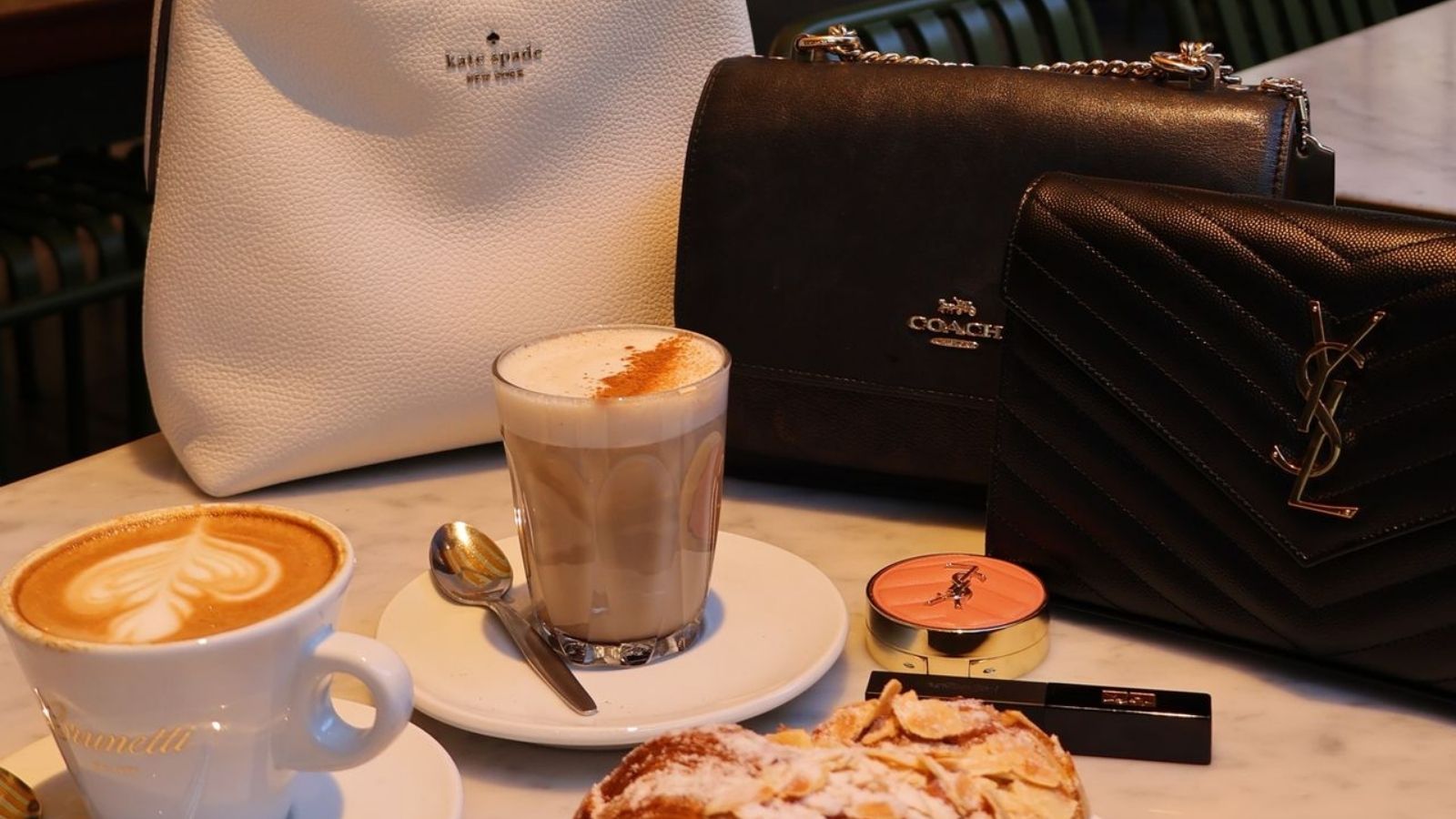
Bar seating makes the purse problem almost impossible to ignore.
A stool offers comfort for the person sitting on it, but often provides no convenient place for a bag. There is no chair back, limited floor space and usually no spare seat nearby. The result is predictable: the purse ends up hanging from a knee or resting dangerously close to the ground.
A small hook underneath a counter can eliminate much of that frustration.
In a 2024 report, Bon Appétit examined why hooks remain surprisingly uncommon in restaurants and bars despite being relatively simple additions. Interior designer Nicole Alexander of Siren Betty Design pointed to factors such as aesthetics and the possibility that designers simply overlook them.
That is exactly why hooks deserve more attention. They take up little space, don’t interfere with the dining area, and solve a problem the moment a guest sits down.
The best design solutions are often the ones people barely notice because they simply work.
Use the table itself as storage space
Restaurants do not always need another object in the room. Sometimes the answer is already built into the furniture.
A table leg, frame or underside of a tabletop can become a practical storage point with the right attachment.
A U.S. patent granted in 2022 described a handbag hook designed to attach directly to restaurant table legs. The invention focused on creating a flexible attachment system that could work with different table designs while giving diners a place to hang bags.
The bigger idea is not the specific product. It is the design philosophy behind it.
Restaurants already control the furniture guests interact with. A small adjustment to that furniture can improve the experience without adding clutter.
A well-designed table should do more than hold plates and glasses. It should account for the person sitting behind it.
Create discreet shelves for bags that cannot hang
Hooks are useful, but they are not perfect.
Some handbags do not have straps. Some have rigid shapes that make hanging awkward. Others are simply too large or too heavy to leave suspended from a small fixture.
That is where shelves can work better.
A narrow shelf placed beneath or beside a table gives guests a stable surface for their belongings while keeping the bag close. Unlike placing a purse on an empty chair, the storage area does not compete with seating.
The important detail is placement.
A shelf that extends into a walkway creates a new problem by interfering with servers and other diners. The best solutions should disappear into the existing design rather than becoming another obstacle.
Good restaurant furniture should support the entire dining experience, not just the food.
Offer dedicated purse stools instead of forcing guests to improvise
Some restaurants have already started treating handbags as something worth designing around.
A 2024 Eater report from Washington, D.C., highlighted several restaurants experimenting with dedicated handbag solutions, including stools, boxes and hooks. At Michelin-starred JÔNT, handcrafted walnut bag stools became part of the dining room experience, while other restaurants explored simpler alternatives.
What makes these solutions interesting is that they do not treat purses as a nuisance.
A dedicated stool beside the table can feel intentional. It can match the room, complement the furniture and provide a clear place for a guest’s belongings.
The idea is similar to coat storage. Restaurants do not expect diners to hold jackets throughout a meal. A handbag deserves the same consideration.
Small details often reveal how carefully a space was designed.
Train staff to notice the problem before guests ask
Not every restaurant can redesign its furniture immediately.
But service can fill the gap.
A server who notices a guest has nowhere to place a bag can offer a simple solution: an extra chair, a nearby stool, or another available option. The interaction does not need to be complicated. Sometimes the difference between a frustrating experience and a comfortable one is simply recognition.
The key is making the offer naturally.
Guests shouldn’t have to explain why they don’t want their expensive handbag sitting on the floor or hanging behind them where they cannot easily see it. A thoughtful restaurant can remove that awkward moment before it happens.
Test chairs with real handbags before choosing restaurant furniture
A restaurant chair can look beautiful in a showroom and still fail once a guest sits down.
Many seating decisions focus on appearance, durability and comfort. But designers rarely discuss another question: what happens to everything the diner brings with them?
An open-backed chair may look elegant, but it can leave a handbag hanging awkwardly. A smooth back may allow a strap to slide. A narrow frame may offer nowhere secure to place anything.
The problem is not that every chair needs to become a storage device. It is that furniture should be evaluated in the environment where it will actually be used.
Before ordering hundreds of chairs, restaurants could test them the same way they test table height or seating comfort: by imagining a real guest arriving with a coat, a phone and a handbag.
A few minutes of practical testing could reveal problems that are expensive to fix later.
The most successful restaurant designs consider the human being sitting in the chair, not just the chair itself.
Build solutions that work for large bags, not only small purses
A tiny clutch is rarely the hardest test.
The real challenge appears when a guest arrives with a large tote, work bag or everyday handbag carrying everything from personal items to electronics.
A small decorative hook may look like a solution, but it becomes less useful if it cannot support heavier bags or does not fit the furniture where guests need it.
A 2026 test by Condé Nast Travelerexamined consumer purse hooks across different settings and considered factors such as weight capacity and compatibility with different surfaces. While restaurant fixtures are not identical to personal accessories, the lesson is similar: storage solutions need to match the bags people actually carry.
A restaurant does not need every table to support a suitcase-sized bag. But the design should account for more than the smallest possible handbag.
A solution that only works in the easiest scenario is not really a solution.
Avoid making the chair back the only place for a valuable bag
The chair-back method is popular because it feels convenient. The purse stays close, the guest doesn’t lose table space, and nobody needs to ask for help.
But convenience does not always equal security.
A handbag hanging behind a diner can become difficult to monitor, especially in busy restaurants where people are moving around constantly. The guest may not notice if the bag shifts, falls or becomes accessible to someone passing behind the chair.
The goal is not to discourage chair-back storage completely. In some situations, it may be the most practical option.
A better approach is to give diners alternatives.
When a restaurant provides a hook, shelf, or dedicated storage option, guests don’t have to choose between convenience and keeping an eye on their belongings.
Make purse storage part of the restaurant’s visual identity
One reason some restaurants avoid hooks and storage solutions is the fear that they will make the space look less sophisticated.
But thoughtful design can turn practical features into intentional details.
Restaurants in Washington, D.C., have experimented with different approaches, from custom wooden handbag stools to decorative hooks and storage pieces that match the surrounding furniture.
The difference comes down to planning.
A basic metal hook added after construction may feel like an afterthought. A carefully selected fixture chosen alongside the lighting, chairs and tables becomes part of the room.
The same principle applies everywhere in hospitality. Coat racks, luggage areas and wine storage are not viewed as design failures because they serve a purpose. They’re part of the experience.
Handbag storage deserves the same treatment.
The question is not whether restaurants should add practical features. It is whether those features are designed well enough that guests notice the comfort rather than the hardware.
Stop making guests bring their own solution
For years, consumers have purchased their own purse hooks because restaurants often leave them with few alternatives.
A U.S. patent published in 2003 described a table-mounted handbag holder designed to keep bags elevated and off the floor. More than two decades later, the fact that similar solutions keep appearing shows demand has never fully disappeared.
The strange part is that the burden has largely remained with the customer.
A guest who remembers a personal purse hook can solve the problem. A guest who forgets one has to negotiate with the furniture, the floor and the limited space around the table.
Restaurants control the environment. They choose the chairs, design the tables, plan the layout and train the staff. That gives them the ability to remove a small but noticeable point of friction.
The solution does not need to be expensive.
Sometimes it is a simple hook under a counter. Sometimes it is a small shelf beneath a table. Sometimes it is a staff member who notices a guest is struggling.
The best hospitality often appears in these small moments.
Related Post: The 3PM Crash Is Lying to You