The U.S. Capitol fell silent as lawmakers from both parties gathered around Lindsey Graham’s casket, wiping away tears while remembering a senator whose career shaped Washington for more than three decades.
The emotional tribute brought together Republicans, Democrats, family members, and government officials who came to honor a man known for his political influence and personal relationships. Inside the Capitol Rotunda, the focus moved beyond political battles and toward the life of a longtime public servant.
Lindsey Graham, the South Carolina Republican who served in the Senate for more than 20 years, died earlier this month at the age of 71. His farewell ceremony reflected the wide impact he had across Capitol Hill, where he built friendships even among those who disagreed with him. Many lawmakers remembered him as someone who could argue passionately while keeping the door open for conversation.
Lindsey Graham’s Capitol Tribute Brings Lawmakers Together in Grief
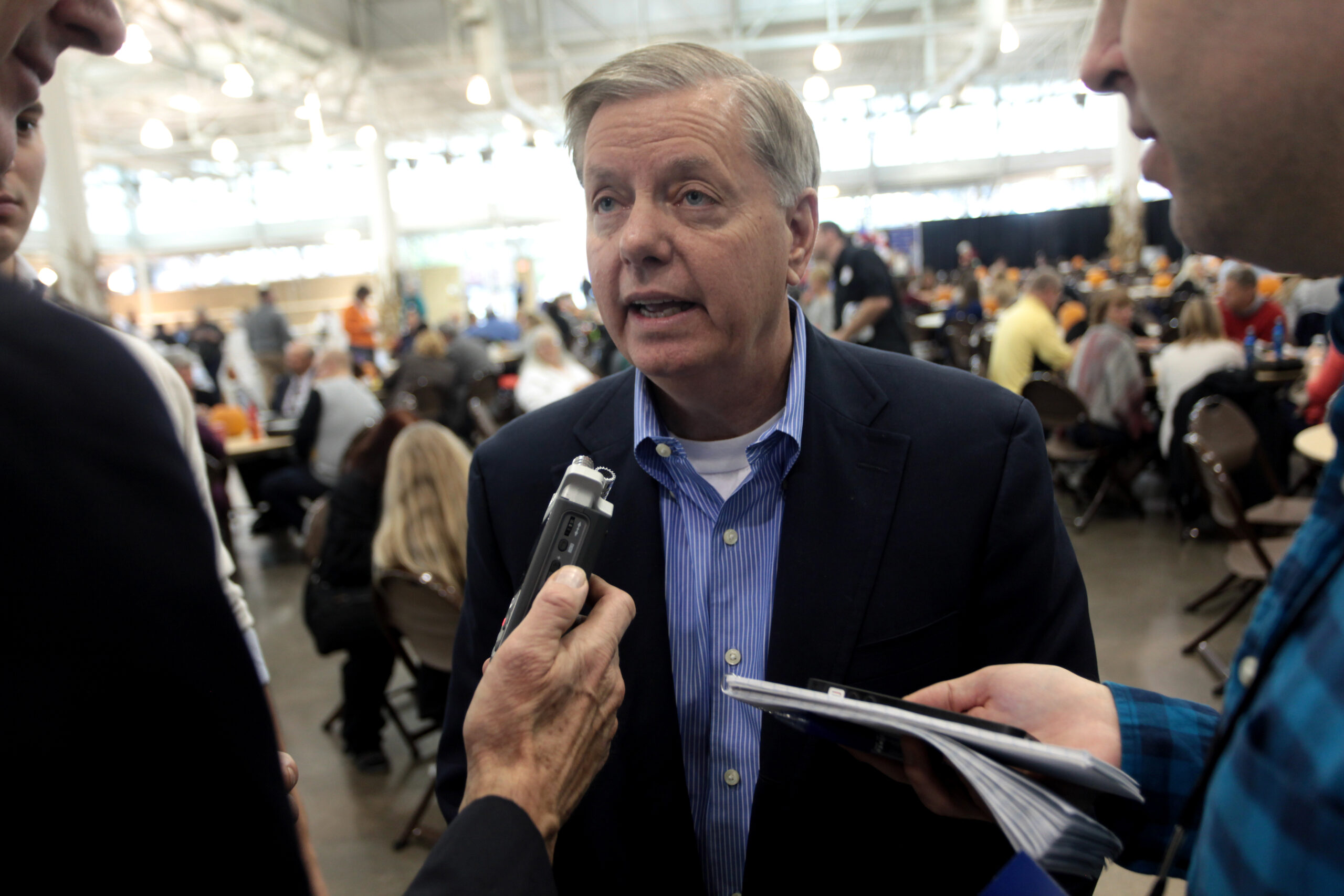
Gage Skidmore from Surprise, AZ, United States of America, CC BY-SA 2.0, via Wikimedia Commons
The Capitol Rotunda became the stage for a solemn farewell as Lindsey Graham received a ceremonial tribute following his death. His casket was carried into the historic chamber by an Armed Forces body bearer team as lawmakers gathered to pay their final respects. The ceremony honored Graham’s years of service and his role in American politics.
Graham’s sister, Darline Graham Nordone, struggled to hold back tears as she watched the tribute alongside her husband and children. Nordone was appointed by South Carolina Governor Henry McMaster to temporarily fill her brother’s Senate seat after his death. The emotional moment showed the personal loss behind the public ceremony.
Lawmakers from both political parties attended the tribute despite years of disagreements with Graham on major issues. Members of the Senate Judiciary Committee, which Graham previously chaired, were among those who came to honor him. The gathering reflected the relationships Graham maintained throughout his long career in Washington.
JD Vance Shares Personal Story About Lindsey Graham’s Support
Vice President JD Vance remembered Graham as more than a political ally during his remarks at the Capitol ceremony. He shared a personal story about how Graham helped his Senate campaign by promoting his campaign website during a television appearance. According to Vance, that moment generated more than $100,000 in support and became a major boost for his campaign.
“In a four or five minute TV appearance, Lindsey Graham raised us over $100,000,” Vance said.
Vance said the story represented Graham’s willingness to help others succeed. He described Graham as someone who valued relationships, respect, and persuasion over simply winning arguments. His comments highlighted the personal side of a senator often seen through the lens of political controversy.
“I remember Lindsey Graham as a man who loved people, and because he loved people, he was willing to reason with them, to respect them, and ultimately to persuade them,” Vance said.
John Thune Remembers Graham’s Humor and Senate Friendship
Senate Majority Leader John Thune delivered one of the most emotional speeches during the tribute. He described how difficult it would be to imagine the Senate without Graham’s familiar presence, humor, and daily conversations. Thune remembered the small moments that often defined their friendship beyond politics.
“It’s hard to think that there will be no more Senate dinners with Lindsey, that he won’t be dropping by my office to discuss some piece of legislation, or make laugh with his witty commentary,” Thune said.
Thune also spoke about Graham’s faith and the hope that guided him throughout his life. He referenced the belief that death was not the end and described Graham’s faith as an important part of his identity. The remarks brought a deeply personal tone to a ceremony filled with political leaders.
Lindsey Graham’s Long Career in Washington Politics
Lindsey Graham’s political journey began in 1995 when he entered Congress as a member of the U.S. House of Representatives. He later moved to the Senate in 2003, where he represented South Carolina for more than two decades. Over the years, he became one of the Republican Party’s most recognizable voices.
Graham played major roles in debates involving national security, foreign policy, and the judiciary. He served as chairman of the Senate Judiciary Committee, placing him at the center of some of Washington’s most closely watched political moments. His work on major issues made him a familiar figure to Americans across the country.
His political decisions often attracted strong reactions from supporters and critics alike. Supporters praised his focus on conservative principles and national security issues, while opponents challenged some of his positions. Despite those disagreements, many colleagues acknowledged his ability to maintain personal relationships.
Graham’s Military Service Influenced His Public Life
Before becoming a powerful Senate figure, Graham built a background rooted in military service. He served in the U.S. Air Force Reserve as a judge advocate and eventually retired as a colonel. His military experience shaped his views on defense, foreign policy, and America’s role in global affairs.
Graham frequently pointed to his military background when discussing national security issues. His experience as a military lawyer gave him a perspective that influenced much of his Senate work. Many colleagues viewed his service as central to his identity.
The combination of military duty and public office defined much of Graham’s career. He often described government service as a responsibility rather than simply a political position. That belief became part of the legacy remembered during his Capitol farewell.
Lawmakers From Both Parties Honor Graham’s Legacy
The tribute attracted officials from across the political spectrum, showing the broad network Graham developed during his years in Washington. Republicans and Democrats who had debated him on major issues came together to remember his contributions. The ceremony focused on his service rather than political disagreements.
Senator John Fetterman of Pennsylvania attended the ceremony wearing a suit instead of his usual casual Capitol attire. His appearance reflected the seriousness of the occasion and the respect many lawmakers showed for Graham. Other officials, including members of the administration, also attended the tribute.
Cabinet officials, including EPA Administrator Lee Zeldin, Homeland Security Secretary Markwayne Mullin, and Energy Secretary Chris Wright, were present at the Capitol. Their attendance highlighted Graham’s influence among government leaders. The gathering showed the wide range of people affected by his career.
South Carolina Faces a New Political Chapter
Graham’s death created a new political situation in South Carolina as officials prepared for a special election. His office announced that the senator died from an aortic dissection caused by arteriosclerotic cardiovascular disease. Additional testing was expected before the final death certificate was completed.
Governor Henry McMaster appointed Darline Graham Nordone to temporarily fill the Senate seat until the end of the current term. Nordone has also filed to seek election for the full Senate term. The upcoming contest will determine who carries the seat forward.
A special primary election is scheduled for August 11, with a possible runoff planned for August 25 if no candidate wins a majority. The political future of the seat remains uncertain. However, the Capitol tribute focused on remembering Graham’s past rather than debating what comes next.
Lindsey Graham’s Legacy Goes Beyond Politics
Lindsey Graham’s final Capitol tribute showed the complicated legacy of a senator who spent decades at the center of American politics. He was known for strong opinions, major policy battles, and his influence inside the Senate. He was also remembered for friendships that survived political disagreements.
For supporters, Graham represented dedication to conservative values and public service. For colleagues across the aisle, he was remembered as someone who believed conversations could continue even after disagreements. His farewell showed the importance of personal connections in a deeply divided political environment.
As lawmakers left the Capitol Rotunda, the message was clear: Lindsey Graham’s career was about more than votes and debates. It was also about the relationships he built, the people he helped, and the conversations he continued throughout his life.