The Strait of Hormuz is moving again, but every transit is fraught with danger. Commercial vessels navigate a militarised corridor where U.S. naval overwatch, Iranian drones, missiles, and fast boats combine with hidden AIS movements, insurance pressures, and high-stakes strategic decisions. Ship traffic remains far below prewar levels, yet nearly 1,000 commercial vessels have transited in the past two months, a figure higher than previous public counts suggested. The Strait is not closed, but it faces constant threats, forcing global trade to adapt to a precarious new reality.
This fragile reopening highlights a broader challenge: the world cannot fully rely on Hormuz for 20% of global petroleum and LNG supply without accounting for military escalation, cyber interference, and environmental hazards. Traders, ship operators, and governments are recalibrating risk daily, balancing commercial necessity against escalating regional tensions. The strait has become both a lifeline and a strategic chokepoint, reflecting the complexity of modern maritime geopolitics.
Commercial Traffic Shows Uneven Recovery
Commercial ship movements have resumed, but cautiously. Nearly 1,000 vessels, primarily large container ships and tankers, have transited the strait in the last two months, roughly 17 per day, far below the more than 100 ships daily before the February conflict escalation. Many vessels operate “dark,” turning off AIS to avoid detection by Iranian forces while still adhering to recommended safe corridors. These AIS-off manoeuvres highlight the psychological and operational stress that shipping companies face, in which visibility itself becomes a calculated risk.
The discrepancy between public tracking counts and U.S. intelligence underscores the complexity. Vessels using both the Iran-sanctioned lane and the alternate Omani route may not appear in standard maritime databases, masking the actual flow of goods. This adaptation is critical for sustaining global energy and industrial supply chains, but it underscores that commercial confidence remains fragile, dependent on real-time security assessments rather than stable conditions.

U.S. Naval Overwatch Shapes Safe Passage
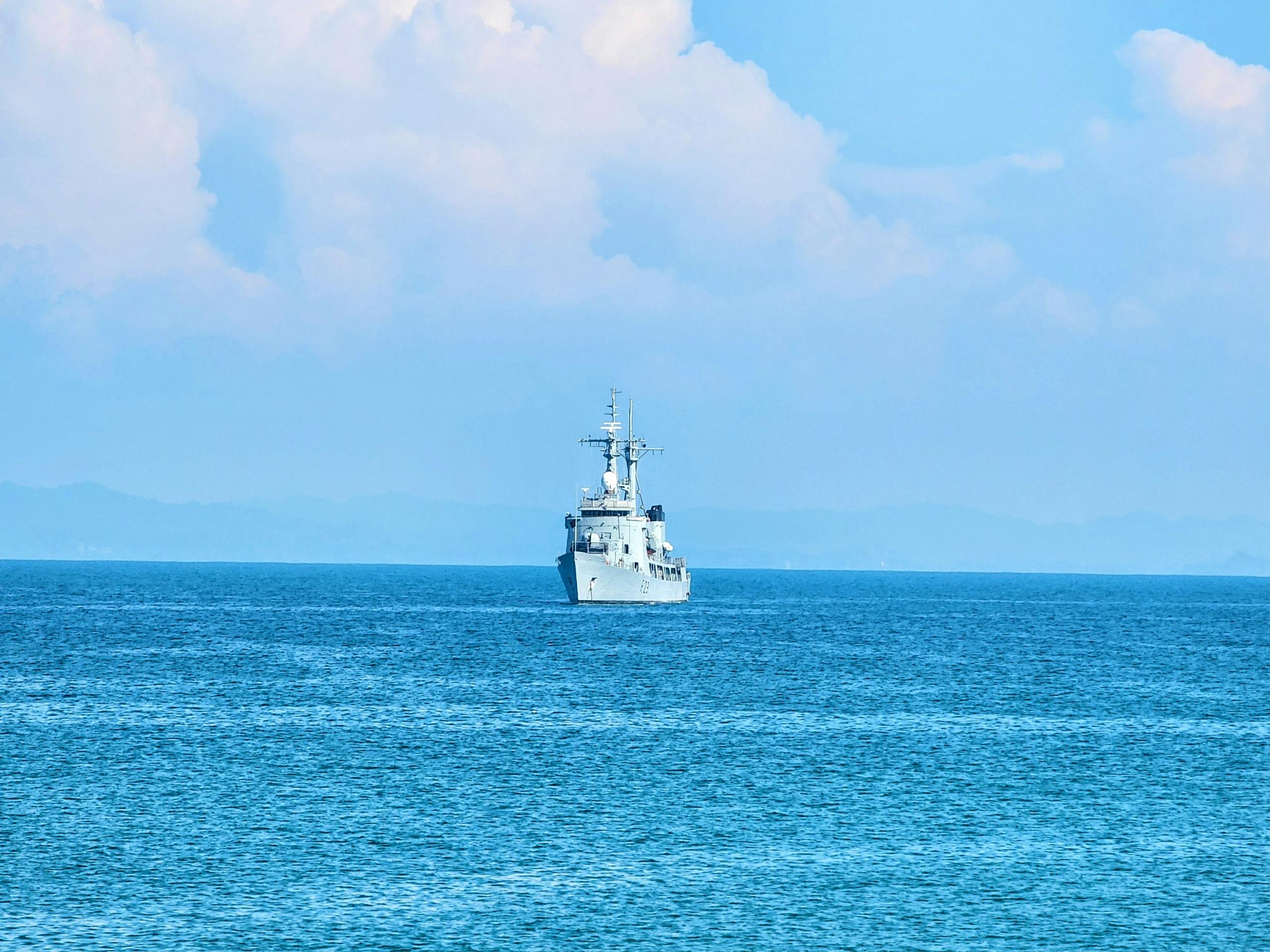
U.S. naval forces have established a quiet yet crucial presence in the strait. While officials insist they are not escorting ships directly, radar, drones, helicopters, destroyers, and aircraft coordinate to monitor threats and advise commercial operators. The southern Omani lane, reinforced by mine-clearing operations and strategic naval deployments, has become a lifeline for vessels seeking to avoid the Iran-controlled corridor.
This naval posture reflects more than mere protection. It acts as a deterrent, shaping Iranian behaviour and providing limited but credible security for shipping. While not eliminating danger, overwatch ensures that commercial vessels have guidance on when to transit, how to respond to fast boats, and when it is safest to operate with AIS off. This strategy preserves global trade in a corridor otherwise dominated by uncertainty.
Iranian Drones and Missile Threats Maintain Pressure
The risk remains acute. U.S. Central Command reports that multiple Iranian drones and missiles have been intercepted near the Strait, with targeted strikes on coastal radar sites in Goruk and Qeshm Island. Recent engagements include the downing of one-way attack drones and strikes on Iranian missile facilities, demonstrating a willingness by the U.S. to counter threats immediately. Iran’s continued use of drones, fast boats, and mine-laying illustrates the persistent tactical leverage Tehran maintains, making every shipping decision high-stakes.
Even limited engagements create global market ripples. Each intercepted drone or missile adds uncertainty, affects insurance premiums, and shapes cargo scheduling. Partial disruption, rather than total closure, has become the primary mechanism of leverage, forcing maritime and energy stakeholders to operate in a constant state of risk assessment.

Psychological and Operational Adaptation of Shipping Companies
Ship operators now make decisions influenced as much by perception as by tangible threat. AIS-off movement, route adjustments, and coordination with naval assets reflect a new normal in which shipping companies proactively mitigate risk without visible confrontation. Decisions are driven by financial considerations, crew safety, insurance constraints, and potential legal exposure. Even when ships successfully transit, each movement reinforces the necessity of calculated navigation under military and political pressure.
Insurance and chartering costs have surged as companies hedge against potential attacks or seizures. Some operators are rerouting via alternative passages, such as Bab el-Mandeb, for LNG and oil exports, showing how psychological pressure from potential threats is influencing global logistics chains.
Economic Implications Beyond Oil
The Strait’s partial reopening carries consequences beyond petroleum and LNG. Fertiliser exports, petrochemical shipments, and industrial commodities also rely on Gulf transit. Delays in these sectors can influence crop prices, production cycles, and global manufacturing costs. For consumers, these disruptions manifest as higher fuel prices, rising freight costs, and higher inflation in consumer goods, highlighting how a regional maritime crisis becomes a global economic variable.
Cyber and Electronic Threats Compound Risks
Beyond kinetic threats, the potential for cyber interference adds a new dimension. Iran’s prior demonstrations of GPS jamming and AIS spoofing indicate that even vessels following recommended routes could be targeted digitally. This creates a multi-layered threat environment where physical presence and electronic security are equally critical, challenging conventional navigation and risk models.

Regional Geopolitics Amplifies the Complexity
Oman and the UAE navigate a delicate balance, supporting U.S. efforts to maintain free navigation while engaging diplomatically with Tehran. Their policies, including alternative routes and toll regulations, influence commercial decisions, showing that regional political manoeuvring is as critical to maritime movement as military actions. Hormuz is not only a site of U.S.-Iran tension but a multi-state strategic theatre.
Environmental and Safety Considerations
Crowded, militarised waters increase the risk of accidents. Collisions, groundings, or accidental fuel spills in the strait could have far-reaching environmental consequences. The combination of AIS-off ships, dense commercial traffic, and fast-moving Iranian patrol boats amplifies this risk, underscoring that the strait’s danger extends beyond immediate conflict to potential ecological disaster.
Markets Adjust to Partial Disruption
Global energy markets now incorporate a “Hormuz risk premium” into pricing. Traders hedge against intermittent disruption, while floating storage and preemptive purchases create localised supply cushions. Markets adapt, but adaptation is not safety. Each drone launch or naval escalation continues to reverberate through pricing, industrial planning, and energy security strategies.
Historical Context Reinforces Current Threat Perception
Comparisons to the 2019–2020 tanker seizures and drone attacks show that Hormuz tensions follow cyclical patterns. Historical precedent reinforces shipping operators’ caution, demonstrating that even partial openings can quickly become conflict zones. Understanding this context explains why operators remain risk-averse and rely on military guidance despite open lanes.
Final Thought
The Strait of Hormuz remains open in name but remains a precarious lifeline under constant threat. Military overwatch, AIS-off shipping, alternate routes, and market hedging are preserving limited commercial flow, yet the strait’s status as a globally vital chokepoint ensures that every transit is high-stakes. Global trade, energy security, and maritime law have adapted to this dangerous new normal, but adaptation is not assurance. As long as drones, missiles, fast boats, and cyber threats hover over this narrow waterway, every barrel of oil and LNG crossing Hormuz carries the weight of global risk.