Abdul El-Sayed secured Michigan’s Democratic nomination for the U.S. Senate after Representative Haley Stevens conceded Wednesday, August 5, and endorsed him. The result followed Tuesday’s statewide primary and gave progressives a closely watched victory in a battleground state.
Unofficial returns showed El-Sayed with about 48.5% of the vote, compared with Stevens’ 47.5%, with nearly all ballots counted. The margin was roughly 15,000 votes. El-Sayed will face Republican Mike Rogers in the November 3 general election for the seat being vacated by retiring Democratic Senator Gary Peters.
A narrow statewide win
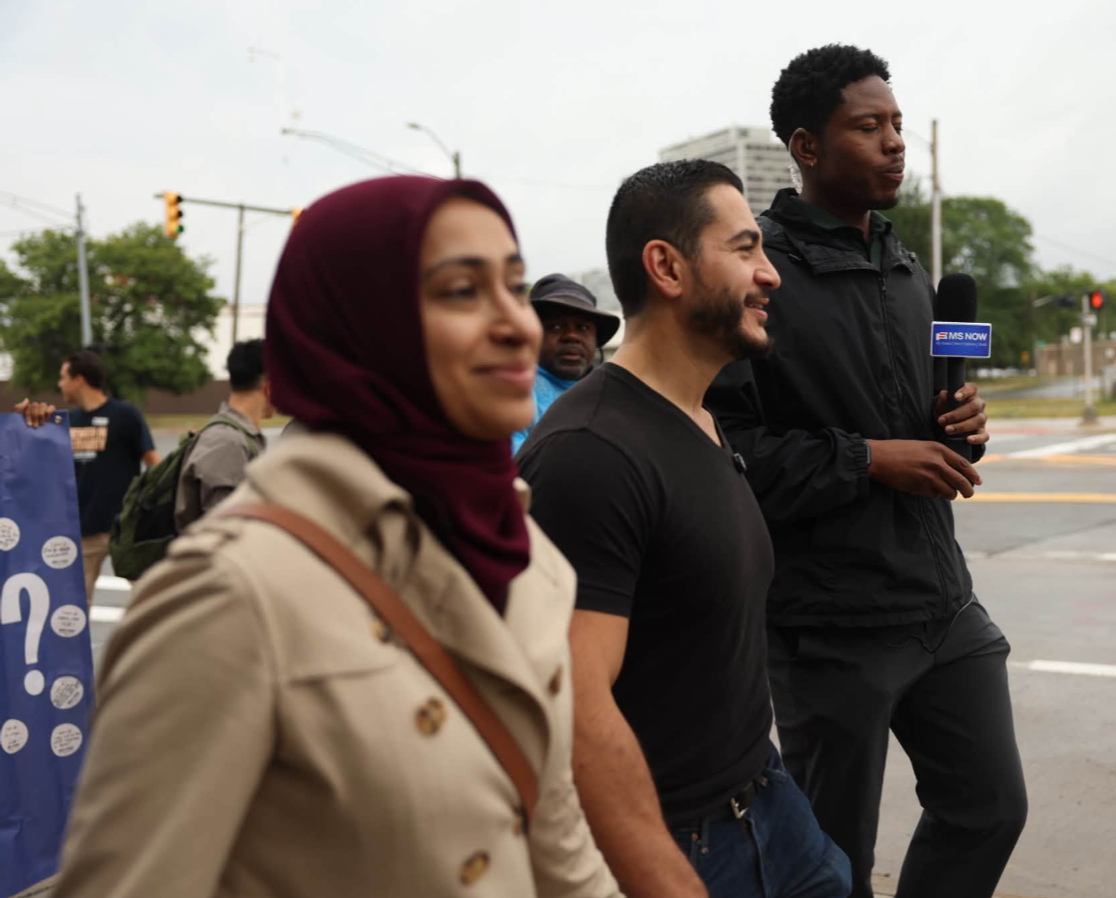
The Associated Press called the race early Wednesday after late-counted ballots left Stevens without a path to overtake El-Sayed. The latest Michigan vote totals showed El-Sayed with roughly 742,000 votes and Stevens with about 727,000.
Former state Senator Mallory McMorrow received about 4% despite ending her campaign before Election Day. Her name remained on the ballot, and those votes exceeded the final margin between the two leaders.
Stevens congratulated El-Sayed and said she would support him against Rogers. She described the primary as a contest representing the Democratic Party’s wide range of views. Her endorsement gave El-Sayed an immediate chance to begin uniting voters after a divisive campaign.
El-Sayed, 41, previously led Detroit’s health department and later directed health and human services for Wayne County. He also ran unsuccessfully for Michigan governor in 2018. His Senate campaign emphasized Medicare for All, higher taxes on billionaires and campaign finance reform.
Outside spending dominates race.
The primary became one of the most expensive Senate nomination contests of the 2026 cycle. Outside organizations spent tens of millions of dollars to support Stevens or oppose El-Sayed, according to advertising data and federal campaign filings.
AIPAC and affiliated political groups made their largest reported investment in a single race. The Associated Press documented the record outside spending campaign before Election Day, including nearly $30 million from AIPAC-linked organizations at that stage.
Other groups also backed Stevens. A Stronger Michigan spent about $12 million without publicly identifying its donors, according to the AP. Total outside spending supporting Stevens later exceeded $60 million, while El-Sayed relied more heavily on volunteers and smaller contributions.
El-Sayed attacked the spending as evidence that powerful groups were trying to shape Michigan’s choice. His campaign said it recruited more than 10,000 volunteers and held hundreds of events statewide. That field operation helped counter a large advertising advantage.
Gaza divides the field.
U.S. policy toward Israel became a defining issue. El-Sayed called Israel’s military campaign in Gaza a genocide and opposed unconditional U.S. military aid. Stevens supported continued aid while criticizing Israeli Prime Minister Benjamin Netanyahu.
The debate carried particular weight in Michigan, home to one of the country’s largest Arab American populations. Communities in Dearborn and nearby cities have family, cultural and political ties to the Middle East. Many voters have pressed Democratic officials to change U.S. policy toward Gaza.
That pressure became visible during Michigan’s 2024 Democratic presidential primary. More than 101,000 voters selected “uncommitted” to protest President Joe Biden’s support for Israel’s military campaign. Reuters reported that Michigan’s uncommitted vote movement received about 13% of the Democratic primary vote.
The 2026 Senate contest showed that the organizing network remained active. Arab American, Muslim, progressive and anti-war voters formed part of El-Sayed’s coalition. His statewide victory also required support beyond metro Detroit.
Party factions choose sides.
The primary drew endorsements from national figures across the Democratic Party. Senators Bernie Sanders and Elizabeth Warren backed El-Sayed. Representative Alexandria Ocasio-Cortez also campaigned for him in Michigan.
Stevens received support from Governor Gretchen Whitmer, Senate Democratic leader Chuck Schumer and former House Speaker Nancy Pelosi. She argued that her congressional experience and manufacturing record made her the stronger general-election candidate.
El-Sayed’s victory gave progressives a major win in a state known for close national elections. Still, the tight result showed that Stevens’ coalition remained substantial. El-Sayed must retain progressive enthusiasm while attracting moderates and independents.
Senate fight moves to November.
Rogers entered the general election after running unopposed in the Republican primary. The former congressman and former FBI agent lost Michigan’s 2024 Senate race to Democrat Elissa Slotkin by fewer than 20,000 votes.
Republicans quickly portrayed El-Sayed as too liberal for Michigan. Democrats argued that Rogers would support President Donald Trump’s agenda and help Republicans retain Senate control. Both parties are expected to treat the open seat as a national priority.
El-Sayed’s campaign said its focus would shift to affordability, health care, manufacturing and corporate influence. He must also answer Republican attacks on his positions involving Israel, policing and federal spending.
Michigan officials have not certified the primary. The state election certification process requires county canvassers to certify results by August 18. The Board of State Canvassers must complete its review by August 24.
The latest count leaves El-Sayed as the clear Democratic nominee, with Stevens publicly backing his campaign. His next test arrives November 3, when Michigan voters decide whether he or Rogers will replace Peters in the Senate.