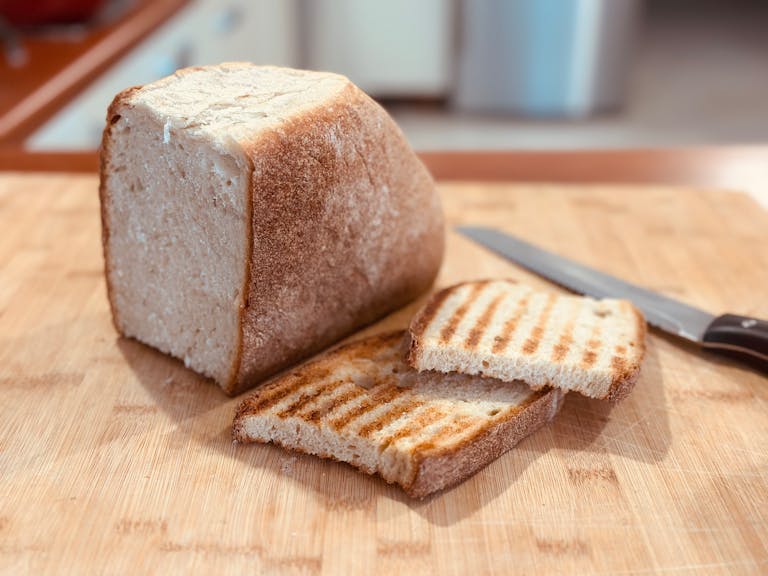
Consider how many everyday meals start with a handful of grain. From a bowl of rice at dinner to corn tortillas, freshly baked bread, and a serving of oatmeal, grains appear in kitchens worldwide. Yet some cereals are produced on a scale that makes others look surprisingly small.
According to the United Nations’ Food and Agriculture Organization (FAO), global cereal production reached approximately 3.1 billion metric tons in 2024. That enormous harvest supports household cooking, animal agriculture, food manufacturing, and several industries beyond the dinner table.
But which grains dominate global production? Using FAOSTAT figures for 2024, the latest complete annual dataset available, here are the six most-produced cereal grains worldwide, ranked by harvested weight. Rice figures refer to unmilled paddy rice, making the comparison consistent with agricultural production statistics.
Corn (Maize)

Corn takes the top spot by an impressive margin. Global production reached approximately 1.22 billion metric tons in 2024, making it the world’s most-produced cereal grain. Its enormous harvest reflects how useful corn has become across agriculture, manufacturing, and everyday cooking.
The United States is the largest corn producer, harvesting approximately 377.6 million metric tons in 2024. China followed with about 294.9 million tons, while Brazil contributed roughly 115 million tons. Together, these countries accounted for a substantial portion of worldwide production.
In American kitchens, corn appears in everything from cornbread and tortillas to popcorn, breakfast cereals, and cornmeal dishes. Elsewhere, it becomes polenta, grits, ugali, and countless traditional preparations that vary by region.
However, not all harvested corn goes directly into people’s food. Large quantities are used in livestock feed, ethanol production, starch manufacturing, and other industrial applications.
This versatility helps explain why corn dominates global grain production. It is not just a popular ingredient but also a key raw material supporting several major industries.
Rice
Rice ranks second, with global production reaching approximately 820.2 million metric tons in 2024. Its importance becomes clear when you consider the countless meals built around this familiar grain, especially across Asia.
India and China lead global rice production, followed by countries including Bangladesh. In 2024, India accounted for about 27% of worldwide output, while China contributed about 25%, according to FAOSTAT-derived figures.
What makes rice especially interesting is how differently people prepare it. In one kitchen, people might steam it and serve it alongside vegetables or meat. In another, it becomes fried rice, a creamy risotto, or the foundation of a richly seasoned one-pot meal.
Rice also appears in dishes such as sushi, biryani, jambalaya, and rice pudding. Each preparation demonstrates how one grain can take on dramatically different textures and flavors depending on the cooking method.
An important distinction is that agricultural production statistics generally measure rice as paddy rice, which still has its outer husk. After milling, the finished quantity is smaller.
This matters when comparing rice with other grains because figures reported for milled rice should not be treated as equivalent to paddy rice production totals.
Wheat
Wheat ranks third, with approximately 798.5 million metric tons produced worldwide in 2024. Although its global harvest is slightly smaller than rice production, wheat remains one of the most familiar cereal grains in everyday cooking.
China, India, and Russia are among the world’s leading wheat producers. Their harvests help supply domestic markets and, depending on the country, international grain trade.
Walk through almost any supermarket bakery, and wheat’s influence becomes obvious. Sandwich bread, rolls, pizza dough, crackers, pastries, and many kinds of pasta begin with wheat flour or other wheat products.
Yet wheat is not limited to baked goods. Bulgur is commonly used in dishes such as tabbouleh, while couscous is traditionally produced from wheat semolina. You can also cook and serve whole wheat berries in salads or grain-based dishes.
Different wheat varieties suit different culinary purposes. Hard wheat varieties are commonly used for breadmaking, while durum wheat is especially important for pasta production.
Unlike corn, which feeds large industrial markets, wheat is best known for flour-based foods.
Its presence in so many familiar recipes helps explain why wheat remains a major agricultural crop worldwide.
Barley
Barley may not get as much attention as corn, rice, or wheat, but it ranks fourth among the world’s most-produced cereal grains.
In 2024, global barley production reached approximately 142 million metric tons. Russia led production with roughly 16.7 million tons, followed by Australia, Germany, France, and Canada.
Barley has a distinctive place in the kitchen because of its pleasant chewiness and ability to work well in soups and stews. Pearl barley, which has been processed to remove its outer layers, is particularly familiar to home cooks.
Add barley to vegetable soup for a satisfying texture. Cook it separately, and it can become the foundation of a grain salad or a warm side dish.
Barley is also widely used for animal feed and malt production. Malted barley is an important ingredient in brewing and certain food products, showing that its uses extend beyond everyday cooking.
Although barley production is much smaller than that of the three leading cereals, its worldwide harvest is still substantial.
Its fourth-place ranking also reveals a significant production gap. The world’s three largest cereal crops are harvested in quantities several times greater than barley.
Sorghum
Sorghum comes fifth, with worldwide production reaching approximately 64.2 million metric tons in 2024. While it may be less familiar to some American shoppers, it has long been part of agricultural systems and traditional cooking across several regions.
The United States was the largest producer in 2024, harvesting approximately 8.7 million tons. Nigeria followed with about 6.5 million tons, while India and Sudan each produced approximately 5.4 million tons.
Sorghum is especially valued in areas where rainfall can be limited. The crop tolerates relatively dry growing conditions, though harvests still depend on rainfall, soil, farming practices, and other factors.
Its culinary applications are surprisingly varied. Sorghum flour can go into flatbreads and traditional porridges, while whole sorghum grains can be cooked much like other cereal grains.
In parts of Africa, sorghum is used in familiar staple dishes, including porridge and fermented grain preparations. It is also grown for animal feed and commercial grain markets.
Sorghum’s position among the six leading cereals shows how a grain can be agriculturally important without regularly appearing on supermarket shelves everywhere.
Its value varies by region, depending on local cooking traditions and farming conditions.
Millet
Millet completes the list, with worldwide production reaching approximately 30.9 million metric tons in 2024.
Unlike corn or wheat, millet is a broad term that covers several small-seeded cereal crops. Different millet varieties have their own characteristics, farming requirements, and traditional uses.
India dominates worldwide millet production, harvesting approximately 12.6 million metric tons in 2024. Niger followed with around 3.8 million tons, while China produced roughly 2.8 million tons. Mali and Nigeria were also important producers.
Millet is particularly familiar in traditional dishes across parts of Africa and Asia. Depending on the variety, people can grind it into flour, cook it as porridge, or use it whole.
In some households, millet flour becomes a dough-like accompaniment to savory dishes. Elsewhere, it appears in flatbreads, steamed preparations, or grain-based breakfasts.
Millet is also associated with farming regions where dependable rainfall can be a challenge. However, its performance under dry conditions varies by species, location, and agricultural practices.
Although its global production is considerably smaller than sorghum’s, millet remains an important cereal crop with strong connections to regional food traditions.
Its place on this list reminds us that global production rankings tell only part of the story. A grain doesn’t need to lead worldwide harvest statistics to matter locally.
Why These Six Grains Dominate Global Agriculture
These crops differ in striking ways. Corn alone produced more than a billion metric tons in 2024, while the world’s millet harvest was about 31 million tons.
Together, corn, rice, and wheat accounted for roughly 91% of the six grains’ combined production. Their overwhelming lead reflects the scale of agricultural systems built around these crops and their many uses.
Barley, sorghum, and millet may contribute smaller harvests, but each occupies a distinctive place in global farming and cooking.
Ultimately, these six cereal grains connect farms, food businesses, and family kitchens across continents. Whether served as bread, porridge, rice, or tortillas, they remain part of how the world prepares and enjoys its everyday meals.
Other Posts You Might Like:
6 Delicious Breakfast Ideas That Support Weight Loss
7 Items You Should Never Buy at the Grocery Store