Most sandwiches rely on bread to contain the filling. Chicago’s Italian beef sometimes asks the bread to do the opposite: absorb the liquid surrounding the meat.
Order it dipped, and the completed sandwich goes into the gravy. The roll takes on the seasoned beef juices, softening and letting their flavor into the bread itself. It is a deliberate part of the preparation, not an accidental spill.
That explains what the dip does. Explaining exactly how the tradition began requires more care.
The sandwich’s history traces back to Chicago’s Italian American communities, festive meals, and the practical business of feeding a crowd. It does not lead to a universally established inventor or a proven first dunk.
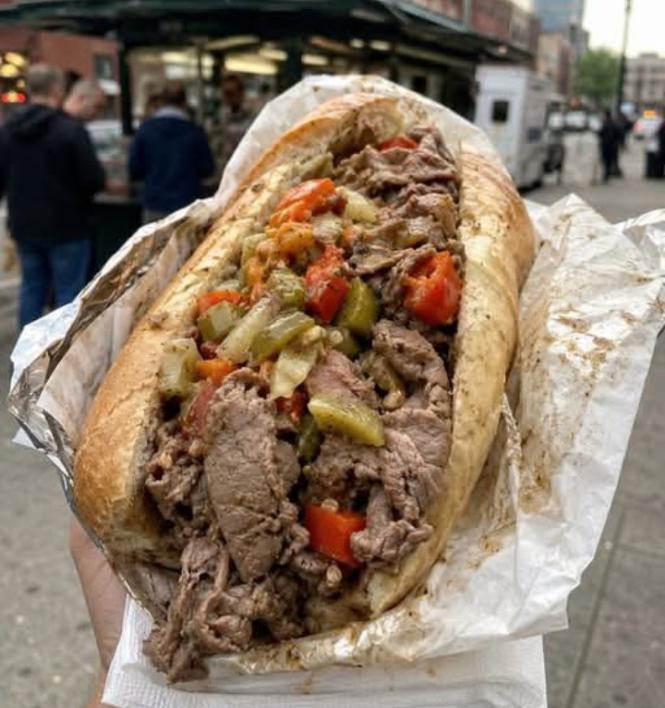
The Gravy Connects the Beef and the Bread
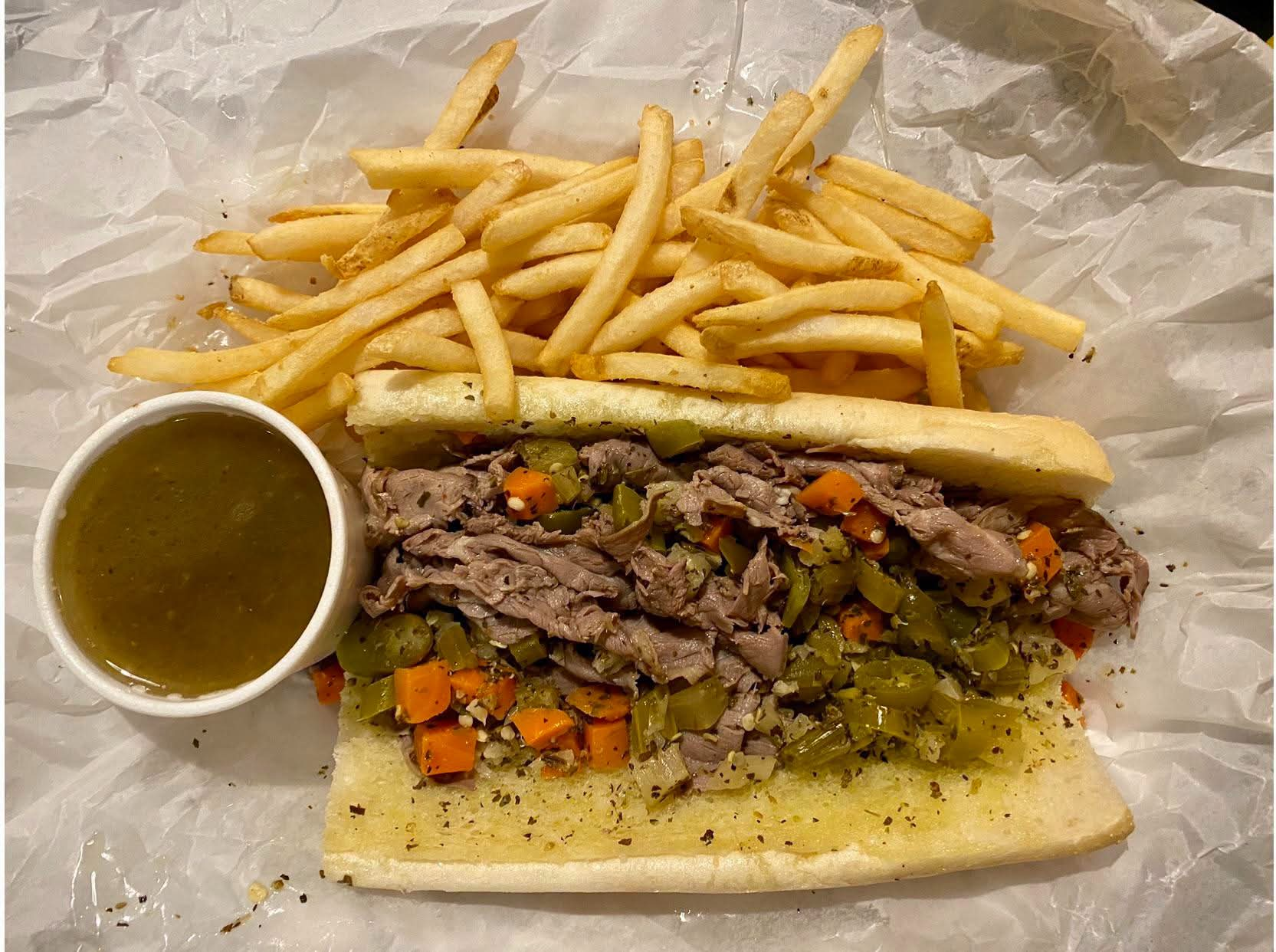
In an Italian beef sandwich, “gravy” means the savory liquid accompanying the meat. The preparation described in the reporting uses beef cooking juices, not a separate flour-thickened sauce.
The meat and liquid remain connected throughout preparation.
In Scripps News’ report on Chicago Italian beef, journalist Ben Schamisso described a process in which beef is cooked, its juices are strained and saved, and the meat is cooled before being thinly sliced. The slices then return to the simmering liquid before the sandwich is assembled.
That report follows one kitchen, not a mandatory recipe for every Italian beef stand. But it illustrates the relationship at the heart of the sandwich: the gravy is part of preparing and serving the beef.
Dipping extends that relationship to the roll. Instead of leaving the liquid mainly around the filling, it lets the bread soak it up, too.
The trade-off is texture. A less-saturated roll retains more structure. A dipped one gives up some firmness to hold more gravy.
The Immigrant History Is Bigger Than One Inventor
Food origin stories often look for a single person with a sudden idea. Food historian Anthony F. Buccini argues that this approach misses something important about Italian beef.
In a presentation published by the Culinary Historians of Chicago, Buccini describes the sandwich as a commercial expression of a festive dish rooted in a traditional meat-preparation method brought by immigrants from southern Italy, particularly Naples and its surrounding area.
His interpretation draws on his knowledge of Italian and Italian American cooking and decades of conversations with older residents of Chicago’s Taylor Street neighborhood. He identifies that neighborhood as where Italian beef emerged as fast food.
Related: 10 American Foods That Make Visitors Scratch Their Heads- But Many Americans Still Love
That account changes the question. Instead of asking only who invented the sandwich, it asks how an existing cooking tradition moved from family and community meals into a business.
It also makes room for gradual development. Preparing meat for a celebration and turning it into a portable sandwich are connected practices, but they need not have begun in one kitchen on one afternoon.
Wedding Stories Explain the Practical Appeal
A wedding also appears in the family history Scripps News recounts with Chris Pacelli Jr., co-owner of Al’s Beef.
Pacelli credited his grandfather, Anthony Ferreri, with seeing roast beef sliced by hand at an Italian wedding and developing a way to cut it much thinner. In the family’s account, that approach allowed the same amount of meat to serve more people.
That remains an attributed family claim, not independent proof of invention. It nevertheless captures a practical idea central to the sandwich’s story: thin slices could help make a roast go further.
The distinction matters. Evidence about economical meals and inherited cooking methods should not be stretched into a claim that affordability alone explains the full-sandwich dunk.
The documented modern preparation shows what dipping accomplishes. The historical sources provide context for the beef tradition without establishing exactly when every serving technique appeared.
Dry, Wet and Dipped Are Not Necessarily the Same Order
The amount of gravy is a choice, not a requirement.
A guide published by Chicago-area producer Bari Beef distinguishes the three common requests this way:
- Dry: The beef goes on the bread with the gravy it already carries, with little extra liquid.
- Wet: Add extra gravy to the beef or add it during assembly.
- Dipped: The completed sandwich is submerged in the gravy.
The useful distinction is between adding more liquid to the filling and soaking the assembled sandwich.
Those descriptions are one producer’s terminology, not a binding standard for every counter. Asking whether “wet” means extra gravy or a full dunk can prevent a different sandwich from arriving than the one expected.
Nor is dipped the more authentic choice automatically. It depends on how the bread and gravy interact.
Why the Dip Became Part of the Sandwich’s Identity
The dipping technique makes visible what’s already there: beef, cooking liquid, and bread are meant to work together.
It also creates an eating experience difficult to confuse with a neatly contained roast beef sandwich. The liquid does not stay politely around the meat. It reaches the roll, changes its structure, and makes the bread an active part of the meal.
That is the culinary explanation, separate from any unproven story about the first person to try it.
Chicago’s Italian beef can be appreciated as both a regional sandwich and an expression of food traditions carried into new settings. Its history is more interesting when those connections remain visible, rather than being reduced to a contest over a single inventor.
Would you keep the roll firm enough to hold its shape, or let it soak up the gravy and become part of the filling?