The Department of Homeland Security has criticized Minnesota Gov. Tim Walz and the state Board of Pardons after the board granted clemency to Tou Lue Vang, a Laotian man convicted in 2006 of first-degree criminal sexual conduct involving a child.
The pardon was granted on June 10 in St. Paul. DHS criticized the pardon decision in a July 1 statement, saying it could affect federal efforts to deport Vang.
Federal Officials Challenge Pardon
DHS said Vang lost lawful immigration status after his conviction and was later ordered removed from the United States. The agency said the Minnesota pardon could remove the state conviction tied to his deportation case.
The agency identified Vang as a 42-year-old citizen of Laos. It said he entered the United States through California in 1994 and later became a lawful permanent resident.
DHS spokesperson Lauren Bis called the pardon “disgusting” and accused Minnesota officials of protecting a convicted child sex offender from deportation. The statement placed the case inside a broader federal dispute with state officials over immigration enforcement.
Minnesota officials have pushed back on that framing. The state has argued that a pardon does not automatically restore immigration status or stop federal removal proceedings. Immigration decisions remain under federal authority.
Walz, Ellison, and Hudson Voted
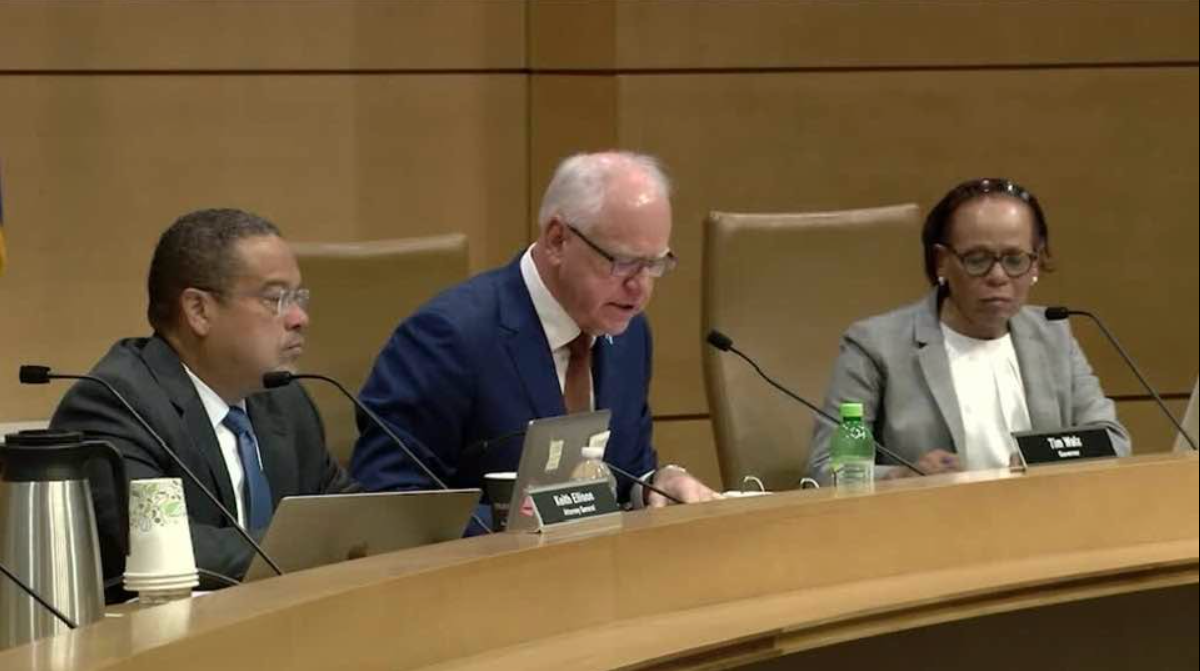
Minnesota’s Board of Pardons includes the governor, attorney general and chief justice of the state Supreme Court. The Board of Pardons members are Walz, Attorney General Keith Ellison, and Chief Justice Natalie Hudson.
The board voted June 10 to grant Vang’s pardon. The decision followed review by Minnesota’s clemency process, which considers applications from people seeking pardons, commutations or sentence reductions.
The pardon does not erase the underlying facts of the case. It is a state act of clemency that changes how Minnesota treats the conviction after the decision.
The federal dispute centers on whether the pardon affects Vang’s removal order. DHS has not announced a final new action in the case since criticizing the Minnesota decision.
Conviction Involved Child Victim
Vang pleaded guilty in 2005 to first-degree criminal sexual conduct involving a 10-year-old girl. He was sentenced in 2006 in Ramsey County, Minnesota.
The case involved abuse that began when Vang was 18. The victim was a child at the time. The criminal charge carried serious consequences, including exposure to immigration authorities.
Court details cited in recent coverage say Vang received a stayed prison sentence. He served workhouse time and was placed on long-term supervision. His probation later ended years before the pardon request.
The 2005 case in which the defendant pleaded guilty has now become a national political issue because of the immigration consequences attached to the conviction.
Victim-Backed Clemency Request

One of the most significant facts in the state review was the victim’s support for Vang’s pardon. The victim submitted a letter in support of clemency, and state officials treated that support as an important part of the record.
The victim supported the pardon after saying she had forgiven Vang and wanted his family to remain together. That support did not eliminate opposition to the decision.
The Ramsey County Attorney’s Office opposed the pardon. Prosecutors argued that the seriousness of the offense weighed against clemency, even years after sentencing and supervision.
Vang also submitted a letter expressing regret. He said he accepted responsibility and was not the same person he had been at the time of the offense.
Immigration Consequences Remain Disputed
The clemency decision has created a legal and political conflict between Minnesota and federal immigration officials. DHS says the pardon could interfere with removal proceedings. Minnesota officials say federal agencies still control Vang’s immigration status.
A state pardon can change how a conviction is treated under state law. It does not itself grant a visa, green card, or citizenship. Federal immigration law decides whether someone remains removable.
That distinction is now central to the dispute. DHS has framed the pardon as a barrier to deportation. State officials have framed it as a case-specific clemency decision based on rehabilitation, victim support, and review.
The case also follows other Minnesota clemency disputes involving immigrants from Laos who faced removal years after old convictions. Those cases have intensified criticism from federal officials and Republican lawmakers.
Political Reaction Builds
The Vang pardon has drawn criticism from Republican officials in Minnesota and Washington. They have argued that people convicted of serious crimes involving children should not receive pardons, especially when deportation is pending.
Democratic officials have been more cautious. Some have pointed to the clemency process and the victim’s support. Others have avoided defending pardons for sex offenses in broad terms.
The political pressure is sharp because the case involves a child victim, immigration enforcement, and a high-profile Democratic governor. Those facts make it difficult for state officials to frame the matter only as a procedural clemency decision.
Walz’s office has emphasized that each case is reviewed individually. Ellison’s office has said the process included victim input, community letters and a formal review before the vote.
Latest Status
Vang has been pardoned by the Minnesota Board of Pardons. DHS continues to criticize the decision and has argued that it may affect deportation proceedings.
The deportation case remains a focal point of the public dispute between state and federal officials. No new federal removal action has been announced publicly since DHS issued its statement.
Minnesota has not announced a new hearing on the pardon. Federal officials have not said whether they will pursue another legal basis for removal.