A Florida family’s private joy became a public legal storm after an alleged IVF embryo mix-up led a couple to give birth to a baby girl who was not genetically related to either parent. Now, after months of court filings, genetic testing, public attention, and emotional uncertainty, Tiffany Score and Steven Mills have reached a custody agreement with the child’s biological parents.
The agreement means Score and Mills will continue raising their daughter, Shea, as her permanent custodial parents. Yet the case does not close the door on the deeper questions surrounding the alleged fertility clinic error, the handling of embryos, and the lingering fear that another family may unknowingly be connected to the same mistake.
A Florida IVF Case That Turned Parenthood Into a Legal Puzzle
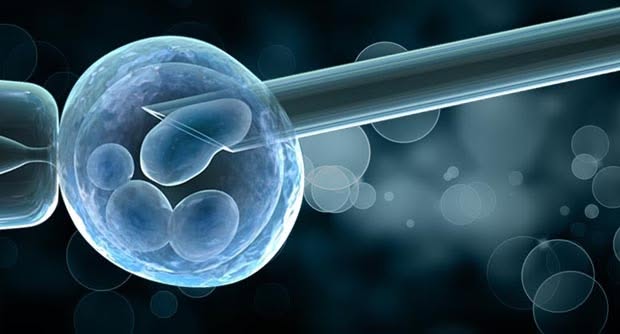
We often think of in vitro fertilization as a carefully controlled medical pathway, built on precision, paperwork, science, and trust. For couples who turn to IVF after years of trying to build a family, every step carries deep emotional weight.
In this case, Score and Mills believed they were moving through that process with their own embryos. The couple had reportedly worked with the Fertility Center of Orlando in Longwood, Florida, where embryos were created and stored as part of their fertility journey.
Score later underwent an embryo transfer in April 2025. Months later, on December 11, 2025, she gave birth to Shea, a healthy baby girl who became the center of their world almost instantly.
But soon after the birth, the couple noticed something that forced them into a painful search for answers. Shea did not appear to share their genetic background. That concern led to DNA testing, and the results confirmed the reality they feared: the baby they had carried, delivered, named, and loved was not biologically related to either of them.
The Custody Agreement That Settled Shea’s Immediate Future
The custody agreement reached between Score, Mills, and Shea’s biological parents keeps the child with the only parents she has known. The agreement is confidential, but court filings indicate that Score and Mills will remain Shea’s permanent custodial parents.
For a child still in infancy, that point matters deeply. The case could have become a painful legal contest between biology, birth, intent, and lived parenthood. Instead, both families reached a private arrangement designed to protect Shea’s stability.
We should understand this as more than a legal technicality. It is a recognition that, in cases like this, family cannot be measured by DNA alone. Score carried Shea through pregnancy. Score and Mills brought her home, cared for her, bonded with her, and built the first months of her life around love, fear, and uncertainty.
The biological parents, whose identities remain private, now have a place in this story as well. The reported agreement suggests a careful attempt to balance privacy, genetic truth, emotional attachment, and the child’s long-term welfare.
How Genetic Testing Identified Shea’s Biological Parents
The search for Shea’s genetic parents became one of the most delicate parts of the case. According to court filings and public reporting, genetic testing helped trace the child’s biological connection to another fertility patient.
That patient was identified in court documents as Patient 004. Reports say the genetic mother was linked to a March 2020 egg retrieval group, which helped narrow the possible source of the embryo.
This detail is important because IVF cases are built around timelines. Egg retrieval dates, embryo storage records, lab identifiers, transfer dates, patient charts, and clinic logs all become critical when something goes wrong. A single mismatch can lead to a search across multiple families, embryos, and years of records.
In this case, the identification of Shea’s genetic parents ended one major unknown. It allowed both families to move from fear and speculation into a negotiated custody arrangement. Still, it did not answer every question.
The Alleged Clinic Error Behind the Florida IVF Mix-Up
The lawsuit names the Fertility Center of Orlando and Dr. Milton McNichol in connection with the alleged embryo error. The couple’s legal action began as an attempt to preserve records, identify Shea’s biological parents, and determine what happened to the embryos that were supposed to belong to Score and Mills.
We must treat the allegations carefully. The legal case has not erased the need for proof, records, and accountability. What is clear from public filings is that Score and Mills believed they had been implanted with one of their own embryos, only to later learn that the child born from the transfer was not genetically theirs.
That discovery created two emotional emergencies at once. First, the couple had to confront the possibility that Shea’s biological parents might one day seek custody. Second, they had to ask whether one of their own embryos may have been transferred to someone else.
For any IVF patient, that second fear is terrifying. It is not only about medical negligence or paperwork. It is about the possibility that a biological child could exist elsewhere, perhaps in another home, without anyone knowing the full truth.
The Remaining Embryo Question That Still Shadows the Case
Even after the custody agreement, the story remains unfinished. Reports indicate that an embryo attributed to Score and Mills has been transferred to another provider for storage and possible parentage testing.
That is a fragile and complicated step. Parentage testing can provide clarity, but embryos are not ordinary records or replaceable samples. Any testing decision carries medical, ethical, and emotional consequences.
The couple’s broader legal case remains significant because the custody agreement solves Shea’s immediate future, not the entire alleged chain of error. The unresolved concern is whether all embryos were properly identified, stored, transferred, and documented.
We can see why this question matters far beyond one family. IVF patients place extraordinary trust in clinics. They trust labels, lab systems, doctors, embryologists, consent forms, storage tanks, transfer rooms, and recordkeeping processes. When that trust breaks, the injury reaches into identity, parenthood, ancestry, and family structure.
Why This Case Has Captured National Attention
This case has drawn public attention because it sits at the intersection of science and the most intimate parts of human life. IVF is not abstract medicine. It is hope stored in frozen embryos, calendar dates, injections, consultations, procedures, waiting rooms, and pregnancy tests.
When everything works, IVF can be life-changing. When an alleged mix-up occurs, the consequences are almost impossible to contain.
For Score and Mills, Shea’s birth brought both love and devastation. They loved the child in their arms, but they also needed to know whose embryo had been transferred and whether their own genetic material had been misplaced.
For Shea’s biological parents, the situation also required a difficult emotional reckoning. They had to learn that their genetic child had been born to another couple, then face decisions about privacy, custody, future contact, and the child’s best interests.
The public may be drawn to the story’s shock, but the real heart of the case is quieter and heavier. It is about four adults trying to build a path around a child who did nothing wrong.
The Bigger IVF Safety Questions Raised by the Case
The Florida IVF mix-up case is likely to sharpen public questions about fertility clinic safeguards. Patients may now ask more pointed questions about embryo identification, double-check systems, electronic witnessing, storage audits, chain-of-custody logs, and disclosure policies.
We should expect more scrutiny around how clinics verify embryos before transfer. In a safe IVF system, the identities of the patient and the embryo should be verified at critical points, not assumed simply because a label appears correct.
Patients may also want to know how clinics respond when an error is suspected. Do they preserve records immediately? Do they notify potentially affected families? Do they offer genetic testing? Do they disclose near misses? Do they cooperate with court-supervised investigations? Do they have written policies for embryo misdirection, damage, or loss?
These questions are not signs of distrust toward fertility medicine as a whole. They are signs that reproductive medicine carries responsibilities unlike almost any other field. A lab mistake in this context can change family trees.
What Fertility Patients May Ask Clinics After This Case
Patients going through IVF may become more direct in asking how their embryos are protected. That is a reasonable response to a case like this.
They may ask whether the clinic uses manual double witnessing, electronic witnessing, barcode tracking, RFID systems, or other identity verification tools. They may ask how embryos are labeled inside storage tanks and how many staff members must verify the embryo before transfer.
They may ask what happens when multiple patients have retrievals, fertilization, embryo freezing, or transfers on the same day. They may also ask whether the clinic conducts internal audits and how quickly patients are told if a possible mismatch is discovered.
In a field where patients are already carrying financial stress, medical strain, and emotional exhaustion, clear answers matter. Trust grows when systems are visible, explained, and documented.
A Custody Resolution With a Human Center
The most important immediate outcome is that Shea’s daily life appears protected. The custody agreement allows Score and Mills to continue as her permanent custodial parents while also respecting the privacy of her biological parents.
That resolution does not undo the alleged mistake. It does not erase the months of fear, the legal filings, the genetic testing, or the unresolved questions about embryos. But it gives the child at the center of the case a stable home while the adults continue dealing with the consequences.
We can look at this case as a warning about fertility clinic accountability, but we should also see it as a story about parenthood under impossible conditions. Score and Mills entered IVF hoping for a child. They became parents to Shea. Biology complicated the story, but it did not cancel the bond.