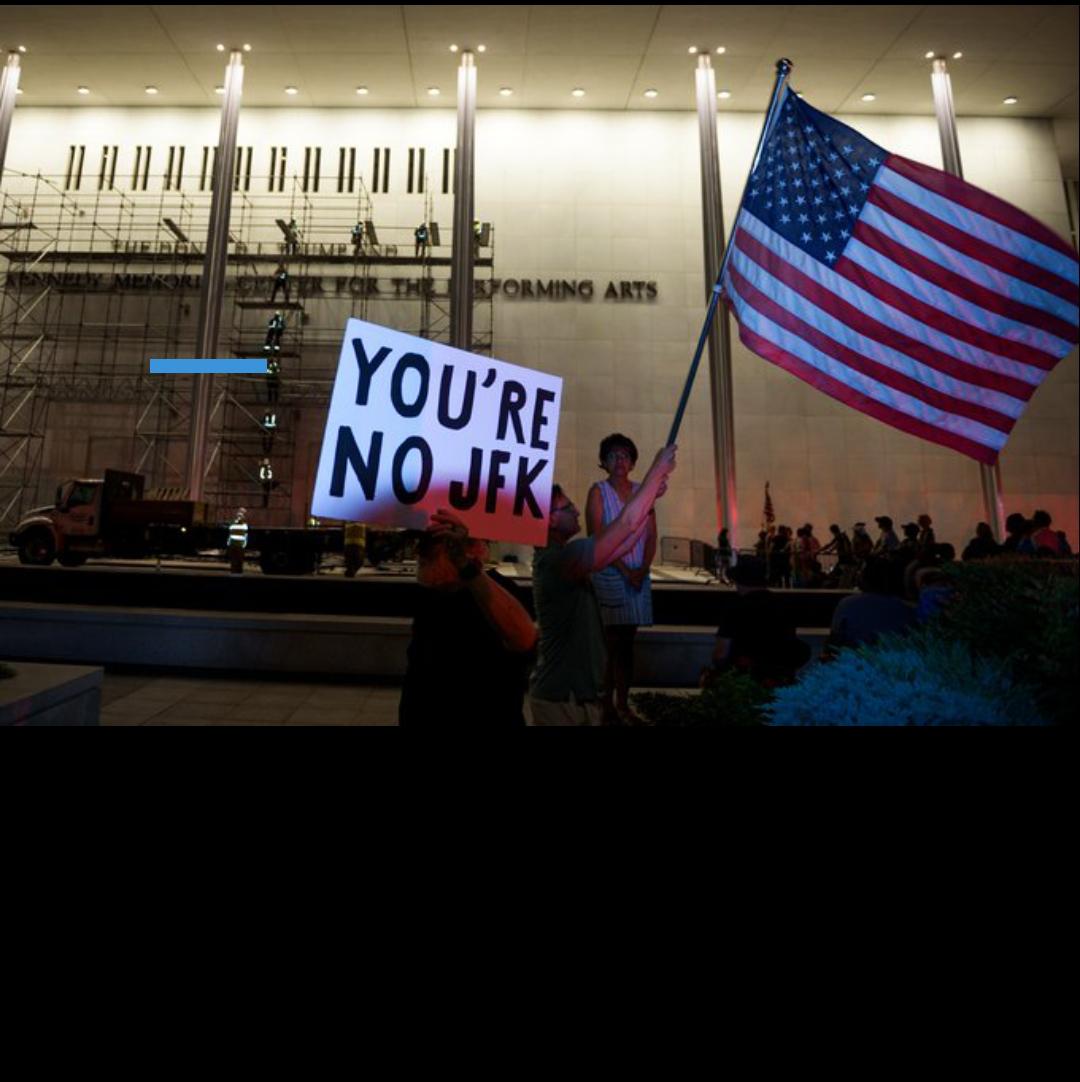
A portion of the exterior display at the John F. Kennedy Center for the Performing Arts in Washington, D.C., remains covered following the removal of former President Donald Trump’s name from the site, drawing renewed public attention and sparking discussion about political influence in national cultural institutions.
The change, confirmed by officials familiar with the situation, has become a talking point in political and arts circles as observers question what prompted the alteration and what it signals for the future of one of the United States’ most prominent performing arts venues.
What Was Changed at the Kennedy Center
According to information from individuals familiar with the matter, the exterior display that previously featured former President Donald Trump’s name has been removed and replaced with a covering that obscures the area.
The Kennedy Center, officially known as the John F. Kennedy Center for the Performing Arts, has long featured donor recognition and honorary displays tied to major contributions and institutional acknowledgments. Changes to such displays are not unprecedented, but the removal of a high-profile political figure’s name has attracted unusual attention due to Trump’s national prominence and ongoing influence in public affairs.
As of now, the covered section remains in place, and officials have not publicly detailed whether a permanent replacement design is planned or whether the change is temporary during renovation or review.
Why the Change Is Drawing Public Attention
The situation is attracting attention for several reasons, including the symbolic nature of the Kennedy Center itself. The institution serves as the United States’ national cultural center and hosts performances ranging from theater and ballet to orchestral and public events. It is widely viewed as a nonpartisan cultural landmark, even as it receives federal support and private donations.
Because of this status, any visible change associated with political figures often becomes a subject of public scrutiny. The removal of Trump’s name has therefore raised questions among observers about governance, donor recognition practices, and whether recent decisions reflect administrative updates or broader institutional shifts.
Public reaction has also been amplified by the highly visible nature of the Kennedy Center’s exterior, which is located along the Potomac River and frequently seen by tourists, residents, and visitors attending performances.
Background on the Kennedy Center and Naming Practices
The Kennedy Center was established as a living memorial to President John F. Kennedy and opened in 1971. Over the decades, it has grown into a major cultural institution hosting hundreds of performances each year, including opera, dance, classical music, and contemporary productions.
Naming rights and donor recognition at the center are typically tied to large financial contributions made by individuals, organizations, or foundations. These recognitions are generally governed by formal agreements and institutional policies, though specific arrangements are not always publicly detailed.
Because of its national significance, the Kennedy Center often finds itself at the intersection of culture and politics. Changes to donor recognition, building signage, or honorary displays can therefore attract attention far beyond the arts community.
Reactions and Public Response
Reactions to the covered display have varied, with some viewing the change as a routine administrative adjustment and others interpreting it through a political lens.
Supporters of the change argue that institutions like the Kennedy Center should regularly review donor recognition practices and ensure that displays reflect current agreements or organizational standards. They suggest that covering or removing names can be part of standard facility updates, renovations, or policy revisions.
Critics, however, have questioned the timing and visibility of the change, suggesting it could be interpreted as politically motivated given Trump’s continued presence in national political discourse. Some observers have called for greater transparency regarding the decision-making process behind the alteration.
At this time, there is no public indication that the change is part of a broader restructuring of donor recognition policies, and officials have not released a detailed explanation addressing the specific reasoning behind the covered display.
Institutional Silence Adds to Speculation
One factor contributing to public interest is the limited official commentary surrounding the change. While institutions often manage internal adjustments without issuing public statements, the Kennedy Center’s visibility makes even small physical changes subject to scrutiny.
In the absence of detailed explanations, speculation has grown across media coverage and public discussion about whether the covered display reflects a temporary construction decision, a donor agreement update, or a broader institutional shift in how recognitions are displayed.
Experts in nonprofit governance note that cultural institutions frequently update donor walls, exterior signage, and recognition panels as contracts expire or are renegotiated. However, they also acknowledge that changes involving prominent political figures tend to attract amplified attention regardless of intent.
For now, the covered section at the Kennedy Center remains in place, and no timeline has been announced for its replacement or update. It is unclear whether the display will be restored, redesigned, or permanently altered.
Officials associated with the institution have not released additional details, and it remains to be seen whether further clarification will be provided in the coming days or weeks.
As the situation continues to circulate publicly, attention is expected to remain focused on the Kennedy Center not only as a cultural landmark but also as a symbolic space where art, politics, and public perception often intersect.