Summer Return With a Different Weight
The Old Town Clovis Farmers Market returns each summer as one of the most recognizable public gatherings in the Central Valley. The Old Town Clovis Farmers Market brings fresh produce, local vendors, and community activity into the heart of downtown Clovis every Friday evening. It remains a defining seasonal tradition in Clovis, California, centered in Old Town Clovis, where agriculture and small business culture intersect in a walkable historic district.
The market operates during a narrow seasonal window, typically from early May through late September. It runs on Friday evenings from 5:30 p.m. to 8:30 p.m., drawing consistent weekly attendance from residents across Fresno County and surrounding communities. This rhythm has turned the market into more than a retail space. It functions as a recurring civic event shaped by habit, timing, and local identity.
Yet its return also arrives with shifting pressures. Rising costs, environmental strain, and growing crowds now influence how the market functions on the ground. The experience remains familiar, but the conditions behind it are no longer static.
The Old Town Clovis Farmers Market now reflects both continuity and change. The same streets host the same tradition, but the economic and environmental context surrounding it continues to evolve.
A Downtown Corridor Under Growing Strain
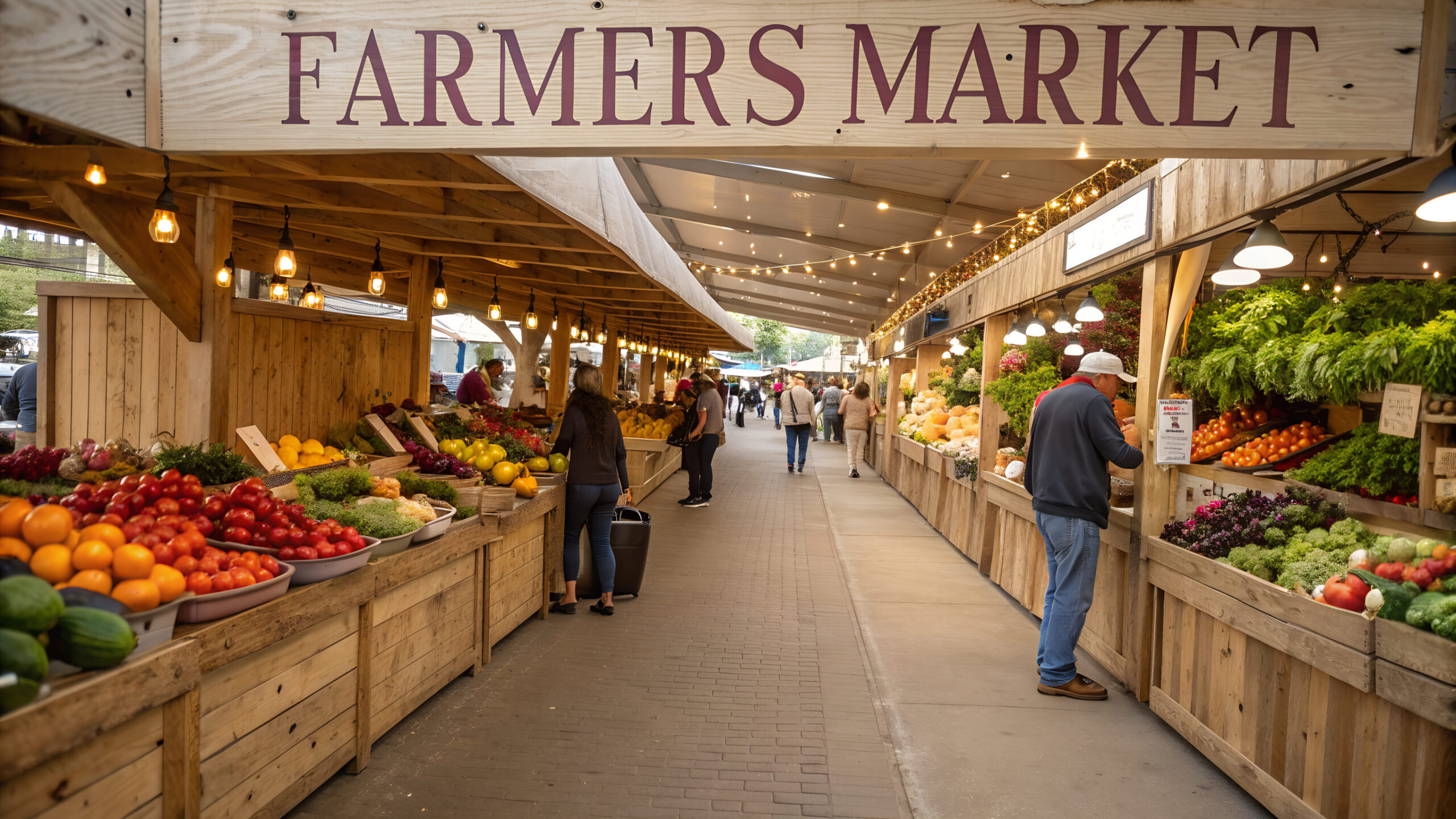
The Old Town Clovis Farmers Market stretches along Pollasky Avenue, transforming a historic downtown corridor into a dense pedestrian marketplace. The layout encourages movement between produce stalls, food vendors, and craft displays. However, increased attendance has changed the flow of the space.
Crowding now defines peak hours more than leisure. Parking demand spills into nearby residential streets, and walking space between booths narrows as evening traffic builds. Some visitors adjust their arrival times to avoid congestion, while others leave earlier due to crowd density.
This shift reflects a broader pattern seen in successful regional markets across California. As popularity increases, infrastructure struggles to keep pace. The result is a tension between accessibility and the quality of the experience.
The Old Town Clovis Farmers Market remains highly active, but its growth has introduced operational friction that did not exist in earlier seasons.
Agricultural Abundance Under Environmental Pressure
The foundation of the Old Town Clovis Farmers Market remains Central Valley agriculture, one of the most productive farming regions in the United States. However, that productivity now operates under measurable environmental pressure. Heat intensity, water restrictions, and shifting rainfall patterns have altered crop cycles across multiple growing seasons.
Farmers report more irregular harvest timing, especially for summer staples such as stone fruits, berries, and tomatoes. This affects not only supply volume but also consistency across weeks. Some vendors experience strong early-season availability followed by sudden shortages later in the summer.
These changes shape how the Old Town Clovis Farmers Market operates at a structural level. Certified Producers must adjust pricing, inventory planning, and crop selection in response to unpredictable conditions. The market still presents seasonal abundance, but that abundance is increasingly uneven.
Over time, this variability influences consumer expectations. Regular visitors may notice smaller selections or higher prices compared to previous years. The market remains rooted in agriculture, yet agriculture itself is under greater strain.
Rising Costs Reshape Local Food Access
The Old Town Clovis Farmers Market continues to emphasize fresh, local food, but affordability has become a more visible factor in visitor behavior. Rising production costs influence pricing at nearly every vendor stall.
Fuel, irrigation, packaging, labor, and transportation costs have increased steadily over recent years. These pressures move through the supply chain and eventually appear at the point of sale. For some households, the difference between farmers’ market pricing and supermarket pricing now affects attendance frequency.
This creates a subtle divide in participation. Some shoppers prioritize freshness and origin, while others shop selectively due to budget constraints. Vendors operate within this tension daily, balancing fair compensation with customer retention.
The Old Town Clovis Farmers Market, therefore, reflects a broader economic reality. Local food systems are not insulated from inflationary pressure, and community markets often absorb that impact directly.
Small Vendors in a High-Risk Seasonal Economy
Behind the visible energy of the Old Town Clovis Farmers Market is a fragile vendor ecosystem. Many small producers rely on weekly market income as a primary or seasonal source of revenue. Their success depends on attendance, weather, and product availability.
Operating costs remain fixed even when sales fluctuate. Stall fees, transportation expenses, and material costs continue regardless of daily performance. This creates financial instability for smaller vendors who lack alternative distribution channels.
Vendor turnover is a recurring feature of the market landscape. Some businesses return each season, while others exit after one or two cycles due to financial pressure. The market appears stable from the outside, yet internally it reflects continuous adaptation.
This dynamic highlights a structural reality in local economies. Visibility does not always equal stability, and success in public markets often depends on narrow margins.
Community Programs With Limited Reach
The Old Town Clovis Farmers Market supports the NOSH Program, an “eat one – give one” initiative that distributes fresh produce to families through local food pantries. The program strengthens the market’s social role and connects agricultural output to food security efforts.
Participation, however, remains uneven. Not all visitors understand how contributions are integrated into the system, and program visibility varies across vendors. While the initiative provides meaningful assistance, its reach is constrained by scale and funding capacity.
Food insecurity in the broader region continues to exceed available distribution resources. The NOSH Program addresses part of this gap, but not all of it. The Old Town Clovis Farmers Market, therefore, operates within a wider structural challenge that extends beyond its immediate footprint.
Economic Benefits Concentrated Around Downtown
The Old Town Clovis Farmers Market significantly increases foot traffic in downtown Clovis, benefiting nearby restaurants, cafés, and retail shops. However, this economic impact is not evenly distributed.
Businesses located directly along the market corridor experience the highest gains. Those positioned just outside the main flow often see limited spillover activity. This creates a concentrated economic zone that peaks during market hours.
Temporary vendors also benefit from high weekend demand. Yet their presence does not always translate into long-term local investment, as many operate seasonally or rotate between markets.
This uneven distribution reflects a common pattern in localized event economies. Growth generates opportunity, but not all participants benefit equally.
Cultural Identity and Community Continuity
Despite structural pressures, the Old Town Clovis Farmers Market continues to function as a cultural anchor in Clovis, California. Families, long-time residents, and new visitors share the same space each week, reinforcing a sense of continuity.
The market also maintains a strong educational role. Children observe food production systems, interact with farm animals in limited settings, and develop early awareness of agricultural cycles. These experiences connect urban life to rural production systems in a tangible way.
Community engagement remains one of the market’s strongest assets. Live music, informal social interaction, and shared dining areas create an environment that extends beyond commerce. It becomes a recurring social space shaped by repetition and familiarity.
Final Reflection
The Old Town Clovis Farmers Market stands at the intersection of tradition and transition. It continues to represent community identity in Old Town Clovis, yet it now operates under conditions shaped by economic pressure, environmental uncertainty, and growing public demand.
Its strength lies in continuity. Its challenge lies in balance. The market persists not because conditions remain stable, but because participants adapt to instability while preserving its weekly rhythm.
What defines its future may not be how much it grows, but how it sustains meaning as the environment around it continues to change.