Hundreds of people gathered along Amsterdam Avenue on Manhattan’s Upper West Side, only steps from where a Jewish man had been stabbed days earlier. Their message was aimed directly at New York City Mayor Zohran Mamdani.
“Remove Mamdani” and “Mamdani has to go” echoed through the neighborhood as demonstrators packed the sidewalk for a rally called “United Against Hate.” Organized by the End Jew Hatred movement, the demonstration followed two separate daylight attacks on July 23 involving a Jewish man and an Asian man.
For many in the crowd, the attacks represented more than another disturbing crime story. Speakers argued that Mamdani’s criticism of Israel and Israeli Prime Minister Benjamin Netanyahu had helped create a hostile atmosphere for Jewish New Yorkers.
The mayor’s office rejected that broader accusation. Mamdani condemned antisemitism, racism and violence, saying every resident should be safe regardless of religion or race.
The result was a tense public debate unfolding on the same streets where two strangers had recently been wounded. One side blamed political rhetoric. The other pointed to the accused attacker and the wider problem of hate itself.
Two Men Attacked Blocks Apart
The violence began shortly after 1:30 p.m. on July 23 near West 84th Street and Central Park West. Prosecutors say Raul Morales, 51, approached a 57-year-old Asian man from behind and stabbed him in the back with a knife.
Morales then allegedly walked several blocks toward Amsterdam Avenue. Authorities say he encountered 50-year-old Moshe Yezhak Grunhaus, a Jewish man wearing a kippah who had just left religious services at The Jewish Center. Morales allegedly stabbed Grunhaus in the chest with a screwdriver near West 86th Street.
Witnesses and victims told investigators that Morales shouted “Allahu Akbar” during the attacks. Prosecutors also allege that he shouted “Justice for Islam” as he moved through the neighborhood. Police said there was no known personal connection between Morales and either victim.
Both men were taken to a hospital and survived. The Asian victim reportedly required surgery to remove the knife from his back.
A witness followed the suspect and helped police locate the building where he was staying. Morales barricaded himself inside an apartment before surrendering after officers spent nearly an hour attempting to persuade him to come out.
A Manhattan grand jury has since indicted Morales on hate-crime charges connected to both attacks. The indictment includes two counts of second-degree attempted murder as a hate crime, along with assault and attempted-assault charges carrying hate-crime enhancements. He could face up to 40 years in prison if convicted of the most serious charges. The allegations remain unproven, and Morales is entitled to the presumption of innocence.
Rally Speakers Turn Their Anger Toward City Hall
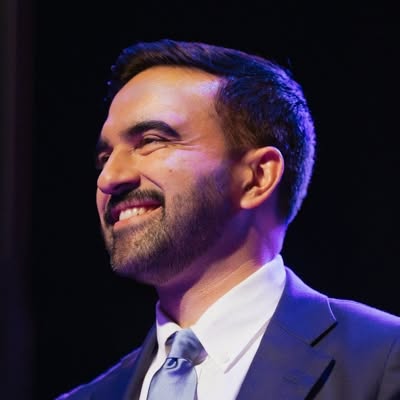
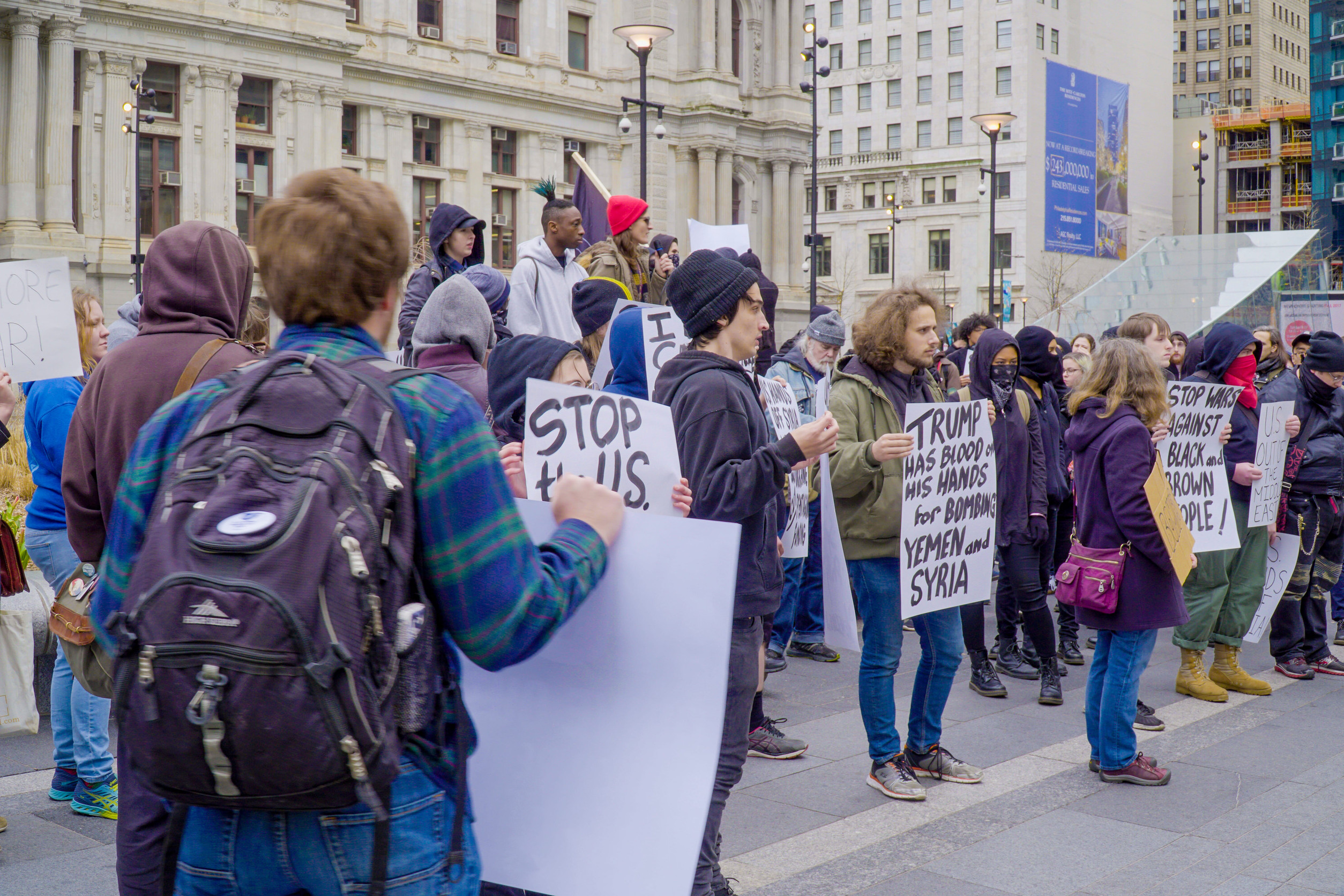
Three days after the attacks, demonstrators returned to the Upper West Side for the United Against Hate rally.
Signs accused Mamdani of failing Jewish residents, and chants demanded that he leave office. Some protesters called for his arrest, although rally speakers presented no evidence that the mayor had any connection to Morales or directed the attacks. Police have also not announced evidence showing that Morales acted because of Mamdani’s statements.
Still, organizers argued that political language can shape the atmosphere surrounding hate crimes.
Michelle Ahdoot, a director of End Jew Hatred, accused the mayor of encouraging hostility through his focus on Israel. Moshe Spern, president of United Jewish Teachers, similarly argued that words coming from City Hall carry consequences.
Nassau County Executive and Republican gubernatorial candidate Bruce Blakeman also attended. He accused Mamdani of normalizing antisemitism and called for tougher punishments for people convicted of multiple bias-motivated attacks.
Other Jewish leaders used more measured language. Jewish Community Relations Council CEO Mark Treyger said no elected official could be held responsible for every hateful act, but leaders still influence the climate in which residents live. Manhattan Assemblyman Micah Lasher called on public officials to promote calm rather than anger.
Their argument was not that political criticism automatically produces violence. It was that harsh language directed at Israel can sometimes be heard by Jewish New Yorkers as hostility toward their own identity, especially during a period of elevated antisemitic incidents.
Mamdani Condemns Hate and Rejects Collective Blame
Mamdani responded to the attacks by saying the suspect should be prosecuted to the fullest extent of the law.
“This kind of despicable violence is not who we are as a city,” the mayor said. He added that his administration would work to eliminate antisemitism, racism and other forms of bigotry.
In another statement, Mamdani said New York would not tolerate antisemitism or hatred of any kind and promised accountability for people who commit hate-driven violence.
The mayor did not abandon his criticism of Netanyahu or Israel’s government. His opponents say that refusal proves he has ignored their concerns. His supporters distinguish criticism of a foreign government from prejudice against Jewish people.
That divide remained visible on Amsterdam Avenue. The rally carried a clear political demand, but the criminal case carries a different question: what motivated the man accused of attacking two strangers?
Prosecutors will attempt to answer that question in court. Until then, claims that Mamdani caused the stabbings remain political accusations, not established findings.
Still, the anger at the rally was real. So was the fear expressed by Jewish and Asian community leaders. Two men were attacked in daylight, blocks apart, allegedly because of who they appeared to be.
New York’s challenge now reaches beyond one suspect or one mayor. The city must punish violence without turning entire religious or ethnic communities into suspects, and it must debate Israel, public safety and political leadership without allowing disagreement to become dehumanization.
On Amsterdam Avenue, those tensions were no longer abstract. They were standing together on the sidewalk, chanting beneath the windows of a neighborhood still processing what had happened.