California has always lived with earthquakes as part of its bargain with beauty. The same restless geology that carved its mountains, valleys, coastlines, deserts, and dramatic skylines also keeps millions of residents near some of the most studied fault systems on Earth.
But the latest warning around Southern California’s earthquake risk is not another vague reminder that “The Big One” could happen someday. New research has heightened concern about two major fault systems: the San Andreas Fault and the San Jacinto Fault. Scientists now say key sections of these faults have reached stress levels at or above anything modeled in the past 1,000 years.
That does not mean an earthquake will strike tomorrow. It does not mean anyone can circle a date on a calendar. What it does mean is that Southern California’s fault network may be sitting in a dangerously loaded condition, especially around Cajon Pass, a crucial fault junction northeast of Los Angeles.
In simple terms, we are not just looking at one fault storing pressure. We are looking at a system in which two powerful faults may be stressed in a way that could allow a larger, more complex rupture than a single-fault earthquake.
SAn Andreas and San Jacinto Faults
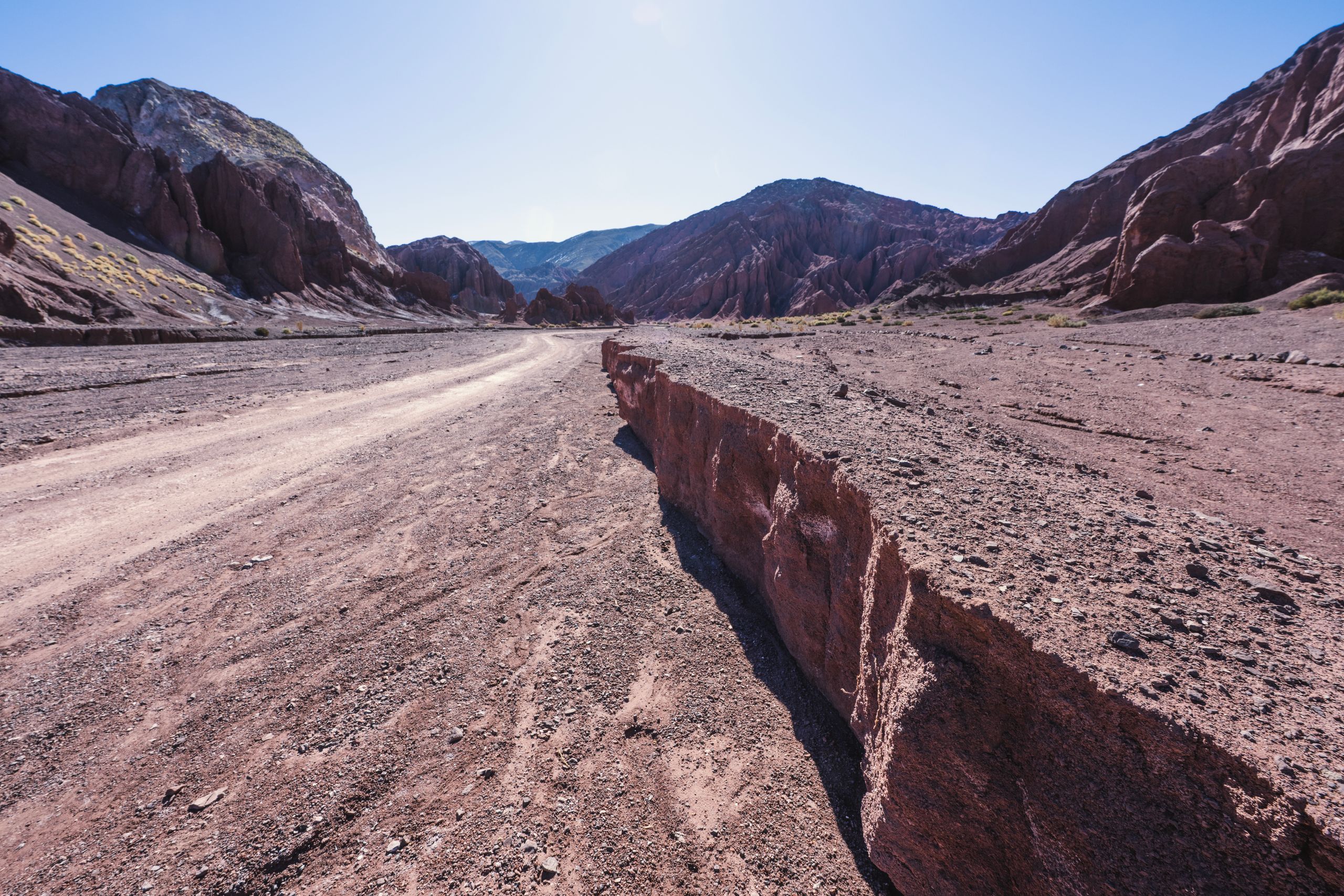
The San Andreas Fault is the name most Californians already know. It stretches for hundreds of miles and marks a major boundary where the Pacific Plate and North American Plate grind past each other. It is capable of producing massive earthquakes, and its southern section has long been closely watched because of the time since its last major rupture.
The San Jacinto Fault is less famous, but it is no minor player. It runs through a densely populated, infrastructure-sensitive part of Southern California and is considered one of the most active fault zones in the region.
The new concern is not only that each fault carries risk. The concern is that the two systems may interact.
That interaction matters because earthquakes do not always respect the neat lines humans draw on maps. A rupture can begin on one segment, stop at a junction, or continue into another fault system, depending on underground stress conditions. This is where Cajon Pass becomes central.
Cajon Pass: The “Earthquake Gate” Near Los Angeles
Cajon Pass is more than a mountain corridor. It is a lifeline. Highways, rail lines, freight routes, energy infrastructure, and regional movement all depend on this narrow passage between the San Gabriel and San Bernardino Mountains.
Geologically, it is also a meeting zone between the San Andreas and San Jacinto fault systems. Researchers now describe it as an “earthquake gate,” meaning it may decide whether a rupture stays confined to one fault or crosses into another.
That idea changes how we think about earthquake danger in Southern California. If Cajon Pass “closes,” a rupture may stop before becoming a wider regional event. If it “opens,” a rupture could move across fault systems and create a larger, more destructive earthquake.
This is the kind of detail that makes the latest research so important. The danger is not just the size of one fault. It is the possibility of connected movement through a crowded, infrastructure-heavy region.
What the New 1,000-Year Stress Study Found
Researchers modeled roughly 1,000 years of earthquake history along the southern San Andreas and San Jacinto fault systems. They used geological evidence, historical rupture records, radiocarbon dating, tree-ring signals, and advanced physics-based modeling to understand how stress has built and released over centuries.
The result is striking. Stress levels in parts of the system are now modeled at the highest levels seen across the past millennium. In some areas, they may have exceeded previous modeled highs.
The study found particularly concerning stress values on the San Jacinto-Bernardino section and the neighboring Mojave South section of the San Andreas Fault. Even more important, stress levels across both systems appear to be high and relatively aligned. That alignment matters because researchers believe similar high stress across both faults can create conditions that favor a through-going rupture.
In plain language, when both fault systems are heavily loaded at the same time, the gate at Cajon Pass may be more likely to allow a rupture to continue rather than stop.
Why a Multi-Fault Earthquake Would Be More Dangerous
A single large earthquake on the San Andreas would already be serious. But a rupture involving both the San Andreas and San Jacinto systems could be far more damaging because it may spread shaking across a broader region.
The areas of concern include Los Angeles, San Bernardino, Riverside, the Coachella Valley, and communities tied to the Cajon Pass transportation corridor. These are not empty desert zones. They include homes, hospitals, schools, warehouses, freeways, rail routes, power systems, water systems, and supply-chain infrastructure.
That is why the phrase “mega earthquake” captures public attention. The danger is not only dramatic shaking. It is the chain reaction afterward: damaged roads, broken water lines, disrupted fuel movement, emergency response delays, fires, landslides, collapsed older buildings, and weeks or months of recovery.
A major Southern California quake would not be one city’s problem. It would become a regional crisis.
The Fort Tejon Earthquake and the Long Silence Since 1857
One reason scientists pay such close attention to the southern San Andreas is the long period of quiescence since the 1857 Fort Tejon earthquake. That quake, estimated at around magnitude 7.9, ruptured a huge section of the San Andreas Fault.
Since then, stress has continued to build across parts of the fault system. A fault that appears quiet on the surface is not necessarily safe. In many cases, silence can mean the fault is locked, storing energy rather than releasing it through smaller events.
This is one of the uncomfortable truths of earthquake science. A long period without a major quake can make a region feel normal to the people living there, but to geologists, it can signal that stored strain is building.
Southern California has modern freeways, dense suburbs, massive ports, mountain passes, aqueducts, power corridors, and sprawling development, all sitting above a fault system that has not released its largest stored energy in generations.
Why Scientists Still Cannot Predict the Exact Earthquake
The latest study does not predict an exact earthquake. It does not say a major quake will happen this week, this month, or this year.
This distinction matters because earthquake risk is often misunderstood. Scientists can estimate probability. They can model fault stress. They can map hazards. They can identify dangerous segments. They can build scenarios based on past rupture behavior and present-day loading.
But they still cannot predict the exact date, time, location, and magnitude of a future earthquake.
That does not make the new warning less serious. It makes it more practical. We should not read it as a countdown clock. We should read it as a sharper hazard map for a region that already knows a major earthquake is inevitable over the long run.
California’s Earthquake Probability Is Already High
Long before this latest stress study, California’s official earthquake forecasts had already shown major risk. The state’s long-term earthquake forecast estimates that California faces a very high chance of at least one damaging earthquake of magnitude 6.7 or greater over a 30-year period.
The UCERF3 model also increased the estimated chance of a magnitude 8 or larger California earthquake compared with the prior forecast, partly because modern modeling allows for multi-fault ruptures. That is important because the newest Cajon Pass research fits into the same larger concern: California’s faults may not always rupture neatly one at a time.
For residents, the message is not to panic. It is preparation with urgency. We cannot stop tectonic plates from moving, but we can reduce what breaks when they do.
What a Major Southern California Earthquake Could Disrupt First
A powerful earthquake in the San Andreas-San Jacinto system would likely hit more than buildings. The first wave of disruption could spread through essential systems that people rarely think about until they fail.
Water lines crossing fault zones could rupture. Freeway overpasses and mountain roads could become blocked. Rail movement through the Cajon Pass could stop. Power transmission routes could be damaged. Cell networks could overload. Hospitals could face a sudden surge of injuries while also dealing with utility problems. Warehouses and distribution centers could lose access routes just when supplies are most needed.
This is why Cajon Pass is so important. It is not just a fault junction. It is a physical bottleneck for Southern California’s economy.
When a mountain corridor carries roads, freight, electricity, fuel, and communications, an earthquake there becomes more than a geological event. It becomes an infrastructure event.