A Texas steakhouse employee has turned one unusual dinner order into a full-blown online debate after sharing a video of a raw ribeye allegedly served straight from the refrigerator to a customer’s table. No grill marks. No sear. No “rare” center. No flame at all.
The viral moment reportedly occurred at Primal Steakhouse in The Colony, Texas, near Dallas, where a customer asked for a 24-ounce Delmonico ribeye with absolutely no cooking. The request was so strange that staff reportedly thought it might be a prank, a social media stunt, or one of those bizarre restaurant tests that only make sense after midnight on TikTok.
But according to the employee’s account, the customer was serious. The steak was served cold and raw, separate from the salt and pepper. The internet did what the internet does best: it turned one plate of uncooked beef into a cultural argument about food safety, customer service, kitchen limits, and how far “the customer is always right” should really go.
The Raw Ribeye Order That Stopped the Kitchen Cold
Most steakhouse orders follow a familiar script. Rare. Medium rare. Medium. Medium well. Well done. Maybe black and blue if someone wants a hard sear with a cool red center. Maybe Pittsburgh-style if the outside needs to be charred while the inside stays nearly raw.
This order skipped every known lane.
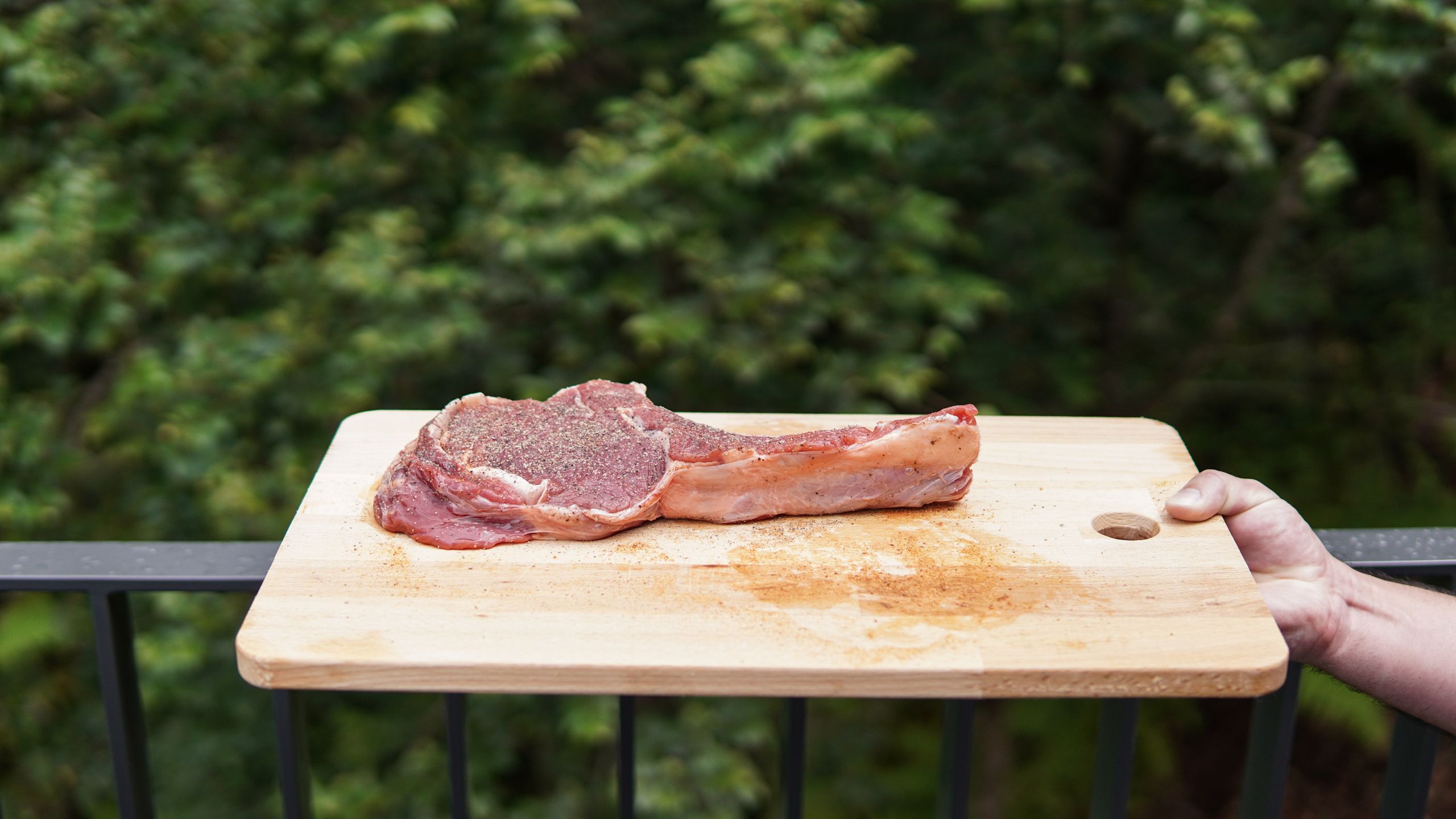
The customer reportedly asked for the steak to go directly from the refrigerator to the table. That detail matters because it removes the one step that normally gives even an ultra-rare steak its identity: heat. A rare steak still touches a hot surface. A black-and-blue steak still gets a sear. Carpaccio and tartare are raw beef dishes, but they are prepared with distinct culinary approaches, usually sliced, chopped, seasoned, dressed, or assembled as a composed dish.
A whole cold ribeye on a board is different. It is not so much a temperature preference as a refusal of cooking itself.
That is why the employee’s reaction landed so hard online. Restaurant workers see strange substitutions, impossible allergies, complaints about overcooked steak, and “surprise me” orders all the time. But a steakhouse being asked to serve a thick ribeye with no heat at all sits in its own category.
Staff Thought It Had to Be a Prank
The employee, Dvon, said the night was slow when the table came in. That detail gives the story its strange restaurant-world rhythm. Slow nights make every unusual request feel louder because there is less kitchen noise to drown it out.
A server reportedly returned from the table, confused, and explained that the customer wanted the steak cold. At first, that could have meant several things. Maybe the guest wanted a very rare center. Maybe the customer wanted the steak rested differently. Maybe the server misunderstood. In a steakhouse, “cold” can sound like bad wording for “barely cooked.”
Then came the clarification: the steak should not come into contact with heat at all.
That is the moment this stopped being a cooking preference and became a management decision. A kitchen can handle rare beef. A kitchen can handle a special request. But a completely raw 24-ounce steak creates a bigger question: should the restaurant serve it just because the customer asked?
According to the employee’s account, the chief operating officer, who was working the floor that night, went to the table to confirm the order directly. That was the right move. When an order raises obvious safety concerns, a manager needs to hear the request clearly, eliminate confusion, and ensure the guest understands what is being asked.
“Fridge-to-Table” Is Not the Same as Rare Steak
The internet’s reaction became so loud because many people immediately treated the meal like an extreme version of rare steak. But “rare” and “raw from the fridge” are not the same thing.
Rare steak is cooked to a lower internal temperature than medium or well-done. It still involves controlled heat. The outside still comes into contact with a hot pan, grill, broiler, or open flame. That searing process gives the steak its flavor, texture, and aroma, and provides some surface-level reduction of bacteria.
A fridge-to-table ribeye has none of that.
There is also a major difference between raw beef dishes and an uncooked steak served whole. Beef tartare is usually finely chopped or minced, seasoned, and served in a controlled portion. Carpaccio is thinly sliced and dressed. Even dishes built around raw or nearly raw meat are treated as specialty preparations, not simply a steak pulled from cold storage and placed in front of a guest.
That is why the phrase “fridge-to-table steak” feels so jarring. Farm-to-table sounds fresh. Fridge-to-table sounds unfinished.
The Food Safety Question Nobody Can Ignore
The viral jokes came fast. Some viewers called the customer a vampire. Others referenced raw-meat internet personalities. Some treated the whole thing like a dare.
But behind the jokes is a serious food-safety question. Raw beef can carry harmful bacteria. Cooking is one of the main ways restaurants and home cooks reduce the risk of foodborne illness. The USDA recommends that steaks reach 145°F and rest for three minutes before eating.
That does not mean every person who eats raw beef will automatically get sick. People eat tartare, carpaccio, and very rare steak every day. But the risk is real, and the difference between a chef-prepared raw dish and a thick raw ribeye matters.
The safest restaurant response depends on policy, local rules, training, and judgment. Some establishments may refuse a request like this outright. Others may serve it only after giving a clear warning. In this case, the employee said the steakhouse had consumer advisories on its menu and that the customer was informed of the risks before the order was fulfilled.
Still, a warning does not make raw meat risk-free. It only makes the decision clearer.
The Customer’s Choice Became a Kitchen Ethics Test
This story spread because it is not just about steak. It is about the invisible pressure restaurant workers face when a customer asks for something that feels wrong.
The old line says the customer is always right. Anyone who has worked in food service knows that phrase has limits. A customer can request sauce on the side. A customer can ask for no onions. A customer can send back an overcooked steak. But when a request crosses into health, safety, or liability, the restaurant has to decide where hospitality ends and responsibility begins.
That is the real tension in the raw ribeye story. The kitchen did not simply make a weird plate. Staff reportedly paused, questioned the request, escalated it, confirmed it, and watched to see whether the guest was serious.
That sequence tells us the employees understood the order was unusual. They did not treat it like a normal steak temperature. They treated it like a situation.
And that may be why the video resonated with so many restaurant workers. It captured the exact moment when service becomes judgment.
Why the Internet Could Not Look Away
A raw ribeye is visually powerful because it breaks the expectation of a steakhouse meal. When people picture a ribeye, they imagine sizzling fat, crusted edges, a hot plate, melted butter, garlic, smoke, salt, and that first cut through a seared surface.
A cold, raw steak removes the romance.
That contrast is what made the TikTok clip spread. The image is simple, strange, and instantly understandable. No one needs a culinary degree to know something is off. Viewers can react in one second.
The comments followed the usual viral pattern. Some people joked. Some people gagged. Some people defended personal choice. Some people turned it into a debate about masculinity, primal diets, raw-food trends, and whether social media has made extreme eating more performative.
The story also arrived in a culture already obsessed with food boundaries. We argue about seed oils, raw milk, carnivore diets, ultra-processed foods, rare burgers, raw oysters, and whether everything “natural” is automatically better. A cold raw ribeye sits right in the center of that debate.
The Raw Meat Trend Behind the Viral Moment
This order may be rare in steakhouses, but the fascination with raw animal products is not new. Online food culture has made raw-meat eating more visible, especially through carnivore-diet influencers, primal-living content, and viral clips built around shock value.
Some people view raw meat as a return to instinct. Others see it as reckless. Many are simply watching because the content is hard to ignore.
That is where restaurants get pulled into an uncomfortable position. A guest’s request may be private, but once an employee posts about it, the order becomes public entertainment. The plate becomes content. The restaurant becomes part of a larger conversation it may not have planned to enter.
This is the modern dining room reality. One strange order can move from table to TikTok to national conversation before the check clears.