A powerful magnitude 7.4 earthquake shook western Colombia, putting communities on alert and reminding the world of the unpredictable forces beneath one of Earth’s most active seismic regions. The earthquake struck along Colombia’s Pacific region, an area known for intense tectonic activity and a long history of powerful seismic events.
The shaking raised concerns about possible damage, aftershocks, and the safety of communities located near the country’s vulnerable coastline.
For residents in western Colombia, the sudden movement of the ground was a frightening reminder of the natural risks that come with living near the Pacific coast. The region is known for its stunning landscapes, but it also sits in an area where underground forces are constantly shifting. Large earthquakes remain one of the biggest natural hazards faced by communities along this part of South America.
Colombia’s Earthquake Highlights the Power of the Pacific Ring of Fire
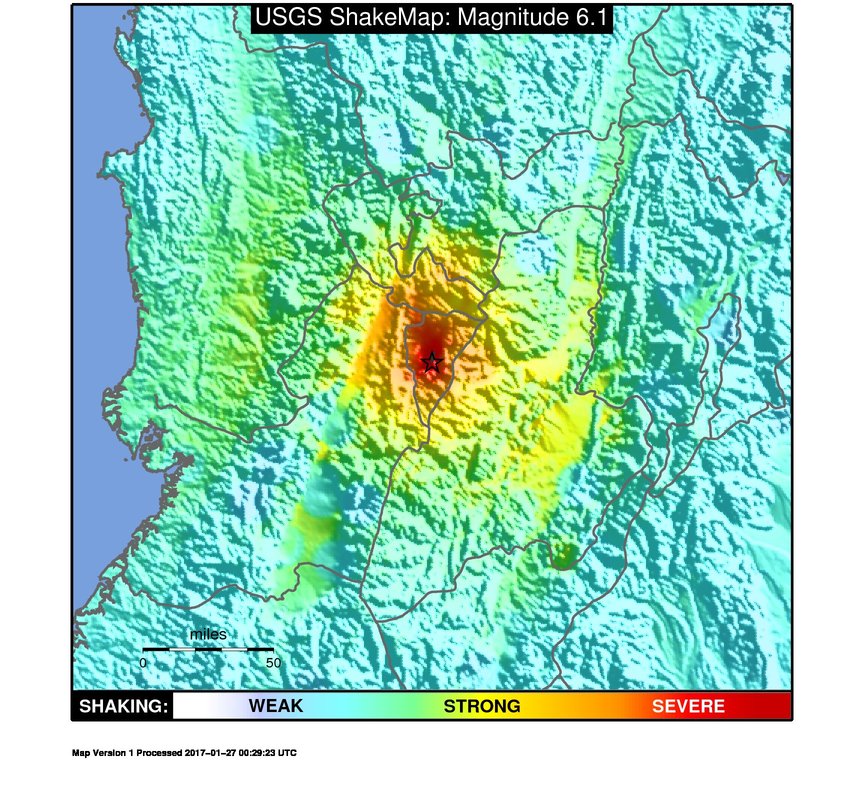
USGS, Public domain, via Wikimedia Commons
The earthquake occurred in the Pacific Ring of Fire, a massive zone surrounding the Pacific Ocean where some of the world’s strongest earthquakes and volcanic eruptions happen. This region is shaped by the movement and collision of several tectonic plates beneath the Earth’s surface.
Colombia is among the countries that regularly experience seismic activity because of its location along this powerful geological boundary.
Western Colombia is especially vulnerable because the Nazca Plate is moving beneath the South American Plate in a process known as subduction. Over thousands of years, this movement creates enormous pressure that can eventually be released through major earthquakes. The latest earthquake serves as another reminder of the powerful forces constantly changing the planet beneath our feet.
A Region With a History of Major Earthquakes
Colombia’s Pacific coastline has experienced some of the strongest earthquakes recorded in South America. One of the most significant events occurred in 1906, when a massive earthquake near the Colombia Ecuador border reached an estimated magnitude of 8.8. That earthquake also generated a tsunami that affected parts of the Pacific coastline.
The history of powerful earthquakes in the region explains why scientists and emergency officials closely monitor seismic activity. Even when an earthquake does not immediately cause widespread destruction, experts continue watching for aftershocks and other possible dangers. Strong aftershocks can create additional challenges for communities already dealing with the effects of the initial shaking.
Why Coastal Earthquakes Can Create Extra Concerns
Earthquakes near coastal areas often receive special attention because of the possibility of additional hazards. When a major earthquake happens beneath the ocean floor, scientists examine whether the movement could disturb enough water to create tsunami conditions. Even without a tsunami, strong earthquakes can still affect buildings, roads, communication systems, and essential services.
Communities near earthquake zones are often advised to remain cautious after major shaking occurs. Residents are encouraged to avoid damaged structures and follow instructions from emergency officials. The danger from a large earthquake can continue even after the first tremors have ended.
Understanding the Strength Behind a Magnitude 7.4 Earthquake
A magnitude 7.4 earthquake is considered a major seismic event that can produce intense shaking in affected areas. Earthquake magnitude is measured on a logarithmic scale, meaning each increase represents a much larger release of energy. This is why even a small difference in magnitude can represent a significant change in the power of an earthquake.
However, magnitude alone does not determine the level of destruction. The depth of the earthquake, distance from populated areas, building quality, and local ground conditions all influence the impact. A major earthquake in a remote area can have a very different outcome from one that occurs near a major city.
The Importance of Earthquake Preparedness
The earthquake in western Colombia serves as another reminder that preparation remains one of the most important tools for protecting communities. Scientists have improved earthquake monitoring systems, but accurately predicting when a major earthquake will happen remains impossible. Emergency planning and public awareness continue to play a key role in reducing risks.
Experts often recommend that families living in earthquake zones keep emergency supplies, understand evacuation routes, and secure heavy objects inside homes. These simple steps can help reduce injuries and confusion during a disaster. For communities along the Pacific coast, preparedness is a daily reality.
The earthquake lasted only moments, but its message was much bigger than the shaking itself. Colombia’s latest seismic event highlighted the immense power of the Pacific Ring of Fire and the importance of respecting the forces beneath the Earth. For millions living near active fault zones, preparation remains the best defense against nature’s sudden and unpredictable power.