Nothing is quite like cutting into a watermelon, expecting sweet, juicy goodness, only to find it tastes more like crunchy water. The outside looked perfect, the price seemed right, and somehow, you still picked the wrong one.
The good news is that choosing a delicious watermelon does not have to be a guessing game. A few simple clues on the outside can tell you a lot about what’s inside. From the color of its underside to how heavy it feels, here is what to check before bringing your next watermelon home.
Look for a Creamy Yellow Spot
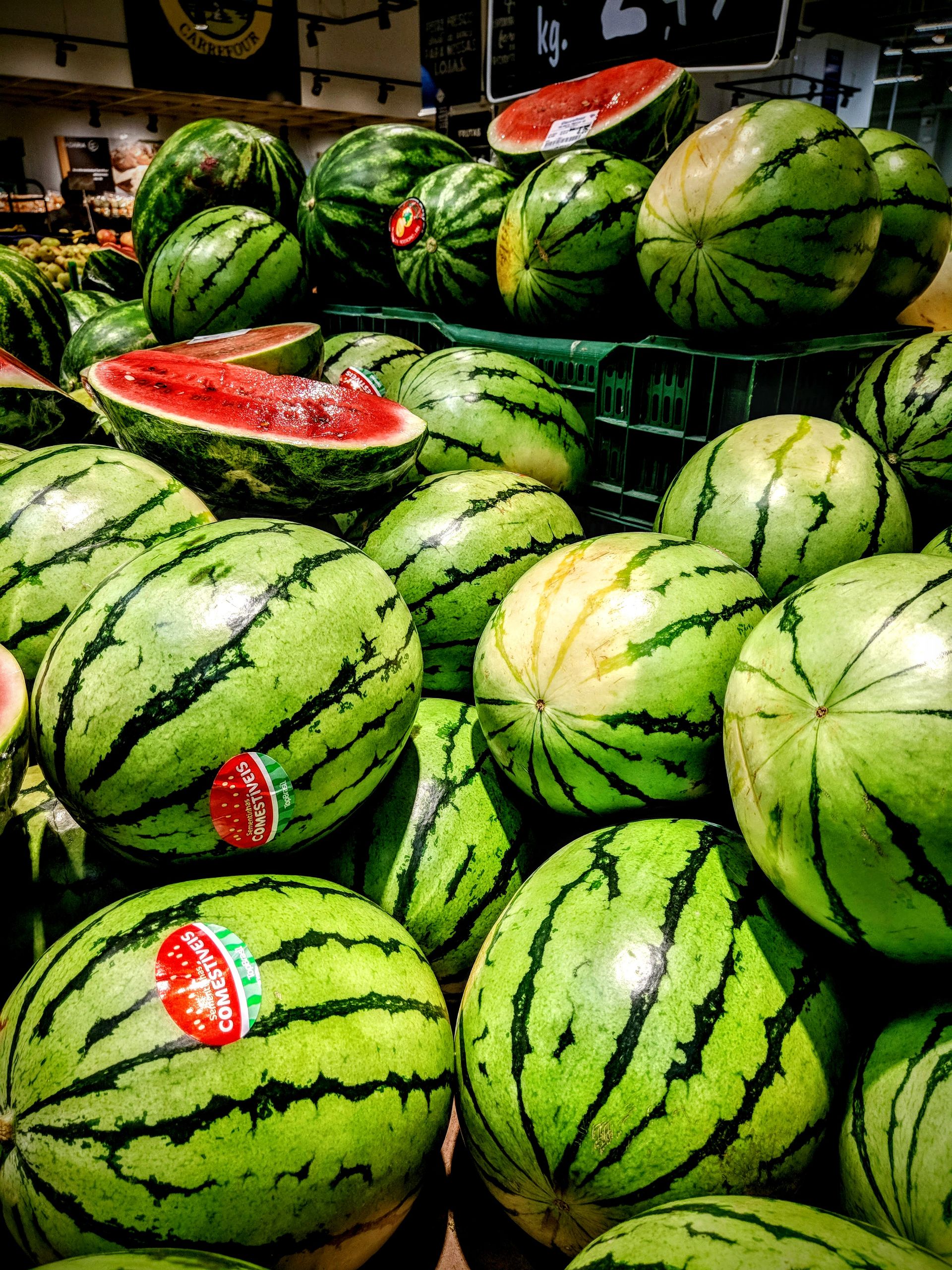
That yellow patch on the bottom of a watermelon is not a defect. It’s one of the most useful clues.
Known as the field spot, this is the area where the watermelon rested on the ground while growing. A creamy yellow or golden spot generally indicates the fruit had time to mature before harvest.
According to Texas A&M AgriLife Extension, a large yellow field spot is one of the strongest visible indicators of watermelon ripeness. A pale white or greenish spot may suggest the fruit was harvested too early.
Before picking a watermelon, turn it over and examine the underside. That slightly unattractive yellow patch might be exactly what you want.
Pick One That Feels Heavy for Its Size
Two watermelons can look almost identical but feel surprisingly different when you lift them. That difference is worth noticing.
Watermelons are about 92% water, so a fruit that feels heavy for its size is generally a good bet for juiciness.
Try lifting two watermelons of similar size, one after the other. The heavier one may contain more water, making it a better candidate for that refreshing bite.
Of course, weight alone cannot guarantee sweetness. A watermelon can be wonderfully juicy without having much flavor. That is why this test works best alongside the other signs of ripeness.
Pay Attention to the Rind’s Appearance
A watermelon with an extra-shiny exterior might look beautiful under grocery store lights, but appearances can be deceiving.
As watermelons mature, their rinds often lose their gloss. A dull or matte-looking surface can therefore be a better sign of ripeness than a shiny one.
North Carolina State University’s watermelon breeding guidance identifies the shift from a shiny to a dull rind as one indicator growers use to evaluate maturity.
Keep in mind that rind colors vary by variety. Some watermelons are dark green, while others have lighter stripes. You are looking for a mature appearance appropriate to the variety, not necessarily the darkest fruit in the display.
Give It a Gentle Knock
You have probably seen shoppers tapping watermelons and listening carefully, almost as though they expect the fruit to answer.
People do this for a reason.
A ripe watermelon often makes a deep, resonant sound when you tap it with your knuckles. An immature watermelon may sound higher-pitched.
However, interpreting the sound takes practice, and even agricultural experts acknowledge that tapping isn’t foolproof.
Rather than knocking on one watermelon and hoping for the best, gently tap two or three similar-sized fruits and compare their sounds. Use the result as an additional clue, not the deciding factor.
Choose a Watermelon With a Firm, Even Shape
Watermelons come in different shapes, from nearly round to long and oval. Neither shape automatically guarantees better flavor.
What matters more is that the watermelon looks reasonably symmetrical for its variety and shows no obvious damage.
Examine the entire surface for deep cuts, cracks, soft areas, or signs of decay. A few harmless surface scratches are generally less concerning than an area that feels unusually soft or damaged.
Don’t reject a perfectly good watermelon just because it is oval instead of round. The claim that round watermelons are always sweeter than elongated ones is not a reliable shopping rule.
Do Not Rely Too Much on Brown Webbing
You may have heard that the rough brown lines sometimes found on watermelon rinds mean the fruit is loaded with sugar.
Those markings can look like tiny webs or scars, and social media posts often present them as a secret trick for identifying the sweetest watermelon.
However, there is not enough reliable evidence to treat heavy webbing as a dependable measure of sweetness.
Minor surface scarring doesn’t automatically make a watermelon bad, but it shouldn’t be your main reason for choosing one, either.
The creamy field spot, relative weight, and overall condition are more useful clues.
Check the Stem, but Know Its Limitations
If you are buying watermelon directly from a farm, the small curly tendril nearest the fruit can offer another clue.
A brown, dried-out tendril can indicate a mature watermelon. Growers sometimes examine it alongside the field spot and rind.
However, most grocery store watermelons have already been detached from their vines. A short, dried stem on a store-bought watermelon does not provide the same information as examining the tendril on a growing plant.
If the vine is no longer attached, focus on the signs you can assess more reliably.
Remember That Watermelon Does Not Get Sweeter After Harvesting
This is one of the most important things to understand before buying watermelon.
Unlike bananas or peaches, watermelons don’t continue developing significant sweetness after they’re picked.
Leaving an underripe watermelon on your kitchen counter for several days won’t make it deliciously sweet.
That means choosing a mature fruit at the store matters more than hoping it improves at home.
For the best eating experience, refrigerate your watermelon before serving if you prefer it cold. Once cut, keep the pieces refrigerated in a covered container.
The Easiest Way to Pick the Best One
You do not need to spend 20 minutes examining every watermelon in the grocery store.
Use this simple routine: find one with a creamy yellow field spot, compare its weight with another of similar size, check for a dull-looking rind, and inspect it for damage. If you want, finish with a gentle tap.
No single trick can promise perfect sweetness every time. Different watermelon varieties, growing conditions, and harvest timing all influence flavor.
Still, combining these clues gives you a much better chance of bringing home a crisp, juicy watermelon worth every bite.
Next time you find yourself standing in front of a mountain of watermelons, remember the prettiest one isn’t necessarily the sweetest. Sometimes the best pick is the heavy, slightly dull-looking fruit with a big yellow patch underneath.