What started as a question about cheap groceries in New York City somehow ended up in the middle of America’s voter-ID war.
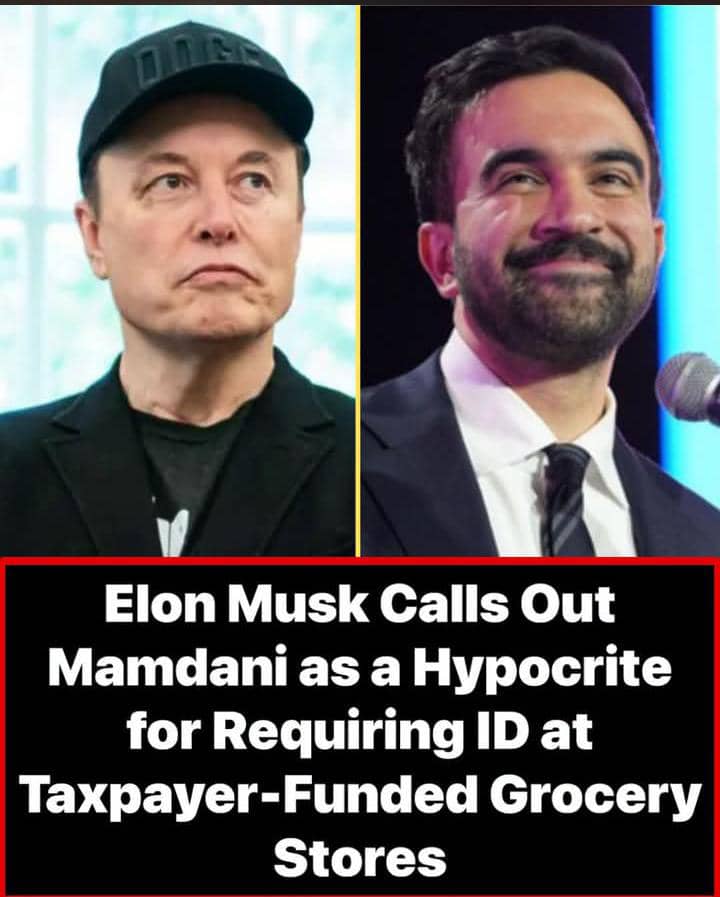
Elon Musk jumped into the controversy this week after comments from a New York City official appeared to suggest Mayor Zohran Mamdani’s planned municipal grocery stores could use something resembling a library card to control who takes advantage of heavily discounted food.
“Oh, the irony is too much,” Musk wrote on X on Aug. 3, sharing the controversy with his massive online audience.
The implication was easy to understand. Critics argued that Democrats oppose strict identification requirements for voting while Mamdani’s taxpayer-backed grocery program was supposedly preparing to demand identification before shoppers could access discounted milk, meat and produce.
There was just one big problem: City Hall says that isn’t what the grocery plan does.
A ‘library-card-esque’ comment lights the fuse
The controversy began after Mamdani was asked how New York would stop shoppers from buying large quantities of discounted groceries and reselling them for profit.
Mamdani said the program was designed for New Yorkers “to be able to put food on the table,” rather than for people looking to “make a quick buck through reselling.”
He then handed the question to Jeanny Pak, interim president and CEO of the New York City Economic Development Corporation.
Pak said officials were considering ways to keep the program focused on ordinary New Yorkers, “whether it be sort of a library card-esque” system, while also managing purchasing.
That phrase was political gasoline.
Musk responded with his “irony” remark. Sen. Rick Scott, R-Fla., went further, writing that the situation was “not just ironic, it’s hypocritical!” President Donald Trump also weighed in.
“I wish they’d have an ID to access the voting booth,” Trump said when asked about the grocery controversy.
The attacks tied Mamdani’s grocery proposal to the broader fight over the SAVE America Act. The legislation would require documentary proof of U.S. citizenship when registering for federal elections and photo identification when voting.
Suddenly, New York’s experiment with cheaper bananas had become a national argument about election law.
City Hall says no ID will be required
Mamdani’s administration quickly pushed back, saying critics had turned Pak’s remarks into something the city was not proposing.
The Associated Press reviewed the controversy and found that the claim that shoppers must show identification is false. City officials said a possible customer card would function more like a supermarket loyalty card and would be voluntary. It would not require shoppers to verify their identity, residency or income.
Mamdani addressed the uproar himself during an appearance on “The Joy Reid Show.”
Speaking about the planned stores, Mamdani said shoppers “do not need an ID to shop” there, before returning to his argument that the project is intended to tackle soaring grocery costs.
His press secretary, Joe Calvello, was even more explicit.
“NYC Grocery stores will be open to everyone,” Calvello wrote, adding that there would be no system for verifying identity, residency or income and that shoppers would not be asked for ID.
Spokesperson Cassio Mendoza said comparisons with voter-ID legislation “simply do not apply,” explaining that the proposed customer-card system is meant to manage inventory and prevent discounted products from being cleared from shelves for resale.
The city’s request for proposals backs up that explanation. It describes a “voluntary free-to-access membership card program” that may track sales and manage discounts, while explicitly stating that the card will not be required to physically enter the stores.
That distinction knocks a major hole in the original hypocrisy charge.
The grocery plan itself is still a political lightning rod

Even without an ID requirement, Mamdani’s grocery experiment gives critics plenty to debate.
His administration has allocated $70 million in capital funding to develop five municipal grocery stores, one in each borough. Private grocery companies will operate the stores day-to-day, while the city owns or develops the sites and sets standards for pricing and operations.
The centerpiece is a basket of everyday foods priced 30% below typical retail prices. It will include fresh produce, meat, seafood, milk, bread and other staples.
City officials estimate the program could save participating shoppers about $90 a month, or roughly $1,000 a year. The first store is expected to open in Hunts Point in the Bronx by the end of 2027, while all five are planned to be operating by the end of Mamdani’s first term.
“A trip to the grocery store shouldn’t spell dread for New Yorkers,” Mamdani said when announcing the discount plan, promising lower and more predictable prices on everyday food.
Critics can still question whether municipal grocery stores are a smart use of taxpayer money, whether the 30% discounts are financially sustainable or whether government-backed competitors could hurt private grocers. Those are legitimate policy fights.
But the ID controversy is a different matter.
Musk unquestionably mocked Mamdani over the supposed contradiction, Trump joined the criticism, and Republican figures accused the mayor’s administration of hypocrisy.
For a political fight that began over who gets to buy cheaper food, that detail is more than fine print. It is the difference between the viral version of the story and what New York City is actually proposing.