A Rhode Island federal court has confirmed what many Americans already feared about the justice system: when the government gets it wrong, accountability can look very different depending on who made the mistake.
Assistant U.S. Attorney Kevin Bolan was not formally disciplined after a special counsel found sufficient evidence that his conduct violated the duty of candor owed to the court. Instead, Chief U.S. District Judge John J. McConnell Jr. issued a public cautionary letter, calling the failure grave while stopping short of a formal misconduct charge.
That decision has now pushed the case beyond a single immigration hearing, a single federal lawyer, or a single missing piece of information. It has become a larger test of whether government attorneys face real consequences when their silence helps create a damaging public falsehood.
For ordinary Americans, lying to a court or withholding key facts can bring harsh punishment. In this case, the court found that the government’s omission helped fuel a public attack on a federal judge, damaged public confidence in the judiciary, and contributed to what McConnell called a serious failure of justice.
Yet the punishment was a warning.
That is why the controversy is spreading so quickly. To many critics, the message feels painfully familiar: the rules are strict for common people, flexible for the powerful.
What happened in the Gómez case
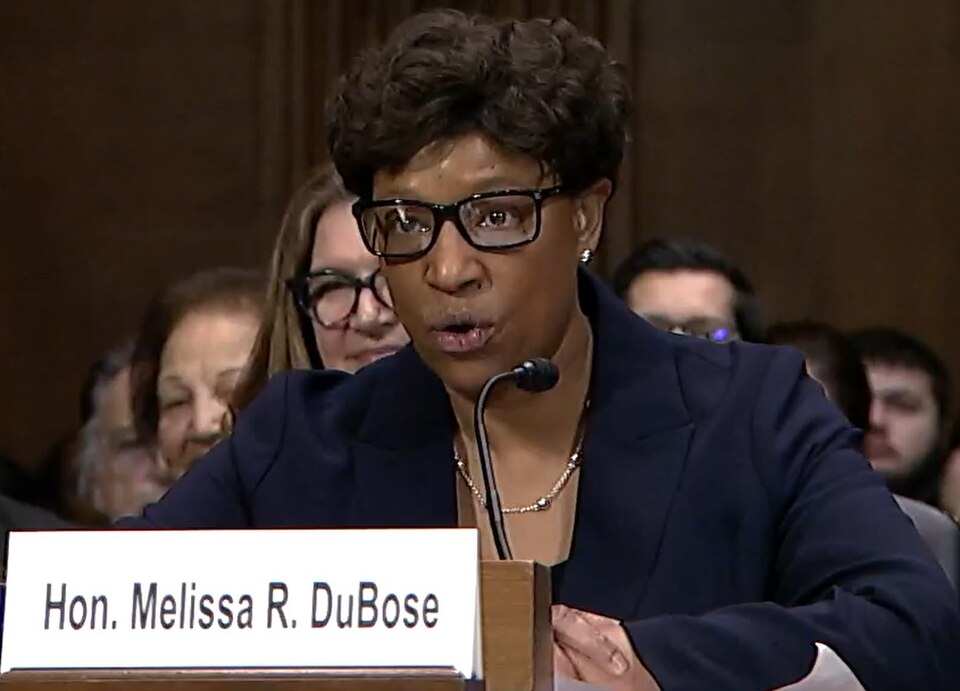
The case centered on Bryan Rafael Gómez, a noncitizen detainee who filed a habeas petition seeking release from ICE custody.
Judge Melissa R. DuBose ruled on the petition and ordered Gómez released. But before she made that decision, the court was not told that Gómez was wanted in the Dominican Republic in connection with an alleged homicide.
That information mattered. It was the kind of fact a judge would be expected to consider before deciding whether someone should remain detained or be released while awaiting further immigration proceedings.
Bolan later admitted that he knowingly omitted the information from his filing because ICE had instructed him that “use authorization” was required before disclosure. The problem was that ICE had already made the information public elsewhere.
That left the court in an extraordinary position. The judge was denied information in the courtroom, then publicly attacked outside the courtroom by the same agency that had withheld it from her.
The public attack on Judge DuBose
After the ruling, DHS issued a sharply worded public statement accusing Judge DuBose of releasing a violent criminal wanted for murder. The court later said the statement falsely suggested that the judge knew Gómez was wanted in connection with a homicide when she ordered his release.
That distinction is not small. It is the difference between a judge knowingly ignoring a serious public safety concern and a judge making a decision based on an incomplete record created by the government itself.
The court said ICE’s public statement was false, unfounded, and damaging. It also said the statement put Judge DuBose in personal danger and undermined faith in the federal courts.
That is the heart of the scandal.
This was not only about a lawyer failing to speak up. It was about an agency helping create the conditions for a judge to be blamed for information she did not have.
In an era when judges are increasingly targeted by political outrage, such public accusations carry real consequences.
The special counsel’s finding
Roger Williams University School of Law Professor Niki Kuckes was appointed as special counsel to investigate possible misconduct. Her role gave the probe added weight because she is a legal ethics expert and a former clerk to conservative Justice Antonin Scalia.
According to McConnell’s letter, Kuckes found sufficient evidence to conclude that Bolan’s conduct violated the duty of candor he owed to the court.
That is a serious finding. Lawyers are not simply advocates for their clients. They are officers of the court. Government lawyers, in particular, have an even higher duty because they represent public power, not a private interest.
The court said Bolan’s decision not to disclose the key information was, under the circumstances, equivalent to making an affirmative false statement about Gómez’s criminal history.
That is why the final result has drawn such a sharp public reaction.
If the court agreed the duty of candor was violated, and if the omission helped produce a false public attack on a judge, why did the case end with a cautionary letter?
Why the court stopped short of formal discipline
McConnell’s letter did not excuse Bolan’s conduct. It described the failure as serious and grave.
But the court also listed factors that worked in Bolan’s favor. It said there was no reason to conclude he was part of a scheme to deceive the court, acted in bad faith, or sought personal gain. The court also noted that he publicly accepted responsibility and apologized.
That explanation may satisfy legal insiders, but it is unlikely to satisfy a public already skeptical of institutional accountability.
The court’s reasoning creates a narrow distinction: Bolan violated his duty, but not in a way that required formal discipline. He failed the court, but not maliciously. He contributed to a serious failure of justice, but did not act for an illicit reason.
To many readers, that sounds less like accountability and more like professional courtesy.
That is where the anger comes from. People see a system that can be merciless toward ordinary defendants but careful and restrained when judging its own officers.
The “punishment is only for common folk” problem.
One public reaction captured the mood clearly: punishment is only for common folk.
That is not just a bitter comment. It is a powerful political diagnosis.
When a regular person misleads a court, they may face contempt, exposure to perjury charges, detention, fines, or long-term damage to their record. When a government lawyer violates the duty of candor in a case that affects public safety, judicial security, and public trust, the result can still be a warning letter.
That contrast is why the story resonates.
Americans do not need a law degree to understand the imbalance. They know that credibility in court is supposed to matter. They know judges depend on lawyers to present the truth. They know a courtroom cannot function if government attorneys treat disclosure as optional.
And they know that “I was following instructions” is rarely accepted as a full defense when ordinary people are the ones in trouble.
The greater danger: trust collapse
The most damaging part of this case may not be the release order, the missing warrant information, or even the DHS press release.
The greater danger is the erosion of trust.
Courts rely on what is sometimes called the presumption of regularity: the belief that government officials are acting properly, honestly, and in good faith unless proven otherwise. When that presumption breaks down, every case becomes harder. Every government filing becomes suspect. Every statement from a federal agency invites doubt.
That is a dangerous place for the country to be.
If judges begin to believe they must double-check the government’s claims as though every omission could be strategic, the system slows down and confidence collapses. If the public believes government lawyers can mislead courts without meaningful punishment, faith in equal justice weakens even further.
This is how institutions lose legitimacy. Not all at once, but through moments where the public sees a gap between the law’s promise and the law’s practice.
ICE’s role deserves more scrutiny
Bolan’s conduct has received much of the attention, but the court’s sharpest concern may be directed at ICE.
According to the court, Bolan acted after ICE told him not to disclose the warrant information. Then, ICE or DHS publicly used the same undisclosed information to attack the judge’s ruling.
That sequence is what makes the case so troubling.
If the information was too sensitive to tell the court, why was it already being used publicly? If the judge was not given the fact before ruling, why did DHS frame her decision as though she had ignored it? If officials knew the statement was false, why did it remain available?
Those questions go beyond one lawyer’s judgment. They point to a larger communications strategy in which court rulings are turned into political weapons, even when the factual record does not support the attack.
That is not just aggressive messaging. It is dangerous governance.
A propaganda gift to America’s adversaries
Another public reaction pushed the issue even further, arguing that America’s enemies have long sought to erode citizens’ confidence in American institutions.
That point should not be dismissed as dramatic. The United States does not need foreign propaganda to weaken public trust when its own institutions create the material themselves.
Every time a court finds that a government agency made a false statement about a judge, adversaries abroad gain an easy talking point. Every time a powerful official avoids meaningful discipline after a serious failure, authoritarian governments can point and laugh. Every time the justice system appears to have one standard for insiders and another for everyone else, America’s democratic image takes another hit.
The damage is not abstract. Public trust is a national security asset. When people stop believing courts are honest, agencies are truthful, or lawyers are accountable, the entire system becomes easier to manipulate.
That is why this case matters beyond Rhode Island.
The warning letter may not be enough.
McConnell’s cautionary letter is now part of the public docket. It publicly rebukes Bolan, reminds government lawyers of their duty to the court, and warns that future misconduct will be severely sanctioned.
But the question remains: why only future misconduct?
The court found this failure was grave. It found sufficient evidence of a duty-of-candor violation. It said the omission harmed Judge DuBose, the court, and public trust in the judiciary. It said the chain of events led to a serious failure of justice.
A warning may be legally defensible, but politically and morally it lands weakly.
The public does not measure accountability only by legal technicalities. It measures accountability by consequences.
And in this case, the consequence appears to be a public scolding of a government lawyer, while the false public narrative targeting the judge remains part of the broader political fight.
Why this story will keep growing
This story has the ingredients that make public anger last.
It involves immigration, judicial independence, government credibility, a missing disclosure, a false public attack, and a court choosing restraint after finding serious ethical failure.
It also arrives at a time when many Americans already believe powerful people move through a softer version of the justice system than everyone else.
That is why the warning letter may not close the controversy. It may intensify it.
For critics, the case is not only about whether Kevin Bolan should have faced formal discipline. It is about whether the federal government can damage a judge’s reputation, distort the public record, and then walk away with little more than a written warning.
The court wanted the letter to serve as a reminder of the duty of candor.
For many Americans, it may serve as something else: another reminder that justice looks very different depending on who is standing before the system and who is standing inside it.