Some childhood foods were delicious. Others were strange, colorful, oddly shaped, or packaged in ways that made eating feel like a game. And somehow, we loved them all.
Back then, dinner didn’t need to be fancy. A can of pasta shaped like little rings felt exciting, crackers stacked with cheese became a masterpiece, and squeezing frosting onto a pastry counted as serious kitchen creativity.
Looking back, you have to wonder whether we loved the flavor or simply enjoyed playing with our food.
Either way, these childhood favorites earned a special place in our memories. Here are 10 foods that might make you laugh, smile, or question your younger taste buds.
Easy Cheese Cheddar Cheese Snack
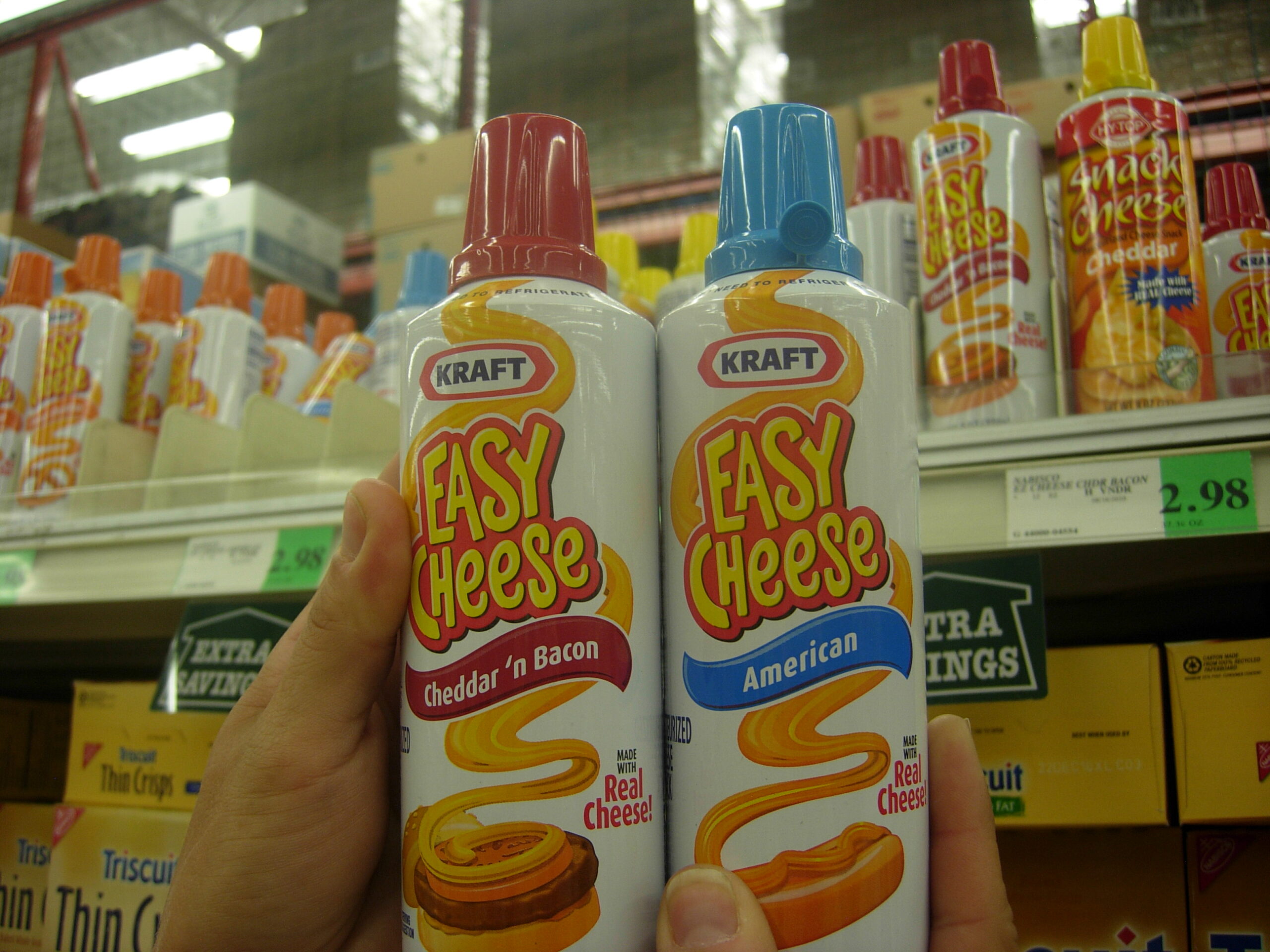
Rowanswiki, CC0, via Wikimedia Commons
Easy Cheese turned cheese and crackers into an activity that required creativity, confidence, and absolutely no artistic talent.
Instead of slicing cheese, you pressed the nozzle and watched a ribbon of cheese land wherever you pointed. Some people made careful spirals, while others created enormous piles that barely fit on their crackers.
The product traces its history to Nabisco’s Snack Mate, introduced in 1965, before it adopted the name Easy Cheese in 1984. The cheddar variety remains a pasteurized cheese spread sold in a convenient dispenser.
Looking back, the delivery system may have been just as appealing as the flavor. Ordinary cheese and crackers were fine, but cheese that came out of a can in squiggly lines? That felt like entertainment.
SpaghettiOs Original Canned Pasta
SpaghettiOs made eating pasta with a spoon feel completely normal. Forget twirling spaghetti around a fork because these tiny pasta rings were designed to make every bite easier.
Campbell’s introduced SpaghettiOs under its Franco-American brand in 1965, after Donald Goerke developed a pasta dish children could conveniently eat with a spoon. Those little rings quickly became the product’s defining feature.
And honestly, the shape was half the entertainment. Scooping up a spoonful of miniature circles swimming in tomato sauce felt satisfying.
Looking back, it’s funny how a simple change in pasta shape could make an ordinary meal feel so special. Sometimes, childhood excitement really was that easy to create.
Lunchables Ham & Cheddar Cracker Stackers
Lunchables Ham & Cheddar Cracker Stackers gave children something ordinary sandwiches couldn’t: complete control over how they built their lunch.
Instead of opening a sandwich someone else had prepared, you could stack crackers, ham, and cheddar cheese in whatever order you wanted. A reasonable lunch suddenly became a tiny food-building project.
Lunchables launched nationally in 1988, and its interactive format set it apart from traditional packed lunches. Today’s Ham & Cheddar version includes crackers, ham, cheddar cheese, and vanilla creme cookies, although the contents have changed across varieties and generations.
The real nostalgia isn’t necessarily about the individual ingredients. It’s remembering how seriously you took assembling the perfect cracker stack, only to eat it in one bite.
Armour Original Vienna Sausage
Armour Original Vienna Sausage might be one of the strangest childhood pantry favorites to explain to someone who didn’t grow up eating it. Tiny sausages packed tightly together in a little can weren’t exactly glamorous, but they had fans.
The original Armour product comes in a 4.6-ounce can and contains meats including chicken, beef, and pork. It differs from a regular refrigerated hot dog, though its small sausage shape looks familiar.
For some families, opening a can meant an easy snack that needed almost no prep. You could eat the little sausages with crackers or add them to a simple snack plate.
As an adult, you might wonder what made those tiny canned sausages so appealing. Maybe it was the convenience, the familiar taste, or the simple pleasure of having a snack that felt entirely your own.
Dunkaroos
Dunkaroos understood something important about childhood snacks: cookies get much more exciting when you can dip them in frosting.
The beloved ’90s treat paired cookies with a separate container of sweet frosting, turning an ordinary snack into a small balancing act. General Mills also gave the brand a memorable mascot, Sydney the Kangaroo.
After disappearing from American shelves, Dunkaroos returned to the United States in 2020. The comeback gave nostalgic adults another opportunity to revisit those familiar cookie-and-frosting combinations.
Of course, the biggest challenge was always managing your frosting supply. Use too much on the first cookie, and suddenly the remaining cookies looked disappointingly plain.
Related: 15 Simple Tips for Improving Your Cooking Skills Without Taking Classes.
Kid Cuisine All Star Nuggets
Kid Cuisine All Star Nuggets made frozen dinners feel like they had been designed specifically for children who wanted everything separated into neat little sections.
The familiar divided tray gave each part of the meal its own space. Today’s All Star Nuggets version contains white-meat chicken patties, macaroni and cheese, corn, and a fudge brownie topped with celebration sprinkles.
And that brownie was undoubtedly a memorable feature for anyone who loved dessert arriving with dinner. It sat in its own compartment, almost daring you to eat it before finishing everything else.
The charm wasn’t simply the food. It was the colorful, child-focused presentation and the feeling that an ordinary frozen dinner had somehow become an occasion.
Fruit Roll-Ups
Fruit Roll-Ups weren’t simply snacks. They were little projects that happened to be edible.
You could unroll the sheet, peel it away from the backing, stretch it, fold it, or tear it into smaller pieces before eating. The brightly colored fruit-flavored sheets gave children plenty of opportunities to play with their food.
By 1980, General Mills’ fruit-snack history included Fruit Roll-Ups as part of its Betty Crocker business. Modern variety packs feature colorful flavors and playful additions like tongue tattoos, though older versions didn’t always include the same designs.
The funny thing is how much effort some of us put into eating something that could have disappeared in a few bites. Apparently, unrolling and rearranging your snack was part of the fun.
Chef Boyardee Beefaroni
Chef Boyardee Beefaroni was the kind of childhood meal that didn’t need fancy presentation or elaborate preparation. A can, a bowl, and a familiar pasta dish were often enough.
Beefaroni combines macaroni and beef in a tomato-and-meat sauce. The Chef Boyardee brand dates back to 1928, when Hector Boiardi founded the business that would become a recognizable name in American kitchens.
Unlike snacks with colorful frosting or unusual packaging, Beefaroni appealed to people because it was familiar. You knew what you were getting, and sometimes that was exactly what made it comforting.
As an adult, you might prefer a homemade pasta sauce simmered with your favorite seasonings. But childhood meals weren’t always about culinary sophistication. Sometimes, they were about eating something familiar after a long day.
Pillsbury Strawberry Toaster Strudel
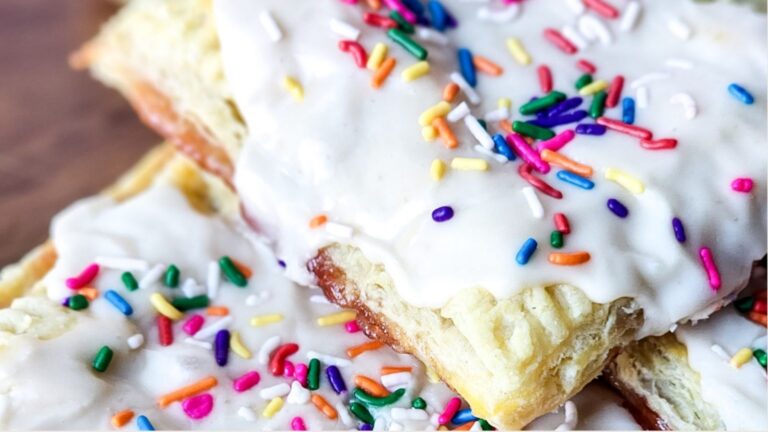
Pillsbury Strawberry Toaster Strudel made breakfast feel like a miniature decorating competition, even when nobody else was participating.
The frozen pastry came with its own icing packet, letting you create stripes, zigzags, or whatever design your morning creativity could manage.
Pillsbury began testing Toaster Strudel in selected American markets in 1982 before introducing it nationally in May 1985. Strawberry was among the original flavors, and General Mills later highlighted the decorating ritual with the name “Strudel Doodle.”
Of course, reality didn’t always match the beautiful icing patterns shown in advertisements. Some mornings produced elegant designs, while others ended with one giant blob of frosting in the middle.
Either way, decorating breakfast before eating it was undeniably part of the appeal.
Pop Rocks
Pop Rocks might be the ultimate childhood candy for anyone who believed snacks should make noise.
These tiny pieces of hard candy contain carbon dioxide trapped under pressure. When moisture dissolves the candy, the gas escapes, creating the familiar popping and crackling sensation.
The result was candy that tasted sweet, but did more. It actually did something inside your mouth, making every handful feel like a tiny experiment.
The experience even inspired a famous childhood rumor that combining Pop Rocks with soda could make your stomach explode. The manufacturer has explicitly debunked that old story.
Looking back, the flavor was almost secondary to the entertainment. What other candy could make you sit quietly just to hear what was happening in your mouth?
Childhood Favorites Were About More Than Flavor
Maybe our tastes have changed, but the joy of stacking crackers, decorating pastries, and making candy pop is something childhood never really lets us forget.