New Orleans’ muffuletta became a food tradition by turning a working lunch into something unmistakably its own: a broad, sesame-seeded loaf filled with cured meats, cheese, and olive salad. Its roots lie in the city’s Sicilian immigrant community, particularly the businesses around the French Market. More than a century later, the sandwich remains a recognizable expression of that community’s influence on a city better known nationally for gumbo, po’boys and beignets.
The most widely credited origin leads to Salvatore Lupo, who founded Central Grocery in 1906. According to his daughter Marie Lupo Tusa’s account, Lupo combined ingredients his customers were already buying separately, making their lunch easier to carry and eat. That practical solution became a signature dish, not through an elaborate restaurant debut, but through a neighborhood grocer paying attention to the people at his counter.
The Story Begins in the French Quarter’s “Little Palermo”
In the late nineteenth and early twentieth centuries, Sicilian immigrants arriving through the Port of New Orleans established homes and businesses near the bustling French Market. The area became known as “Little Palermo” and the “Italian Sector,” with groceries, bakers and other small shops serving the community. New Orleans Historical describes these newcomers as bringing customs and recipes that met the city’s existing food traditions and ingredients. The muffuletta emerged from that exchange rather than arriving as a finished sandwich from Sicily.
Bread was already central to the neighborhood’s food economy. Sicilian bakers produced a round loaf called muffuletto, selling it on the street and supplying local grocers. Street sellers advertised the fresh loaves with the call “muffuletto, caldo, caldo,” reminding people the bread had its own identity before it became famous as a sandwich wrapper. Eventually, the loaf’s name carried over to the assembled lunch.
Lupo’s customers reportedly bought the bread alongside cold cuts, olives and cheese, then ate standing or balanced their food on their laps. His daughter’s account explains why assembling everything inside the loaf made sense: it simplified a meal people were already eating. That is a family history preserved in later accounts, not a surviving transcript of the first order. Describing Lupo as widely credited with the sandwich respects that distinction without discarding the established story.
Marie Lupo Tusa also preserved her family’s broader cooking traditions in Marie’s Melting Pot, a cookbook containing Sicilian, French, and Creole-style recipes. Her contribution matters because food history often survives through family records as well as restaurant menus. The muffuletta’s story is therefore not only about an inventive grocer; it is also about the next generation documenting how that grocer’s work fitted into New Orleans life.
Related: 10 Weird Sandwiches From History, Ranked By How Much You Want To Try Them
Olive Salad Gives the Sandwich Its Personality
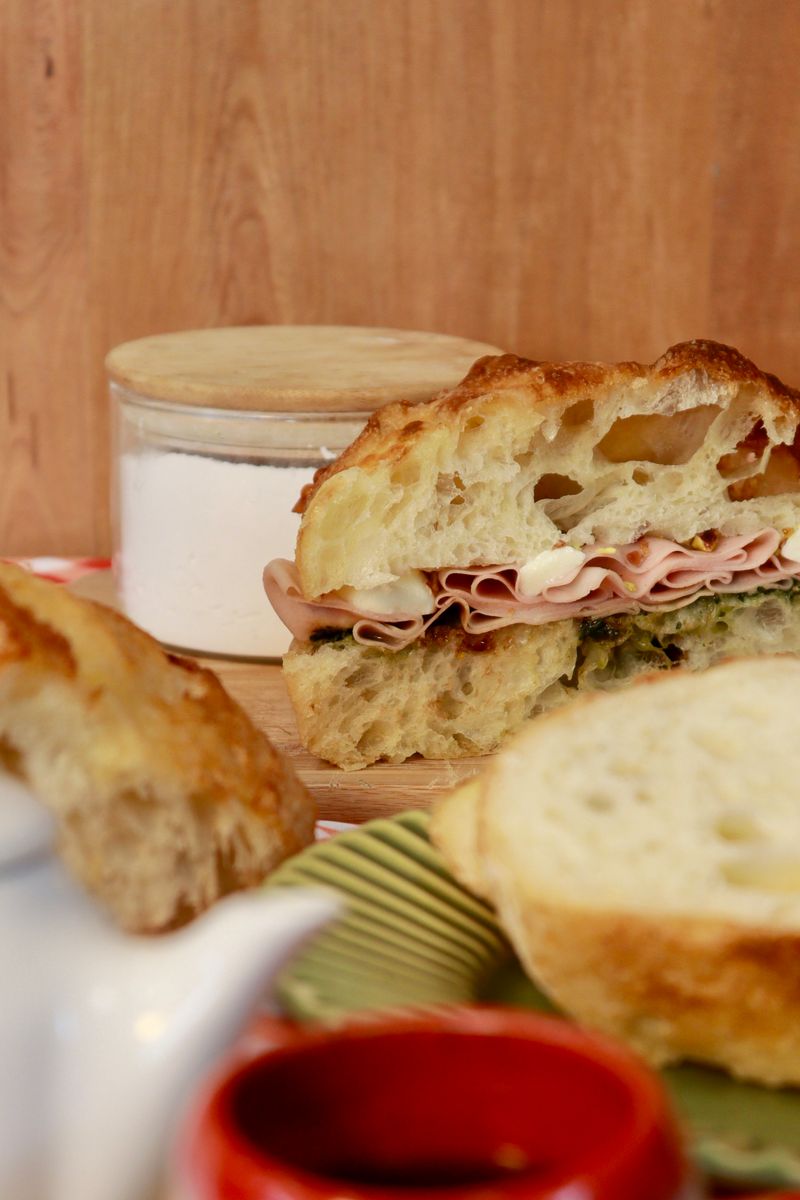
A classic muffuletta layers Genoa salami, ham, mortadella, provolone and Swiss cheese with olive salad on the distinctive round loaf. Central Grocery serves its version cold. The combination brings together several rich ingredients, while the olive salad adds a different flavor and texture to the layers. That complete arrangement, not simply a large portion of meat, makes the sandwich recognizable.
Central Grocery emphasizes the continuity of its preparation. “We’ve always made our muffuletta’s with meats sliced in house, locally baked handmade bread and our family’s Italian Olive Salad,” the business states on its website. That is the shop’s description of its own practices, not an independent assessment of every sandwich made over 120 years. Still, it identifies the elements the family considers essential: the bread, the sliced fillings and its particular olive mixture.
The bread does more than supply a name. Soft, round, relatively flat and covered in sesame seeds, it gives the sandwich a shape different from the long loaves associated with New Orleans po’boys. Its broad surface accommodates the stacked fillings and makes the muffuletta easy to recognize before anyone examines its contents. The sandwich’s visual identity is part of its cultural staying power: it looks like itself, even among a city’s crowded field of famous foods.
Most importantly, it is a New Orleans creation with Sicilian roots, not evidence that the same sandwich was traditionally served in Italy. New Orleans Historical makes that distinction explicit, describing it as Italian in spirit but born from the immigrant experience in Louisiana. Its identity rests on adaptation: familiar ingredients reorganized to suit a particular place, community, and daily routine. That is what makes it both Italian-American and distinctly local.
A Storm Closure Showed How Much the Original Shop Mattered
Central Grocery’s history acquired another chapter when Hurricane Ida forced the Decatur Street business to close in 2021. After extensive repairs, the shop announced it would reopen Dec. 14, 2024, at 923 Decatur St. More than three years had passed. The reopening was notable not because New Orleans had been entirely without muffulettas, but because the business most closely associated with the sandwich was returning to its original French Quarter home.
During the closure, Central Grocery continued producing sandwiches through arrangements with other businesses. Neighboring Sidney’s Wine Cellar sold muffulettas, and other partners included local grocers and retailers. That distinction is important: the original storefront was closed, but the sandwich had not vanished. Its distribution helped sustain the business’s presence while the damaged location underwent repairs.
The family connection remains visible today. Central Grocery identifies itself as a third-generation business operated by Tommy Tusa and Frank Tusa, with its sandwiches also available through listed regional retailers and nationwide shipping partner Goldbelly. Broader availability lets people try the muffuletta without visiting the French Quarter, while the grocery’s address and founding story keep its identity anchored in New Orleans. National reach and neighborhood roots can coexist.
That combination explains how the muffuletta became more than an oversized deli sandwich. It preserves a trace of Little Palermo, a bakery tradition and a family business that adapted to both everyday customers and extraordinary disruption. Its fame began with a simple idea: put lunch inside the bread, but its lasting significance comes from the people and place around that idea. In a city with no shortage of food traditions, that is a substantial legacy to fit between two halves of a loaf.
Other Posts You May Like
- 8 caregiving-red-flags-families-should-never-ignore
- 8 things-family-caregivers-should-never-do-alone-when-caring-for-an-aging-parent
- 8 financial-pitfalls-that-quietly-drain-family-caregivers