For years, millennials were described as America’s permanently young generation. That description no longer fits.
Most millennials are now in their 30s and early 40s. They are raising children, building careers, paying mortgages and thinking about retirement. At the same time, many feel that the usual signs of financial stability, including affordable housing and dependable health care, remain harder to reach.
Rep. Alexandria Ocasio-Cortez believes those experiences are beginning to reshape American politics.
“Millennials are not punk kids anymore,” the New York Democrat said during an Aug. 9 appearance on ABC News’ This Week. She called the growing political influence of younger Americans a “generational tidal wave” that party leaders cannot afford to ignore.
Her point was not simply that millennials are getting older. She argued that years of financial pressure have created a large group of voters who are frustrated, politically restless and increasingly willing to challenge the party establishment.
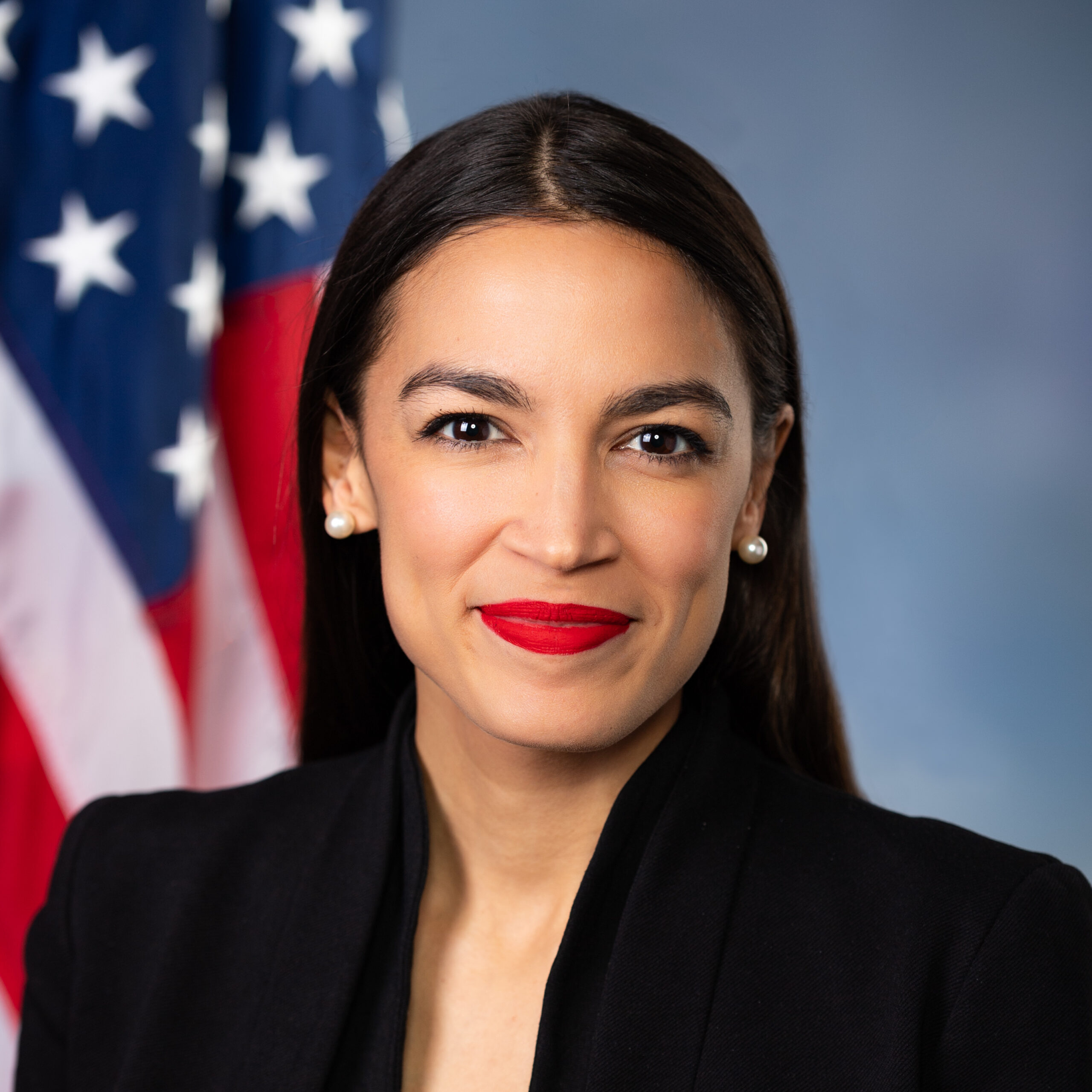
Franmarie Metzler; U.S. House Office of Photography, Public domain, via Wikimedia Commons licensed under PD US Congress
Financial frustration is reaching the ballot box
Ocasio-Cortez described millennials as adults who feel that political leaders have repeatedly pushed their concerns aside.
Housing, health care, climate change and the cost of raising a family are no longer distant policy debates for this generation. They affect monthly budgets, family decisions and plans for the future.
The youngest millennials are approaching 30, while the oldest are now in their mid-40s, depending on the definition being used. They make up a large part of the workforce, operate businesses, care for children and face many of the financial responsibilities linked to middle age.
Housing helps show why frustration is growing.
During the fourth quarter of 2025, the homeownership rate among households led by someone under 35 stood at 37.9%. The rate reached 79% for households headed by someone 65 or older, based on federal housing figures.
Those numbers do not mean that older Americans intentionally created financial hardship for younger generations. They do show that younger and older Americans often occupy very different positions in the housing market.
Many older homeowners bought property before the steep increase in prices and mortgage rates. Younger buyers have entered a market shaped by expensive homes, limited supply and borrowing costs that can make monthly payments difficult, even for people with steady jobs.
That helps explain why candidates who discuss rent, home prices and grocery bills may connect more strongly with voters than those focused mainly on political labels.
A Michigan primary strengthens AOC’s case
Ocasio-Cortez made her comments after Dr. Abdul El-Sayed defeated Rep. Haley Stevens in Michigan’s Democratic Senate primary.
El-Sayed, a progressive backed by Ocasio-Cortez, defeated an opponent with stronger ties to prominent Democratic leaders. Progressives quickly pointed to the result as evidence that voters may be increasingly willing to reject candidates favored by the party establishment.
During her ABC News interview, Ocasio-Cortez said the Democratic Party was going through a period of renewal. She argued that Democrats should focus on improving people’s daily lives rather than becoming consumed by internal arguments over political labels.
The strategy is easy to understand. Younger voters may care deeply about major social and political issues, but many of their most immediate concerns begin at home.
Rent, grocery prices, medical bills, job security and the chance to buy a house can shape how people view both political parties. Ocasio-Cortez believes candidates who speak clearly about those pressures can win support, even when powerful party figures stand behind someone else.
Still, one primary result cannot prove that a nationwide political shift has arrived.
Local issues, campaign spending, voter turnout and the quality of the candidates can all affect an election. More contests will be needed before Ocasio-Cortez’s “generational tidal wave” can be measured across the country.
Millennials are not one political group

Talking about millennials as a generation can make them sound like a united voting bloc. They are not.
Millennials hold different views based on income, race, religion, education, location and personal experience. Some support democratic socialist candidates. Others prefer moderate Democrats, vote Republican or identify as independents.
The 2024 presidential election showed just how complicated the generational picture can be.
Voters between ages 18 and 49 supported Kamala Harris by seven percentage points, a 2024 election analysis found. Four years earlier, voters in the same broad age group had favored Joe Biden by 17 points.
The analysis also found that 8% of Biden’s 2020 voters under 50 moved to Donald Trump in 2024. Four percent moved in the opposite direction.
That movement should caution Democrats against assuming that younger voters will remain loyal to the party simply because of their age.
Americans under 50 represented 44% of the 2024 electorate, based on a separate demographic analysis of voters. That gives younger and middle-aged voters considerable influence, although people 50 and older still made up the majority.
The coming political change is not necessarily an automatic progressive takeover. It is a competition for millions of voters whose financial frustrations may make them willing to consider candidates from different political backgrounds.
The economic story is not the same for everyone
Ocasio-Cortez’s argument reflects the anger of millennials who believe decisions made over several decades have weakened their chances of achieving financial security.
That frustration matters, but it does not mean that every baby boomer is wealthy or responsible for the problems younger Americans face.
Many older Americans also struggle with rent, medical expenses, caregiving costs and limited retirement savings. Housing shortages, interest rates, wage growth, government policy and local zoning rules provide a fuller explanation for the economic divide than age alone.
The financial position of millennials is also more mixed than it may first appear.
A Federal Reserve analysis found that millennials and members of Generation X had built more wealth in housing and stocks than baby boomers had at comparable ages.
That does not cancel the affordability problem. Instead, it shows that the economy has treated millennials differently depending on what they own.
Millennials who bought homes or invested in the stock market may have gained from rising asset values. Renters and people still trying to enter the housing market have faced a much tougher experience.
Both political parties now have something to prove.
Democrats must turn their promises on housing and household costs into policies that younger voters find believable. Republicans have an opportunity to appeal to millennials who feel let down by Democratic leaders or unconvinced by progressive ideas.
Ocasio-Cortez’s political wave has not yet been proved nationwide. Still, the economic conditions behind her warning are hard to overlook.
Millennials are no longer waiting to become adults. They are already raising families, planning for retirement and voting with years of financial pressure in mind.
The real political shift may not simply involve millennials replacing baby boomers. It may begin when America’s leaders finally recognize that the generation once treated as permanently young has become too large, too burdened and too politically important to ignore.