The latest round of U.S.-Iran diplomacy has taken an unexpected turn. Instead of simply rejecting Tehran’s demand for compensation, President Donald Trump has decided to send one of his own.
Trump said Monday, August 10, that Iran should compensate people killed or seriously wounded in attacks and conflicts that Washington has tied to Tehran and Iranian-backed groups. He also said families of Iranians killed during decades of government crackdowns should receive payments. Most significantly, Trump said he has ordered his representatives to make the issue part of future negotiations with Iran.
The demand adds another difficult issue to talks already struggling over sanctions, military operations and the Strait of Hormuz.
Trump answers Iran’s compensation demand with one of his own
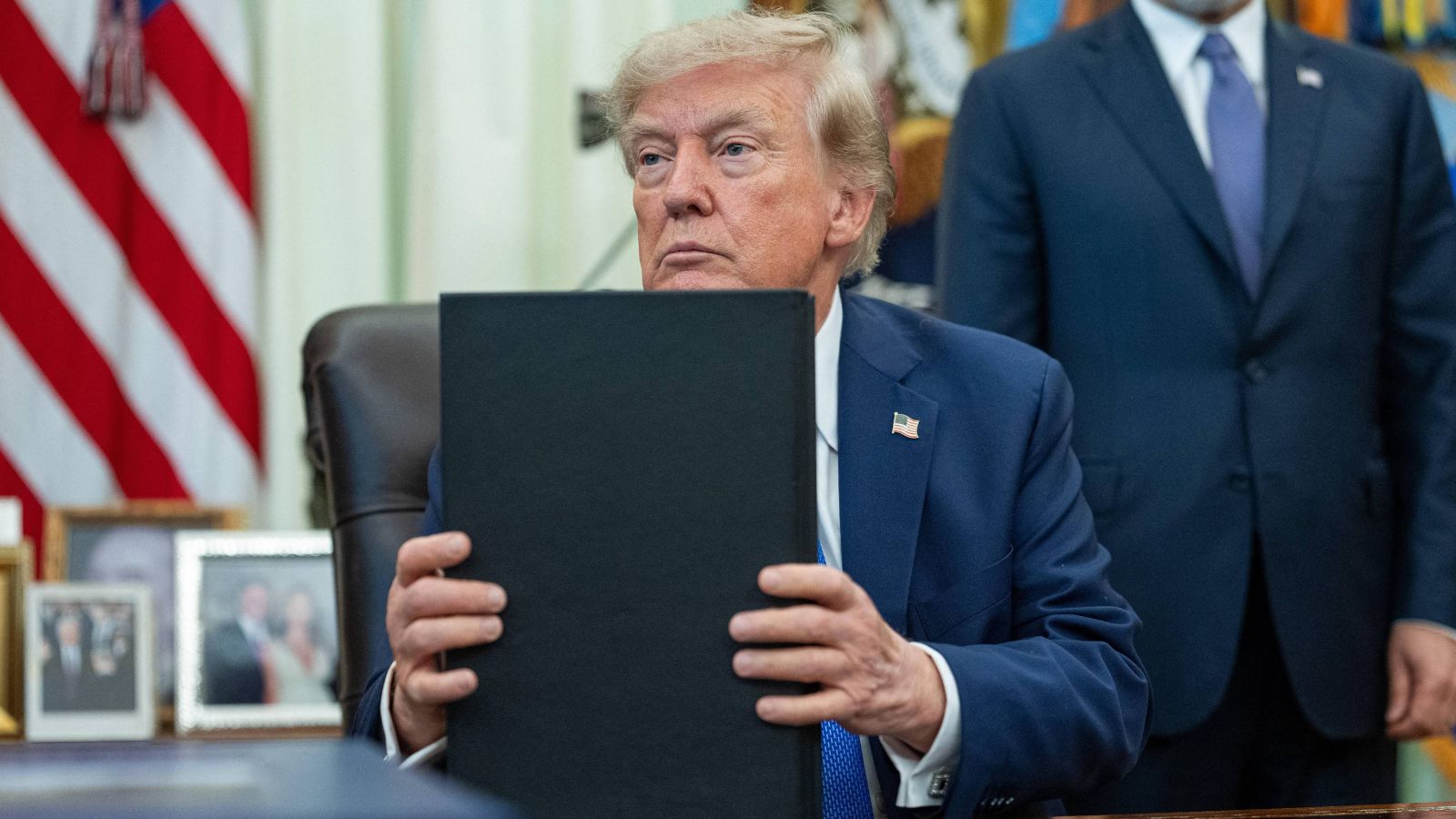
The dispute began as Iranian officials pushed Washington to compensate Tehran for damage caused during months of U.S. and Israeli military operations against Iran.
Iranian Foreign Minister Abbas Araqchi has said reopening the Strait of Hormuz depends partly on Washington meeting several Iranian conditions. Those demands include compensation for wartime damage, sanctions relief, the release of frozen Iranian assets, an end to military threats and the lifting of the U.S. naval blockade. Iran and the United States are not currently holding direct negotiations, although messages have been exchanged through intermediaries.
Trump responded by turning the argument around.
“I am likewise demanding compensation from Iran, for all of the people that they have killed and gravely wounded with their roadside bombs and many conflicts,” Trump wrote on Truth Social. He added that he had instructed his representatives to put the demand “firmly into any, and all, future negotiations.”
That language suggests Trump is trying to transform reparations from an Iranian negotiating condition into a two-way accounting of decades of conflict.
There is history behind the roadside-bomb accusation
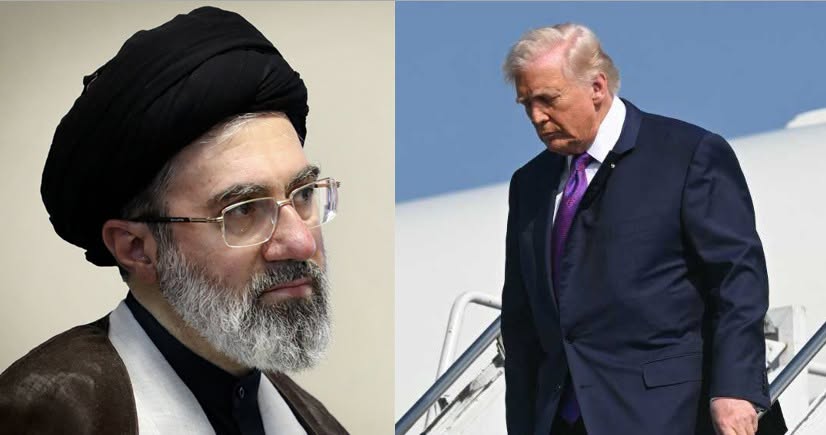
Trump’s reference to roadside bombs has roots in the Iraq War.
The Pentagon said in 2019 that it assessed at least 603 U.S. military deaths in Iraq as having resulted from attacks by Iranian-backed militants. Those deaths were attributed to several types of attacks, including explosively formed penetrators, other improvised explosive devices, rockets, mortars, sniper attacks and small-arms fire.
The U.S. government has also accused Iran’s Islamic Revolutionary Guard Corps and associated armed groups of supporting attacks against American forces across the region. A State Department legal assessment published in April 2026 said Iranian-backed groups were responsible for attacks that killed at least 600 Americans over an eight-year period.
That provides factual background for Trump’s complaint about U.S. casualties, although his broader language should still be treated as a presidential claim rather than a precise casualty calculation.
There is also one important problem in Trump’s full Truth Social post. He included families of those killed aboard the USS Cole among people he said Iran should compensate. The October 2000 attack in Yemen killed 17 American sailors, but U.S. authorities have attributed that bombing to al-Qaeda, not Iran. Reuters and other outlets highlighted that discrepancy after Trump’s statement.
Trump’s protester figure goes beyond verified estimates
Trump also said compensation should go to families of the “hundreds of thousands of innocent protestors” he claimed Iran has killed during roughly the past 50 years.
Iran has unquestionably carried out deadly crackdowns against protesters, including an extraordinarily violent response to demonstrations that began in late 2025 and intensified in January 2026. But Trump’s figure of “hundreds of thousands” should not be presented as an established death toll.
The Human Rights Activists News Agency had verified more than 6,800 protest deaths by early February, according to The Washington Post, while thousands of additional cases were still being investigated. TIME separately reported that Iranian health officials believed as many as 30,000 people could have been killed during two especially violent days in January, although restrictions and internet blackouts made independent verification extremely difficult.
The documented scale is enormous, but publicly available evidence does not currently establish Trump’s broader claim that Iranian authorities have killed “hundreds of thousands” of protesters over five decades.
Reparations could make the Hormuz standoff even harder to solve
The timing matters because the Strait of Hormuz remains at the center of the confrontation.
Iran has been discussing new shipping arrangements with Oman, but Tehran says broader U.S. concessions must come before the vital waterway fully reopens. Before the current conflict, roughly one-fifth of the world’s oil and liquefied natural gas moved through the strait.
Markets are already reacting to the diplomatic uncertainty. Oil prices jumped about 5 percent Monday as Iran and the United States traded compensation demands, and hopes for a quick Hormuz agreement weakened.
That gives Trump’s statement consequences far beyond political rhetoric.
Iran entered the bargaining process saying Washington owed Tehran for destruction caused during the war. Trump’s response was essentially: if compensation is going onto the negotiating table, America will bring its own list.
Whether that becomes a genuine financial demand or primarily another bargaining weapon remains unclear. What is clear is that Trump has now ordered his negotiators to raise the issue, adding decades of disputed deaths, proxy warfare and Iranian repression to negotiations that were already carrying the weight of sanctions, war and one of the world’s most important shipping routes.