Donald Trump has spent much of his political life turning uncertainty into spectacle. Now one of his best-known biographers is suggesting that the final act of his presidency could arrive the same way: suddenly, dramatically, and with the entire country forced to react in real time.
Michael Wolff, the author who has built a career studying Trump’s inner world, recently predicted that Trump’s second term could end without warning. His argument was not framed as an official medical conclusion or a legal finding. It was a character reading, a political warning, and a deeply uncomfortable question about what happens when age, pressure, ego, and power all meet inside the Oval Office.
That is why the remark is spreading. We are not just watching another anti-Trump prediction move through the news cycle. We are watching a broader anxiety take shape around presidential stamina, public transparency, succession rules, and whether the country is prepared for a presidency that could change course in one shocking moment.
Michael Wolff’s Trump Prediction Lands at a Sensitive Time

Wolff’s warning was blunt. He suggested there is a real chance that Trump’s presidency does not wind down slowly, but instead ends abruptly, with no long public buildup and no orderly narrative prepared in advance. The phrase that made the moment travel was his idea that there could be “no warning, no preparation.”
That matters because Trump’s public image has always depended on force. He sells strength, dominance, endurance, and personal invincibility. Any conversation about fatigue, age, health, or political decline runs directly counter to the identity he has built for himself and sold to his supporters for years.
We should also understand why this prediction feels different from ordinary criticism. Wolff is not simply saying Trump may lose influence. He suggests that Trump’s need for drama could shape even how his presidency ends. In that reading, the ending itself becomes part of the performance.
Why Trump’s Health Is Back in the Spotlight
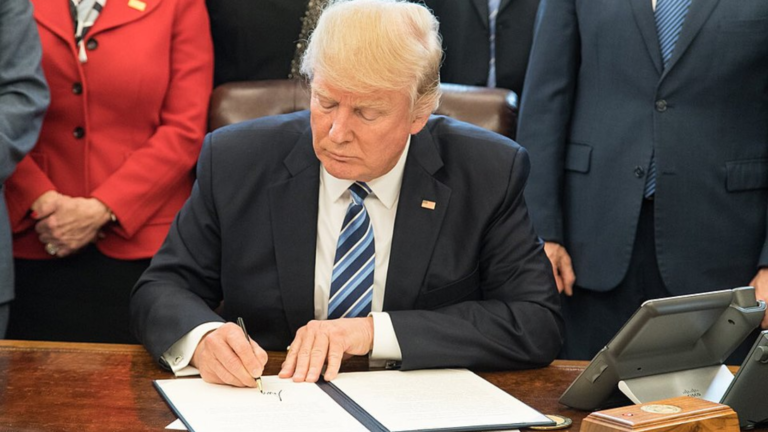
The timing of Wolff’s comments is impossible to ignore. Trump recently underwent another medical examination at Walter Reed National Military Medical Center, and the White House physician described him as fit to serve. The official line was meant to calm concern, not feed it.
Still, questions have continued. Public attention has focused on Trump’s age, repeated medical visits, reports of visible swelling, bruising on his hand, and the broader reality that he is nearing 80 while holding the most demanding job in American government. Even when a medical memo says the president is in strong condition, the public often looks for what is not fully explained.
That is the tension at the center of this story. Officially, the White House presents Trump as strong, capable, and fully prepared to carry out his duties. Politically, critics and observers see a president under immense stress, facing legal, diplomatic, electoral, and personal pressures simultaneously.
The Presidency Is a Brutal Test of Stamina
Every presidency ages the person holding it. The job compresses crisis, ego, isolation, public judgment, and global danger into one office. For a second-term president, the pressure can feel even heavier because the clock is already visible.
Trump’s second term carries a different kind of weight. He is not a new political figure trying to introduce himself. He is a returning president, surrounded by unfinished battles, old grievances, loyalists and enemies, investigations, policy fights, and a constant demand to prove he still controls the room.
That is where Wolff’s warning becomes more than gossip. The question is not only whether Trump is medically fit today. The sharper question is whether the daily strain of the office, combined with Trump’s own appetite for conflict, could create the conditions for an abrupt break in the story.
The Midterm Pressure Could Become a Turning Point
The 2026 midterms sit like a storm cloud over the administration. For any president, midterms are a referendum. For Trump, they are more personal than that. They are a test of whether his movement still bends the Republican Party, drives voters, and frightens opponents.
If Republicans suffer major losses, Trump would not likely treat it as a normal political setback. His history suggests he would turn the result into a fight over loyalty, messaging, fraud claims, weak allies, hostile media, and betrayal. That kind of reaction could deepen internal pressure at the very moment the White House needs discipline.
Wolff’s prediction gains force because it imagines Trump facing the one thing he has always resisted most: visible decline. A weakened party, falling approval, health questions, and a hostile political environment would not simply be challenges to manage. They would threaten the entire image of command that Trump has spent years projecting.
Why the Word “Dramatic” Matters So Much
Trump has never been a quiet political actor. He announces, attacks, brands, escalates, and dominates attention. Even his setbacks often become performances, with Trump placing himself at the center of the conflict.
That is why Wolff’s focus on Trump’s sense of drama is so important. The prediction is not just that Trump could leave office early. It is that he might, in some way, turn the ending into a moment of historical theater.
In that scenario, the end of the presidency would not look like a slow fade. It would look like a breaking-news event, a sudden announcement, a shocking medical turn, a constitutional scramble, or a political scene that freezes Washington in place. Whether one agrees with Wolff or not, the point is clear: Trump’s political career has rarely moved quietly.
What Would Actually Happen if a Presidency Ended Suddenly?
If a president dies, resigns, or is removed from office, the Constitution is clear. The vice president becomes president. That part is not a mystery, and the 25th Amendment exists to prevent the country from drifting into a leadership vacuum.
The more complicated question is what happens if the president is alive but unable to perform the duties of the office. In that case, the 25th Amendment includes procedures that allow presidential power to be temporarily transferred or, in extreme circumstances, contested by the vice president, Cabinet, and Congress.
That legal structure matters because it separates political panic from constitutional process. Even if Trump’s presidency faced an abrupt crisis, the government would not be operating without rules. The real uncertainty would be political, not procedural: who would act, how fast they would act, and whether the country would accept the explanation.
The White House Has Every Reason to Push Back
The Trump team is unlikely to treat Wolff’s prediction as neutral analysis. Trump’s aides have often attacked Wolff’s credibility, and they have framed his reporting as hostile, exaggerated, or unreliable. That pushback is part of the story.
From the White House perspective, allowing health speculation to spread would be politically dangerous. It could weaken Trump’s image, embolden rivals, unsettle allies, and create a storyline opponents would use whenever he stumbled, repeated himself, skipped an event, or appeared tired in public.
That is why official health statements are written with such confidence. Words like excellent, strong, fit, and capable are not only medical descriptors. They are political armor. They are meant to close the door before speculation gets inside.
Wolff’s Critics See a Familiar Pattern
Skeptics will argue that Wolff has made a career out of dramatic Trump narratives. His books and podcast commentary often lean into chaos, personality, palace intrigue, and the psychology of power. For Trump supporters, that makes him easy to dismiss.
There is also a fair distinction between prediction and evidence. Wolff’s claim does not prove that Trump will leave office early. It does not replace medical records. It does not establish incapacity. It is an interpretation from a journalist who has long argued that Trump’s character is the key to understanding his politics.
But dismissal alone does not erase the public concern. The reason the prediction travels is that it touches on questions many voters already have: Is Trump too old for the job? Is the White House being fully transparent? Could the pressure of the presidency overwhelm him? What would happen if everything changed overnight?
Why Americans Are Paying Attention
This story has the ingredients that make political news impossible to ignore. It has a famous president, a provocative biographer, a health question, a constitutional shadow, and the possibility of a sudden historic event. That combination naturally pulls readers in.
But underneath the drama is something more serious. Americans have lived through years of intense concern about presidential age, mental sharpness, medical transparency, and whether political parties are honest about their leaders’ health. The Trump question now sits inside that larger national debate.
We are in an era where voters no longer simply ask what a president believes. They ask whether the president can endure the office. They ask who is really making decisions. They ask whether public confidence can survive if the official story feels incomplete.
The Real Story Is Bigger Than One Prediction
Wolff’s warning may turn out to be wrong. Trump may complete his term, remain politically dominant, and use every question about his health as proof that his critics underestimated him again. That outcome is entirely possible.
But the prediction still matters because it captures the strange fragility of this political moment. Trump is powerful, but he is also older. He is surrounded by loyalists, but also by pressure. He commands attention, but attention can quickly become scrutiny.
That is why the phrase “sudden end” has taken hold. It not only describes one biographer’s theory. It describes the fear that American politics is now so volatile, so personal, and so dependent on one man’s stamina that the next major turn may not arrive gradually. It may arrive all at once.