The ceasefire between the United States and Iran is still on paper, but the skies over the Middle East tell a darker story.
For the second day in a row, American and Iranian forces exchanged strikes across the region, dragging Bahrain, Kuwait, and Jordan into the center of a crisis that is no longer limited to Washington and Tehran. What began as a shaky pause in fighting has now become a dangerous test of military nerves, diplomatic patience, and regional survival.
This is not just another foreign-policy clash. It is a crisis that can reach civilian homes in Bahrain, military bases in Jordan, airspace over Kuwait, oil tankers near the Strait of Hormuz, and eventually the American gas pump.
The Ceasefire Is Alive on Paper but Dying in the Sky
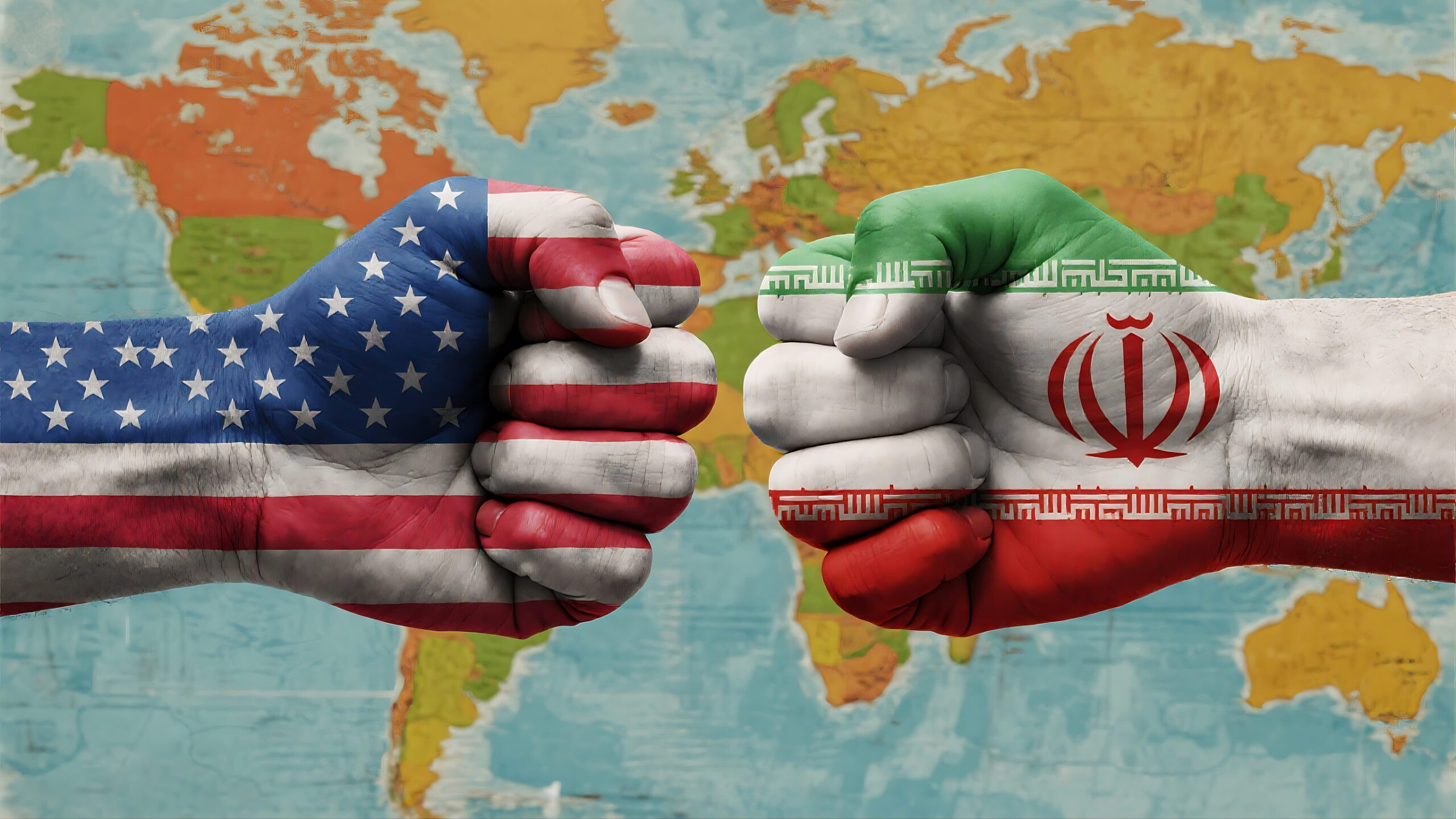
The April ceasefire was supposed to slow the march toward a wider war. Instead, it now looks like a thin sheet of paper stretched across a battlefield. Both sides still talk about diplomacy, but missiles, drones, air defenses, and retaliatory strikes are doing most of the speaking.
US Central Command said American forces carried out self-defense strikes against Iranian military targets, including surveillance, communications, and air-defense systems. Washington framed the operation as a necessary response to threats against US forces and commercial movement near the Strait of Hormuz.
Iran saw it differently. Tehran said the US strikes violated the ceasefire and made the agreement practically meaningless. That phrase matters because it signals that Iran may no longer see restraint as useful, even if formal diplomacy has not completely collapsed.
The most dangerous part is the contradiction. The US says it wants a deal, but it is striking inside Iran. Iran says it is defending itself, but it is targeting US-linked assets across the Gulf. The ceasefire has not been officially buried, but every new explosion pushes it closer to the grave.
Bahrain, Kuwait, and Jordan Are Now Caught Between Two Giants
The latest exchange shows how quickly a US-Iran conflict can become a regional emergency. Iran’s response reportedly targeted American military assets in Bahrain, Kuwait, and Jordan, three countries that did not start the crisis but now sit inside its blast radius.
Bahrain is especially sensitive because it hosts the US Navy’s Fifth Fleet. Kuwait remains a major security partner with deep American military ties. Jordan sits at a strategic crossroads and has long worked closely with Washington on regional defense.
That geography now comes with a price. When Iran wants to pressure the United States without striking the US homeland, it can look toward the network of bases, ports, airfields, and command centers spread across the Middle East. That means smaller countries can become pressure points in a confrontation led by much larger powers.
This is one of the most overlooked parts of the story. The US and Iran dominate the headlines, but Bahrain, Kuwait, and Jordan are the countries dealing with intercepted missiles, activated air defenses, closed airspace, falling debris, and anxious civilians.
The War Reached Homes Before It Reached a Peace Table
The most human part of the escalation came from Bahrain, where officials said debris from intercepted Iranian drones damaged homes and vehicles. An 11-year-old girl was treated for a minor injury.
That detail should not be buried under military language. It turns the story from a clash of governments into a night of fear for ordinary families. Air raid sirens are not abstract. Shrapnel on a residential street is not abstract. A child needing medical treatment because of a regional strike is not abstract.
Military officials often speak in terms of targets, assets, command centers, and defensive operations. Civilians experience the same conflict through broken windows, burned vehicles, children crying in the dark, and the sudden knowledge that the war has moved close enough to touch their street.
That is why Bahrain’s damage matters even if the injury was minor and the destruction was limited. It shows how modern missile and drone warfare spreads fear beyond the intended target. Even when air defenses work, the debris still has to fall somewhere.
Kuwait’s Airspace Closure Shows How Fast Normal Life Can Stop
Kuwait said its air defense systems intercepted hostile aerial targets and temporarily closed its airspace before reopening it. That may sound like a technical response, but airspace closures are serious signals.
When a country closes its skies, flights can be delayed, rerouted, or canceled. Cargo movement can slow. Travelers are left waiting. Airlines and insurers start calculating risk. Governments are beginning to prepare for the possibility that one wave of attacks may not be the last.
That is how escalation spreads without a single soldier crossing a border. A missile fired in one direction can force airports, shipping companies, military planners, and families in another country to change their day.
For Kuwait, the danger was not just what was intercepted. It was the warning that its skies are now part of the conflict map.
Jordan’s Missile Interceptions Reveal the Risk of One Failed Defense
Jordanian state media reported that missiles fired toward central Jordan were intercepted by air defenses and the air force, with no casualties or material damage. That is the best possible outcome in a dangerous moment, but it should not be mistaken for safety.
Every interception is also a reminder of what could happen if one system fails. A missile that is destroyed in the sky is a crisis averted. A missile that gets through can become a funeral, a destroyed base, or the trigger for a much larger military response.
That is the brutal math of this conflict. The region does not need hundreds of casualties to slide into a wider war. It may only need one missile to hit the wrong target, one soldier to be killed, one tanker to burn, or one government to decide that restraint now looks like weakness.
Jordan’s successful defense buys time. It does not remove the danger.
America’s Base Network Has Become Part of the Battlefield
Iran’s retaliation appears designed to send a message beyond the immediate damage. The message is that America’s regional military footprint is vulnerable.
The US has spent decades building a network of bases, partnerships, ports, airfields, and command structures across the Middle East. That network gives Washington reach, speed, and influence. It also gives Iran a long list of nearby targets if it wants to raise the cost of American pressure.
That is why Bahrain, Kuwait, and Jordan matter so much in this story. They are not random names on a map. They are part of the architecture that allows the United States to project power across the region.
Iran may not be able to match US firepower directly, but it can try to make America’s regional presence more expensive, more exposed, and more politically uncomfortable. That strategy is risky because it can pull more countries into the crisis, but it is also a clear way for Tehran to show that US strikes inside Iran will not remain isolated.
The Strait of Hormuz Is the Global Pressure Point
The Strait of Hormuz is one of the world’s most important shipping chokepoints, and that is why every threat near it shakes markets far beyond the Middle East. Oil, gas, and commercial cargo passing through that narrow waterway help fuel economies around the world.
Iranian state media reported that the strait was closed to all vessels, while the US said commercial shipping was still moving. That disagreement alone was enough to unsettle oil markets because energy traders do not wait for perfect clarity when the world’s most sensitive oil route is threatened.
This is where the conflict becomes personal for Americans. A missile near the Gulf can cause a price increase at a gas station in Ohio, Texas, Florida, or California. A tanker scare can become a grocery bill problem. A shipping delay can become another inflation headache.
That does not mean prices will automatically explode overnight. It means the risk premium is back. When the Strait of Hormuz becomes a battlefield headline, the global economy starts holding its breath.
The Gas Pump Angle Americans Cannot Ignore

For many Americans, the Middle East can feel far away until oil prices move. Then the conflict suddenly becomes local.
If the Strait of Hormuz becomes harder or more expensive to transit, the pressure can travel through shipping markets, insurance costs, crude prices, refinery expectations, and eventually fuel prices. Even the fear of disruption can move markets before any long-term shortage appears.
That is why this crisis has political weight in the United States. Voters may not follow every strike, base name, or diplomatic statement, but they understand gasoline. They understand inflation. They understand the feeling of watching global chaos show up in their weekly budget.
The White House knows this. Tehran knows this. Oil traders know this. That is why the Strait of Hormuz is more than a military concern. It is a financial weapon, a diplomatic bargaining chip, and a direct line from the battlefield to the American household.
The Shipping and Insurance Shock Could Come Before a Supply Crisis
Oil prices are only part of the story. Shipping risk is another pressure point.
When missiles and drones are flying near a major maritime route, shipowners, insurers, and cargo buyers begin to reassess the level of danger. Insurance premiums can rise. Vessels may move more cautiously. Some ships may alter routes or delay passage. Energy buyers may look for backup supply options.
Those costs do not always appear immediately in dramatic headlines, but they matter. A shipment that becomes more expensive to insure becomes more expensive to deliver. A tanker that waits for safer conditions slows the flow of energy. A region that looks unstable becomes a more expensive place to do business.
This is the hidden economy of conflict. Even when ships keep moving, fear adds a surcharge.
Trump’s Pressure Strategy Faces Its Hardest Test
President Donald Trump has warned that Iran would be hit hard if it did not move toward a deal. That approach is built around pressure: show Iran the cost of delay, weaken its military tools, and force Tehran back to the negotiating table.
The gamble is obvious. Military pressure can sometimes accelerate diplomacy. It can also make compromise harder by turning every concession into a public humiliation.
Iran’s leaders do not want to look like they surrendered under American fire. Trump does not want to appear to have threatened force and then backed away. That creates a dangerous trap where both sides may keep escalating simply to avoid appearing weak.
This is where domestic politics and military strategy collide. Leaders may privately understand the need to de-escalate, but public language can box them into harder positions. Once threats are made loudly, it becomes harder to step back quietly.
Iran’s Retaliation Is a Message to US Partners
Iran’s strikes were not only about revenge. They were also a warning to countries that host US forces.
By targeting American-linked assets in the Gulf and Jordan, Iran is telling Washington’s partners that their security relationship with the US can bring direct risk. That message is meant to create pressure from the outside: make allied governments nervous, make civilians anxious, and make the American footprint feel costly.
But the strategy can backfire. Civilian damage in Bahrain may harden public anger against Iran. Intercepted attacks may make Tehran’s threats look less effective. Regional governments may move closer to Washington if they feel directly threatened.
Still, the message has been delivered. Iran wants the region to know that if the US strikes Iran, the consequences may not stay inside Iran.
This Is Becoming a War of Missiles, Drones, and Falling Debris
Modern conflict in the Gulf is not always defined by armies moving across borders. It is defined by radar systems, drones, ballistic missiles, fighter jets, air-defense batteries, electronic surveillance, and falling wreckage.
That changes how civilians experience war. A drone does not have to hit its target to cause fear. A missile does not have to destroy a base to close airspace. A successful interception can still scatter debris over neighborhoods.
This is a war of fragments as much as firepower. The explosion may happen in the sky, but the consequences fall on roads, rooftops, cars, and families.
That is why the phrase “intercepted” should not make the public relax too quickly. Interception means the disaster was reduced. It does not mean danger vanished.
The Biggest Risk Is Not a Planned War but One Mistake
The most frightening possibility is not that Washington or Tehran has already decided to launch a full-scale war. The greater danger is that both sides keep pushing until one mistake becomes impossible to contain.
A missile could get through. A US service member could be killed. A tanker could be struck. A drone could hit a residential area. A government could misread an attack as larger than intended. A leader could decide that failing to respond would look politically fatal.
That is how wars widen. Not always through a grand plan, but through pressure, pride, confusion, bad timing, and one event that changes the emotional temperature overnight.
The Middle East has seen this pattern before. Limited exchanges create the illusion of control until a single strike breaks the rhythm. Then, leaders who spent weeks saying they wanted restraint suddenly face demands for revenge.
Why the UN Warning Matters
UN Secretary-General António Guterres warned that the region risks moving from “lesser fire” toward full war. That phrase captures the moment better than most official statements.
The Middle East is not at peace. It is not yet in a full regional war either. It is trapped in the dangerous middle, where every side claims defensive purpose while taking offensive action.
That gray zone is unstable because it allows leaders to keep escalating while insisting they are not escalating. The US calls its strikes self-defense. Iran calls its attacks retaliation. Gulf countries call their interceptions protection. Each statement may be true from one perspective, but the combined effect is still a widening crisis.
The warning from the UN is not dramatic language for its own sake. It is a recognition that repeated “limited” attacks can become unlimited faster than governments expect.
The Human, Military, and Economic Costs Are Now Converging
The crisis now has three faces.
The first is human: an injured child in Bahrain, damaged homes, frightened families, and civilians living under the sound of sirens.
The second is military: US strikes inside Iran, Iranian retaliation across the region, air defenses firing in Jordan and Kuwait, and America’s regional base network under renewed pressure.
The third is economic: oil-price volatility, shipping uncertainty, insurance risk, and fear around the Strait of Hormuz.
That combination makes this moment more dangerous than a routine exchange of threats. When civilian fear, military escalation, and global energy pressure arrive together, leaders have less room for error.
What Happens Next Could Decide Whether the Ceasefire Survives
The next few days may matter more than the last few weeks. If both sides step back, the ceasefire may survive as a wounded agreement. If they keep striking, the ceasefire may become nothing more than a diplomatic memory.
Washington must decide whether more pressure will force Iran toward a deal or push it into wider retaliation. Tehran must decide whether more regional attacks will strengthen its position or further isolate it. Gulf states must protect their skies while trying not to become full participants in a war they did not choose.
The most urgent question is no longer whether the ceasefire is weak. It clearly is. The real question is whether anyone still has enough control to stop the next strike from becoming the one that breaks it completely.