Rep. Alexandria Ocasio-Cortez rejected President Donald Trump’s warnings that progressive policies could push the United States toward communism during an exchange recorded Thursday, July 23, 2026.
The New York Democrat called the prospect “very silly” and pointed to Congress’ failure to approve even modest economic changes. Her comments followed Trump’s July 22 rally in Marietta, Georgia, where he described communism as an urgent threat and directed the label at left-wing Democrats.
Ocasio-Cortez challenges the warning.
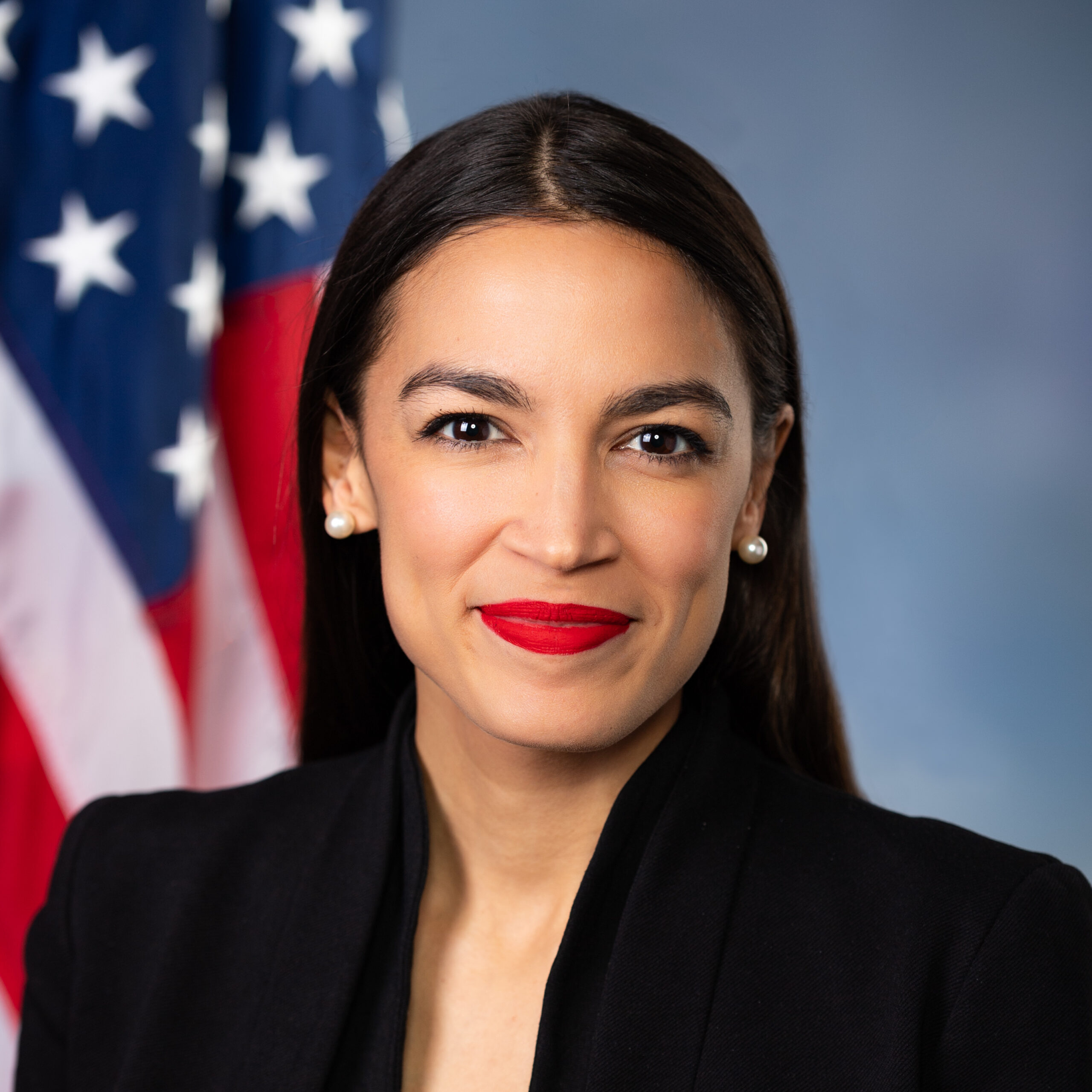
Franmarie Metzler; U.S. House Office of Photography, Public domain, via Wikimedia Commons licensed under PD UU.S.Congress
Ocasio-Cortez was asked whether the growing prominence of democratic socialism could place the country on a “slippery slope” toward full communism. She rejected the communist warning and said the American political system remained resistant to major economic change.
“No. I’m not concerned about America turning into a communist country in like a year,” she said. “I think that’s very silly.”
She cited the federal minimum wage as evidence. Congress has repeatedly failed to increase the national wage floor, despite years of proposals and political campaigns.
“We can’t even raise the minimum wage,” Ocasio-Cortez said. She argued that Republicans understand how difficult it would be to enact a sweeping economic transformation.
Ocasio-Cortez said the communist label functions as a political scare tactic. She tied it to disputes over health care, wages and the role of government in providing essential services.
Trump targets progressive Democrats.
Trump has increasingly described progressive Democratic politicians and their policy proposals as communist. He repeated that message during his July 22 appearance in Georgia.
Trump delivered the remarks while discussing national history, political identity and the growing influence of the Democratic Party’s left wing. He portrayed communism as a greater threat than several wars and attacks the United States has faced.
Trump also claimed communists wanted to destroy Mount Rushmore. His comments placed disputes over monuments, economic policy and national identity inside one political argument.
The president’s language presents proposals such as expanded health coverage, higher wages and stronger labor protections as parts of a broader ideological threat.
Ocasio-Cortez responded by focusing on the policies themselves. She said voters should examine whether those proposals would improve their lives instead of accepting a politically charged label.
Federal wage remains unchanged.
The federal minimum wage has remained $7.25 an hour since July 24, 2009. A worker earning that amount for 40 hours each week would make about $15,080 annually before taxes.
The federal minimum wage remains unchanged even though living costs have risen since the last increase. Many states and cities have established higher wage requirements within their own jurisdictions.
National proposals have faced opposition over their possible effects on hiring, regional economies and small businesses. Supporters argue that the current wage does not provide enough income for basic household expenses.
The prolonged stalemate supports the narrow point behind Ocasio-Cortez’s response. Even limited economic reforms can take years to move through Congress, making a sudden transformation of the American economy highly unlikely.
Communism would require far broader changes, including extensive government control of production and private property. No such program has moved through Congress.
Political labels obscure policy differences
Ocasio-Cortez identifies as a democratic socialist, not a communist. Democratic socialism generally supports elections, political pluralism, expanded social programs and greater public influence over major economic institutions.
Communism has historically involved state control of the economy and, in many countries, authoritarian one-party government. The terms have related ideological roots but do not describe identical political systems.
Progressive Democrats have proposed broader public health coverage, higher taxes on wealthy households, stronger unions and increased government spending. Those ideas remain open to scrutiny over costs, implementation and their effects on private businesses.
Critics can oppose those policies without describing them as the abolition of elections or private ownership. Ocasio-Cortez argued that the communist label prevents a more detailed discussion of what each proposal would actually do.
Health care drives the dispute.
Ocasio-Cortez focused much of her response on the cost and availability of medical care. She said Republicans use the communist label to discourage Americans from comparing the United States with other wealthy nations.
The United States spent $5.3 trillion on health care in 2024. That figure equaled about $15,474 per person and 18% of the national economy.
National health spending reached that level after increasing 7.2% during the year. Despite the high spending, the country has not established continuous universal coverage.
Ocasio-Cortez said nations including Germany, Italy, Britain and Canada guarantee health care while spending less. Those countries use different systems rather than one uniform government model.
Germany relies heavily on mandatory insurance funds. Italy operates a tax-supported national health service, while Canada and Britain use their own public financing structures.
Each country maintains elections, private businesses and market activity. Their health systems do not require complete government ownership of the wider economy.
U.S. care produces mixed results
Ocasio-Cortez said the United States spends the most money for the “worst care” among developed nations. Her description summarized weaknesses in access, affordability and overall outcomes, though it was broader than available comparisons support.
American hospitals and research institutions provide advanced treatment and medical innovation. The country also has highly trained specialists and major pharmaceutical and technology industries.
However, international comparisons have identified serious systemwide problems. The United States has ranked poorly in access, administrative efficiency, health equity and overall outcomes despite its higher spending.
A wealthy nations health comparison placed the United States last overall among 10 countries. It also found stronger American performance in some areas involving clinical care and preventive services.
The dispute therefore concerns value rather than whether every American doctor or hospital provides inferior treatment. Patients can receive advanced care while still facing high deductibles, coverage restrictions and medical debt.
Ocasio-Cortez’s latest position remains that communist accusations divert attention from those costs. The federal minimum wage remains $7.25 an hour, and Congress has not approved a national increase since 2009.