A steakhouse dinner carries a certain promise. The rich aroma of grilled beef, the soft glow of the dining room, and a menu filled with tempting appetizers can make an ordinary evening feel like a celebration. But even professional chefs have dishes they would rather leave off the menu.
In three chef-interview features published by Eat This, Not That! in 2024 and 2025, culinary professionals shared their concerns about familiar steakhouse favorites. Their objections ranged from oversized portions and disappointing textures to paying restaurant prices for dishes they could easily prepare at home.
Of course, these are personal preferences, not proof that every steakhouse serves disappointing food. Still, their observations offer useful clues about which menu choices deserve a closer look.
Filet Mignon: When Tenderness Isn’t Everything
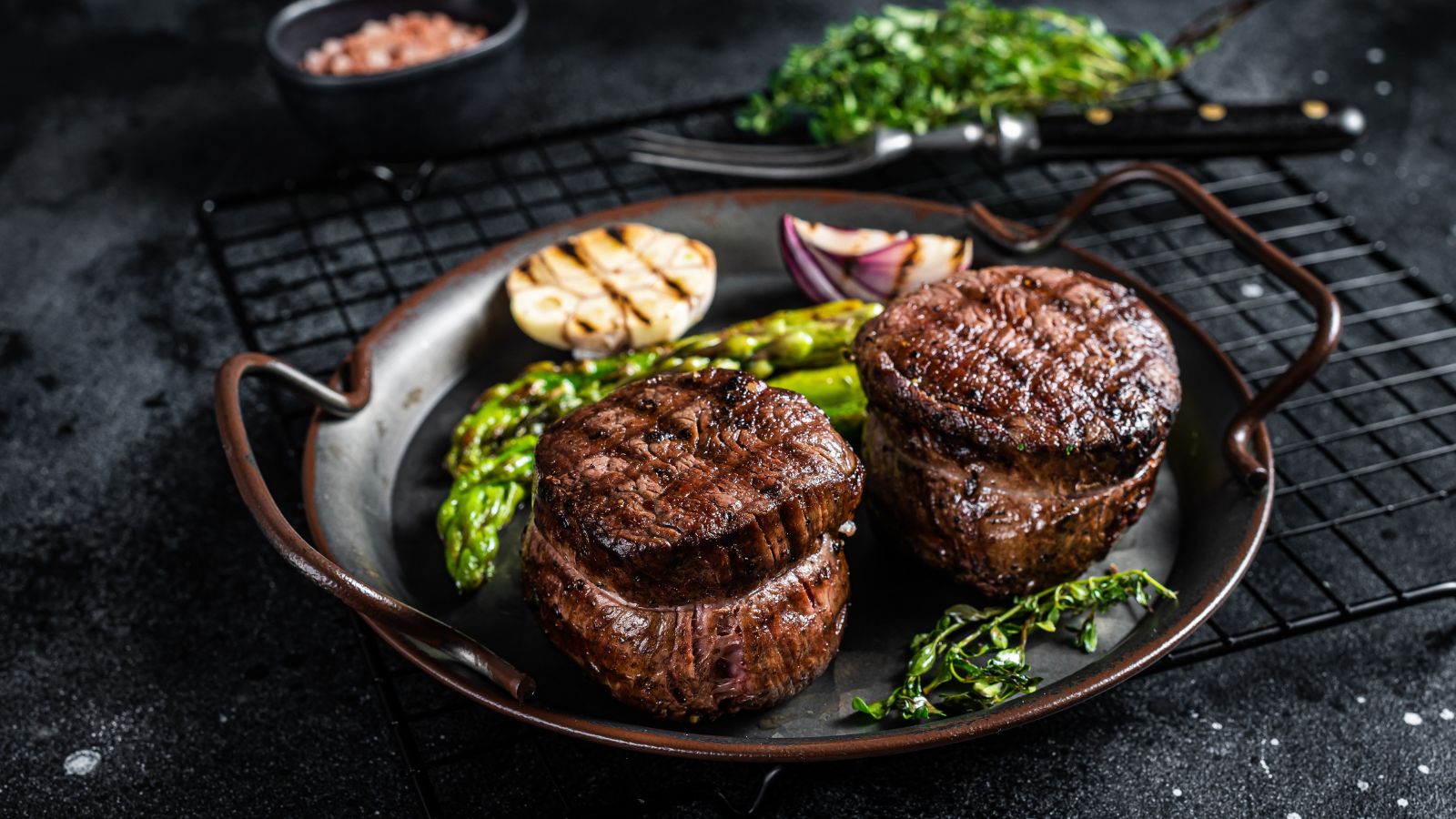
Filet mignon has an elegant reputation. Its tender texture makes it a familiar choice for diners who want something special. But chef Diana Manalang sees things differently.
In a November 2024 Eat This, Not That! interview, Manalang, identified as chef-owner of Little Chef Little Cafe in New York City, explained that she prefers rib-eye.
Her reason comes down to flavor. She considers filet mignon too lean to deliver the richness she enjoys in beef.
That doesn’t mean she considers filet tough or unpleasant. She acknowledges its tenderness but believes other cuts provide a more satisfying eating experience.
Interestingly, chef Andy Knudson recommended a bone-in filet in the same article. Clearly, even chefs don’t agree on the perfect steak.
Tomahawk Steak: When Bigger Doesn’t Mean Better
Few steakhouse dishes make an entrance quite like a tomahawk steak.
Its dramatic bone and generous portion practically demand attention when the plate reaches the table.
But chef Jeremy Shigekane, identified in the reporting as executive chef of 100 Sails & Bar in Honolulu, prefers to skip it.
His reason is surprisingly straightforward: the portion is too large for him.
Shigekane’s objection isn’t about flavor, preparation, or quality. He doesn’t want more steak than he plans to eat.
The same interview features Knudson recommending that diners share larger cuts rather than order unnecessarily generous portions.
So before choosing the biggest steak on the menu, consider whether you’re ordering for enjoyment or simply for the spectacle.
Well-Done Wagyu: When Cooking Changes the Experience
Wagyu holds a special place on steakhouse menus because of its distinctive marbling and rich flavor.
But chef Eric Mickle has a particular concern about how it’s ordered.
In the 2024 chef interview, Mickle, identified as executive chef of Salt & Fin at Harrah’s Resort Southern California, advised against ordering Wagyu or American-style Wagyu well-done.
He believes prolonged cooking diminishes the fat-rich qualities that make the beef appealing to him.
For Mickle, the disappointment isn’t Wagyu itself. It’s choosing a preparation that changes the characteristics he values most.
Of course, diners have different preferences about how their steaks are cooked.
His advice reflects a chef’s preferred eating experience, not a rule that every customer must follow.
Shrimp Cocktail: A Simple Appetizer With a Restaurant Price
Shrimp cocktail has an effortless elegance. Chilled shrimp, a flavorful dipping sauce, and a neat presentation make it a familiar steakhouse starter.
Yet chef Paul Chadwick would rather pass.
In a November 2024 Eat This, Not That! interview, Chadwick explained that he considers shrimp cocktail easy to prepare at home for considerably less money.
He would rather spend his restaurant budget on a more elaborate shrimp appetizer.
Chef Yulissa Acosta offered another reason for skipping it. She said the versions she encountered sometimes lacked flavor and had an unpleasantly rubbery texture.
But the opinions aren’t unanimous. Chef Andy Knudson specifically included shrimp cocktail among his preferred steakhouse starters.
The lesson? Simplicity can be delightful, but whether it’s worth restaurant prices depends on what you expect.
Charcuterie Boards: Are You Paying for the Assembly?
A charcuterie board can be beautiful. Carefully arranged meats, cheeses, and accompaniments turn an appetizer into something that feels almost artistic.
But chef Brian Hatfield, executive chef at Atlanta steakhouse Bones, raised an interesting question.
What exactly is the restaurant adding to the experience?
In his interview with Eat This, Not That!, Hatfield suggested that some charcuterie boards rely heavily on items customers could purchase at grocery stores.
He considers those boards potentially overpriced.
However, he makes an important exception for restaurants producing their own distinctive cured meats or other components.
His criticism isn’t that charcuterie tastes bad. It’s that diners may be paying more for arrangement than craftsmanship.
Asking what the kitchen prepares in-house can help clarify the value.
Mozzarella Sticks: A Familiar Appetizer That May Not Impress
Golden mozzarella sticks have an irresistible little trick. Break through the crunchy coating, and melted cheese stretches into a delicious ribbon.
But private chef Julian Boudreaux isn’t particularly enthusiastic about ordering them at steakhouses.
In a March 18, 2025, chef-interview feature, Boudreaux explained that he expects some steakhouse mozzarella sticks to be commercially prepared frozen products.
He would rather order something that better demonstrates the kitchen’s specialty.
That expectation wasn’t supported by a survey of restaurant suppliers, so it shouldn’t be treated as proof that every steakhouse uses frozen mozzarella sticks.
A restaurant preparing its own version might offer a completely different experience.
Sometimes the best question isn’t whether mozzarella sticks are worth ordering, but how that particular kitchen makes them.
French Onion Soup: When the Details Fall Apart
French onion soup can be wonderfully comforting. A flavorful broth, tender onions, and a golden cheese topping create a dish that rewards patient preparation.
But chef Sean Telo has encountered versions that missed the mark.
In the March 2025 steakhouse-appetizer feature, Telo, identified with Hank & Artie’s in Portland, Maine, criticized soups with overly salty broth, onions that had lost their appeal, and rubbery cheese toppings.
He worries that French onion soup sometimes gets less attention than the restaurant’s signature steaks.
These were his professional observations, not measured findings about every restaurant.
Still, they highlight something important: when a dish depends on just a few major components, disappointing texture or flavor can stand out even more.
Loaded Potato Skins: When the Crunch Disappears
Loaded potato skins promise a satisfying combination of crisp potato, melted cheese, and savory toppings.
But chef Dennis Littley of Ask Chef Dennis believes they can become an underwhelming start to a steakhouse dinner.
In the March 2025 interview, Littley explained that heavy toppings sometimes overwhelm the potatoes themselves.
He also said preparing the skins ahead and reheating them can diminish the contrast between their crisp exterior and fluffy interior.
His preferred alternatives are simpler: a baked potato or house-made potato chips.
That doesn’t mean every steakhouse reheats its potato skins or that every loaded version disappoints.
It simply shows how much the final texture matters when choosing an appetizer.
What These Chefs Really Want You to Know
The interesting thing about these eight steakhouse orders is that none received a unanimous rejection.
Some chefs favor rib-eye over filet mignon, while others appreciate the filet. One chef skips shrimp cocktail because it’s easy to make at home, while another considers it essential to a steakhouse dinner.
Concerns reported across the 2024 and 2025 interviews largely center on preparation, portion size, personal taste, and value.
With that in mind, the next time you sit down with a steakhouse menu,
Before ordering, consider what the restaurant does especially well. Ask about house-made appetizers, think carefully about portion sizes, and choose the dishes that genuinely excite you.
After all, a memorable steakhouse dinner isn’t about ordering the most impressive-looking plate. It’s about enjoying every delicious bite.