Florida did not wait for Zohran Mamdani to come south.
It brought the fight directly into the middle of New York City.
The Florida Chamber of Commerce paid for a giant digital billboard in Times Square that sarcastically named Mamdani Florida’s “Economic Developer of the Year.” Under his image came the punch line: “Thanks for the jobs!”
The billboard is in New York, but the attack is coming from Florida.
Florida business leaders are using one of New York’s most famous locations to argue that the city’s taxes, costs and progressive policies are making the Sunshine State more attractive to businesses, wealthy residents and workers.
Mamdani is now the face of that argument.
And while the billboard is clearly designed to provoke, the economic warning underneath it is harder to ignore.
Florida Brought the Rivalry Into Mamdani’s Backyard

The Florida Chamber could have made its argument from Tallahassee.
Instead, it chose Times Square.
That decision turns a normal economic-development message into something far more aggressive. Florida is essentially telling New Yorkers, in the heart of their own city, that their loss may be Florida’s gain.
Florida Chamber President and CEO Mark Wilson said the organization wanted to thank New York leadership for the jobs, businesses and residents it believes are moving south.
Putting Mamdani’s face on the billboard makes the message personal.
He identifies as a democratic socialist and has supported policies that ask wealthy residents and businesses to contribute more toward city programs.
That gives Florida an obvious political target.
Mamdani’s Tax Plans Make Florida’s Attack Easier to Sell
Mamdani has made affordability one of the defining themes of his administration.
His answer involves asking some of New York’s wealthiest residents to pay more.
Earlier this year, he proposed a 2% personal income tax increase on people earning more than $1 million annually. He also supported raising corporate taxes as part of an effort to fund his broader economic agenda.
Gov. Kathy Hochul resisted some of those increases, but Mamdani has continued backing measures aimed at extracting more revenue from wealthy New Yorkers.
Supporters argue that those residents can afford to contribute more toward a city where housing and daily living costs have become punishing.
Critics see something else.
They worry New York is making it easier for high earners to ask one simple question:
Why stay?
Florida is building its entire campaign around that concern.
Florida Has Numbers That Make the Joke Sting
The billboard works because the Florida Chamber says the numbers support its argument.
The organization claims Florida gains around $2.4 million in net taxable income every hour while New York loses about $1.1 million.
It also says Florida gains hundreds of residents each day while New York records a net population loss.
Those figures are tied to IRS migration data that track people moving between states.
That gives Florida’s argument more weight than a standard campaign insult.
There has been significant migration from high-cost states such as New York toward states including Florida.
The Chamber wants businesses and taxpayers to see that movement as proof that Florida’s lower-tax model is winning.
Mamdani’s problem is that he has stepped into this fight after the trend was already underway.
Mamdani Did Not Start the Exodus, but What Happens Next Is on Him
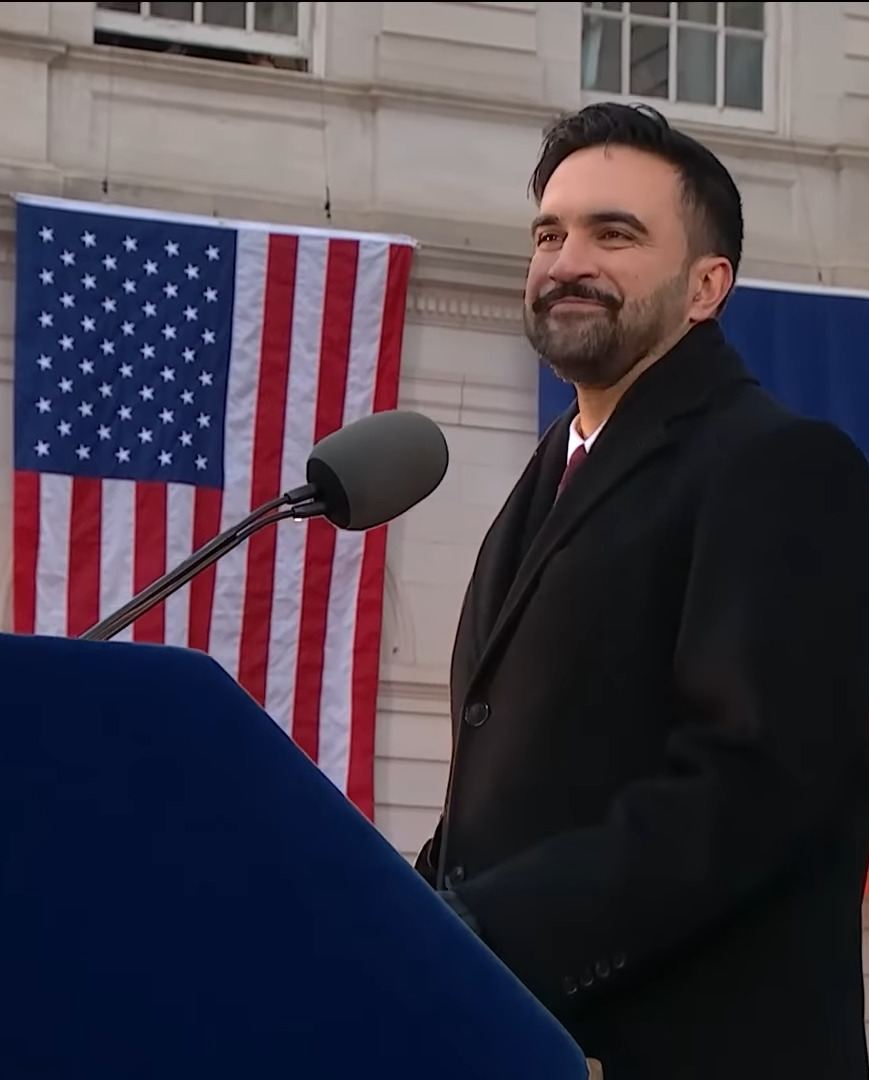
NYC Mayor’s Office via Wikimedia Commons licensed under CC BY 4.0
There is an important limit to Florida’s attack.
Mamdani cannot fairly be blamed for migration that occurred before he became mayor.
The federal figures being cited largely reflect years before his administration began in January 2026.
So Florida cannot honestly point to those numbers and say Mamdani personally caused them.
But the stronger question is whether his policies make an existing problem better or worse.
Mamdani inherited a city already struggling with high housing costs, affordability concerns and fierce competition from lower-tax states.
He bets that stronger public services and higher contributions from wealthy residents can make New York more livable.
Florida is betting those same policies will push more money and people south.
That is the real economic fight behind the billboard.
New York’s Wealthy Tax Base Raises the Stakes
The debate matters because New York depends heavily on high-income residents and major businesses.
The city still collects enormous amounts of tax revenue, which complicates any claim that its economy is already collapsing.
It is not.
But that same strength creates vulnerability.
If a relatively small group of wealthy residents contributes an outsized share of revenue, losing even some of those taxpayers could become expensive.
Critics of Mamdani argue that repeatedly raising costs on people who can easily live elsewhere is risky.
Supporters counter that wealthy New Yorkers benefit enormously from the city and should contribute more toward keeping it functional.
Florida has found a much simpler message.
Come here instead.
Florida Is Selling More Than Sunshine
Florida is no longer marketing itself only around beaches, retirement and warm weather.
Its political and business leaders increasingly pitch the state as an economic alternative to New York and other high-tax places.
That makes Mamdani useful.
His political identity gives Florida a recognizable figure in a larger argument about taxes, government spending and economic freedom.
For Florida’s supporters, Mamdani represents the danger of pushing progressive economic policies too far.
For Mamdani’s supporters, the billboard is conservative political theater dressed up as economic analysis.
Either way, Florida has forced the argument onto New York’s home turf.
The Real Problem for Mamdani Is That Florida Does Not Need to Prove He Failed Yet
Florida’s smartest move may be attacking Mamdani before anyone can definitively judge his economic record.
The Chamber does not need to prove that he destroyed New York.
It only needs to convince people that his policies could accelerate trends already making the city vulnerable.
That is much easier.
Mamdani can point out that the migration numbers predate his administration. He can also argue that New York remains one of the most important economic centers in the world.
But Florida can keep returning to one uncomfortable reality.
People and money already move between these two states.
The question is which direction that movement goes next.
That is why the Times Square billboard is more than a joke.
Florida placed it in New York because it wanted New Yorkers themselves to see the message.
Mamdani did not create this economic rivalry.
But his policies may determine whether Florida gets to keep using him as its favorite punch line.