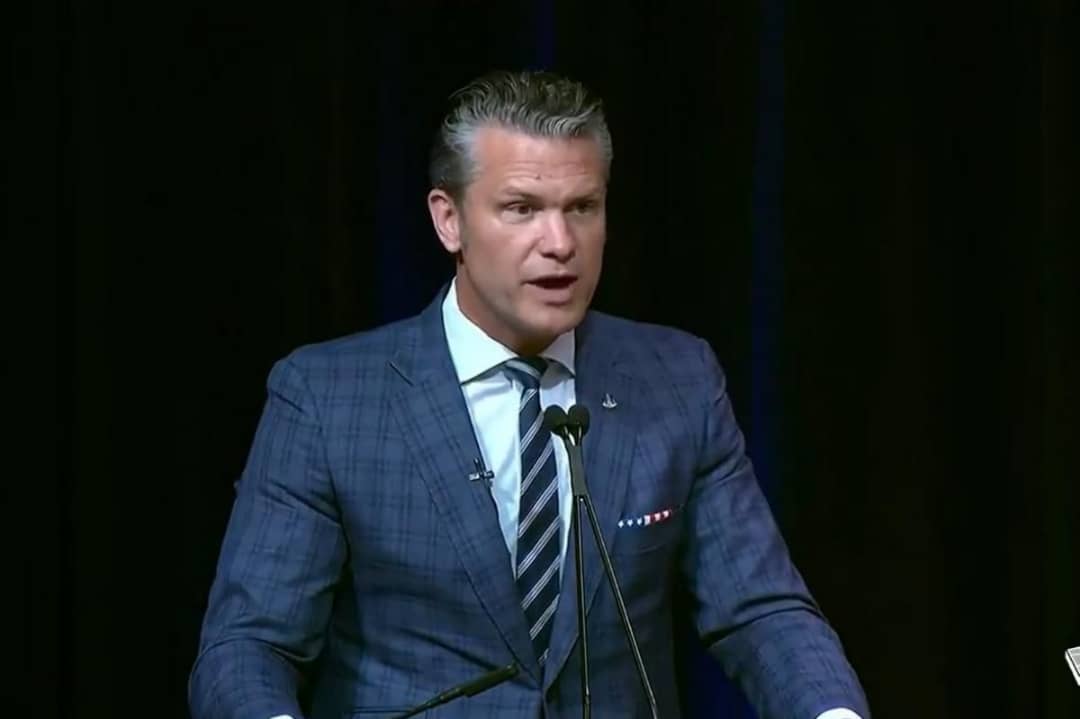
Pete Hegseth is facing increased scrutiny after several polls showed that the defense secretary has struggled to win broad public support. The numbers have placed him at the center of a larger political conversation about the Trump administration’s Iran policy and how voters view the officials responsible for carrying it out.
CNN senior data analyst Harry Enten recently highlighted the challenges facing Hegseth, pointing to polling that showed the defense secretary with some of the lowest approval numbers among senior Trump administration officials. The analysis, reported shows Hegseth with a net approval rating of minus 22 based on figures from Quinnipiac University and Fox News polling.
The figures placed Hegseth behind several other prominent administration officials, including Vice President JD Vance, Health Secretary Robert F. Kennedy Jr., and Secretary of State Marco Rubio. Enten said the numbers represented a difficult political environment for the defense secretary, describing the trend as a warning sign for Hegseth’s public standing.
The polling does not determine Hegseth’s future. Still, it highlights a challenge facing an official who has become one of the administration’s most visible figures during a major foreign policy debate.
A public opinion challenge during the Iran debate
Hegseth’s approval numbers come as Americans express growing concerns about the Iran conflict and the broader role of the United States in the region.
Recent polling shows that public support for the military campaign remains limited. A Reuters/Ipsos poll released August 6 found that 35% of Americans supported the war, while many respondents expressed concerns that the conflict could create greater instability in the Middle East.
A Quinnipiac University national poll released in late July found that 60% of registered voters opposed U.S. military action against Iran, while 28% approved of President Donald Trump’s handling of the situation.
The results do not show that the Iran conflict is the only reason behind Hegseth’s approval numbers. Many factors, including personal image, political views, and broader views of the administration, shape public opinions about government officials.
However, Hegseth’s position places him close to one of the most debated issues facing the White House, making his public standing closely connected to how Americans view the administration’s national security decisions.
Why Hegseth’s numbers stand out among officials
One of the more notable parts of the polling is the difference between Hegseth’s numbers and those of other officials involved in the administration’s foreign policy.
Secretary of State Marco Rubio, who has also played a role in discussions surrounding Iran policy, has received stronger public ratings than Hegseth. According to reports of the figures cited by CNN, Rubio’s net approval rating stood at minus 8, compared with Hegseth’s minus 22.
The difference suggests that voters are not viewing every administration official in the same way. While broader opinions about the Trump administration influence public perceptions, individual officials can develop separate reputations based on their roles, communication styles, and public visibility.
Hegseth’s role as defense secretary places him in a particularly visible position because military decisions often attract intense public attention.
Historical comparisons provide context
During his analysis, Enten compared Hegseth’s polling situation with former Defense Secretary Donald Rumsfeld before the 2006 midterm elections.
Rumsfeld became closely associated with the Iraq War during a period when public support for the conflict was declining. Gallup polling at the time showed increasing concerns among Americans about the direction of the war, which became a major political issue before the 2006 elections.
The comparison provides historical context for why analysts are paying attention to Hegseth’s approval numbers. However, the situations are different, and past political outcomes do not predict what will happen in the future.
Hegseth’s current position remains shaped by the support he receives from President Trump and the administration’s broader political strategy.
Trump’s support remains a major factor
Despite questions surrounding his polling numbers, Hegseth continues to have the backing of President Trump.
Trump has publicly defended the defense secretary and said he remains satisfied with his performance. Hegseth also continues to serve as defense secretary, according to official Defense Department information.
That support remains one of the most important factors in determining Hegseth’s future. Cabinet officials often face criticism during controversial policy debates, but their ability to remain in office depends heavily on presidential confidence.
For now, the polling shows a difficult public environment for Hegseth, but it does not indicate an immediate change in his position.
Pete Hegseth’s approval numbers have placed him under greater public attention at a time when the administration’s Iran policy is facing intense debate.
The numbers raise questions about how voters view the defense secretary and the role he plays in communicating national security decisions. At the same time, his continued support from President Trump shows that public approval ratings are only one part of the political equation.
As the debate over Iran continues, Hegseth’s challenge will be balancing his role inside the administration with the broader public conversation happening outside Washington.